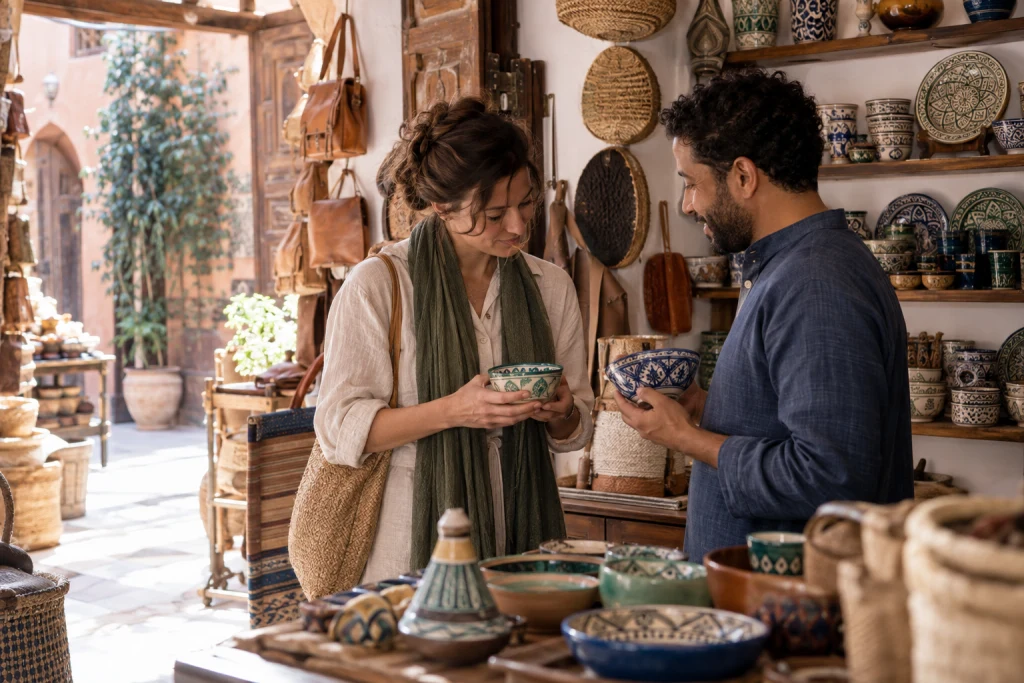
Entering a souk means entering a place of work, trade and conversation. Colour catches the eye, but a satisfying purchase is rarely built through haste. Looking in several shops, touching only with the seller’s agreement and asking simple questions can change the whole pace of the experience.
The Moroccan National Tourist Office describes souks as markets often found in medinas and highlights the variety of Moroccan crafts. Its Marrakech shopping page also distinguishes negotiation in the souks from modern shops in Guéliz where prices are fixed. Context matters as much as the object.
Look before asking the price
Begin by observing shapes, finishes and variations within one kind of product. Two bowls, rugs or bags that appear similar may involve very different materials, techniques and amounts of work.
A first walk without an intention to buy helps you notice price ranges, specialist shops and useful questions. It also prevents the first amount you hear from becoming a universal reference. There is no standard discount that applies to every souk and every object.
Ask what you are actually buying
Ask about the material, place of production, technique and, when relevant, working time. Find out whether the piece was made in the workshop, selected from another craftsperson or produced in a series. A precise answer is informative, although it cannot by itself certify origin.
For textiles, check dimensions, fibre and care instructions. For ceramics or metalwork, examine edges, balance, joins and the stated use. If an item will touch food, do not assume it is suitable: ask the seller for clear information.
Find out whether the price is open to discussion
In some souks, discussing the price is part of the exchange. In other shops, cooperatives or contemporary retail spaces, the displayed amount may be fixed. A simple question — “Is this a fixed price?” — avoids confusion.
When discussion is welcome, keep your tone calm and offer only an amount you would genuinely pay. There is no need to perform anger or dismiss the quality of the work. The seller may say no, you may say no, and both people can end the exchange politely.
Compare without making the visit a competition
Comparing two or three options is useful. Chasing only the lowest possible price can hide differences in quality, service and production. Careful packing, an honest explanation or an adjustment made by the workshop also carries value.
Photograph an item only with the seller’s permission, especially when the frame includes a design, a person or the inside of a working space. Save the address or a reliable landmark if you plan to return; market lanes can look surprisingly similar once your attention has stayed on the displays.
Confirm the amount and payment
Before agreeing, repeat the total, the currency and what it includes. When buying several pieces, confirm whether the quoted amount is for the set or for one unit. If a card terminal is available, read the displayed total before approving it; when paying cash, count at an unhurried pace.
Do not let a card or phone leave your sight. Ask for a receipt or other proof of purchase for a valuable item. Payment methods vary from one business to another, so keep more than one reasonable option without carrying an unnecessarily large amount of cash.
Plan for size, weight and the journey home
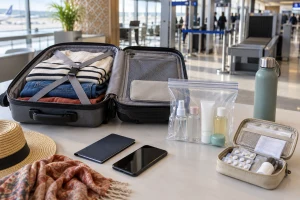
An object that looks perfect in a shop may be awkward to carry. Measure or estimate its volume, check how fragile it is and remember your baggage limits. For delivery, request written details of the address, contents, full price, carrier and stated conditions.
Baggage, customs and import rules depend on the route and the product, and they can change. Before buying anything costly, old, plant-based or made from animal material, consult the relevant authorities in your own country. Do not rely on an oral promise that an item is guaranteed to pass.
Say no without breaking the exchange
You can say thank you, explain that you are thinking and leave. An invitation to look does not create an obligation to buy. At the same time, asking for a long explanation and then disappearing during an advanced negotiation can feel discourteous; state your intention clearly.
If the exchange becomes uncomfortable, keep your response short, move towards a busier space and continue your walk. A positive commercial experience rests on consent on both sides, not on the idea that one person must win.
Let the souvenir carry meaning
A purchase can recall a city, a technique or an encounter. Choosing fewer objects that you understand often creates a longer-lasting connection than accumulating things. Ask the name of the technique and remember the care advice offered by the person who presented the piece.
The souk then becomes more than a transaction. It is a place to notice differences, talk about work and make a decision at your own pace while respecting the people whose working day unfolds there.