Packing for Morocco from one national average temperature is a poor method. The country combines Atlantic and Mediterranean coasts, inland cities, the Rif and Atlas ranges, pre-Saharan regions and desert landscapes. One week can therefore include bright afternoons, coastal wind and evenings that feel considerably cooler.
MOP’s solution is not to take more but to build compatible layers. This guide provides an adaptable base. The official forecast for the exact destination and the requirements of a booked activity must take priority immediately before travel.
Start with the itinerary, not the season
List every stop, its approximate elevation, proximity to the ocean and planned activities. An urban stay in Rabat does not require the same equipment as an Atlas hike or a night near the desert.
The Moroccan National Tourism Office describes a country exposed to several climatic influences. The coast is relatively mild, inland areas are more continental and spring and autumn are particularly suitable for the desert south. These broad patterns guide packing; they do not predict a particular day.
Build three simple layers
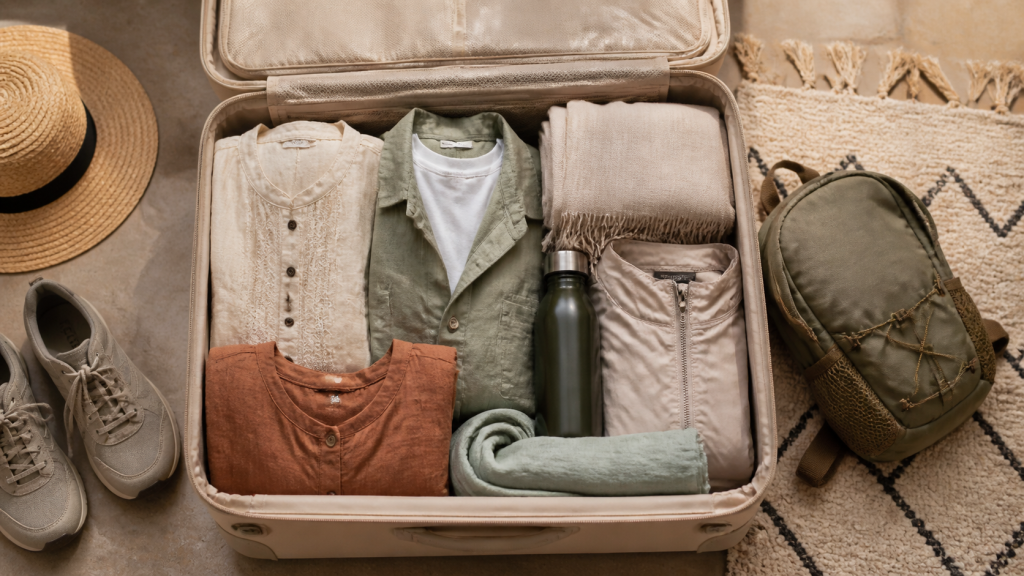
Pack a light breathable base, an intermediate layer such as a shirt or thin jumper, and an outer layer suited to wind or possible rain. Each item should work with the others.
This system lets you remove a layer at midday and replace it after sunset. It is more useful than one very heavy garment that becomes impractical as soon as the temperature rises.
For the Atlantic and Mediterranean coasts
Wind and humidity can change how the coastal temperature feels. Include a light wind-resistant jacket, a long-sleeved layer and footwear suitable for a damp or sandy walk.
For beach time, add sun protection, swimwear and a compact towel if your accommodation does not provide one. Bright weather does not guarantee calm water. Official marine vigilance and local safety instructions should guide swimming decisions.
For Marrakech, Fez and inland cities
In inland cities, prioritise breathable fabrics, a hat, sunglasses and a reusable water bottle. A light long-sleeved shirt offers sun protection and makes it easier to dress respectfully in religious sites or more formal settings.
Comfortable shoes with a stable sole matter more than several dressy pairs. Medinas combine paving, steps, uneven surfaces and long days on foot.
For the Rif and Atlas Mountains
Elevation can make evenings cold even when the valley is warm. Add a fleece or jumper, a genuinely protective jacket, suitable socks and footwear matched to the terrain. Hiking equipment depends on distance, ascent and the type of supervision.
Mountain weather can change quickly. A qualified local guide may require or recommend additional items. Do not substitute ordinary city clothing for technical equipment simply because a walk appears short.
For desert regions
Choose loose, breathable clothes that cover the skin, head protection and glasses that reduce exposure to sun and sand. A warm layer remains useful after sunset.
Seal electronics in a pouch when it is windy. Carry water according to the operator’s instructions, while avoiding unnecessary weight when a reliable supply has already been clearly confirmed.
Respectful, versatile clothing
Morocco is urban, rural, coastal and religious in different ways. There is no single visitor uniform, but clothes that cover shoulders and knees provide useful flexibility. They also protect against the sun.
A light scarf can help with wind, sun or entry to some spaces. It is not a substitute for a warm garment or specialist protection.
Check the weather at the right time
Morocco’s General Directorate of Meteorology publishes forecasts and an updated vigilance map. Check a few days before departure and again before a weather-sensitive journey. Look at the places crossed as well as the final destination.
A seasonal outlook expresses probabilities over several months; it cannot describe the weather on one day. Use short-range forecasts and official warnings when deciding on a hike, crossing or swim.
Compact checklist to adapt
- Breathable tops and one long-sleeved piece.
- An intermediate layer and wind-resistant jacket.
- Comfortable trousers and versatile modest clothing.
- Walking shoes already broken in.
- Hat, sunglasses and sun protection.
- Water bottle, small daypack and sand-resistant pouch.
- Extra warm layer for altitude or a desert night.
- Personal medication and essential documents.
Continue with our travel advice and check the particular needs of each stop in the Destinations catalogue.
Sources consulted
- Moroccan National Tourism Office, climate and seasons, accessed 24 August 2026: https://www.visitmorocco.com/en/travel-info/climate-and-seasons
- Morocco’s General Directorate of Meteorology, forecasts, vigilance and monitored hazards, accessed 24 August 2026: https://www.marocmeteo.ma/fr
- General Directorate of Meteorology, general vigilance map, accessed 24 August 2026: https://www.marocmeteo.ma/fr/carte-de-vigilance-g%C3%A9n%C3%A9rale