Oujda and Saidia are often grouped by travel platforms even though they are not one base. Oujda is an inland city in Morocco’s Oriental region; Saidia supports a Mediterranean beach stay. The choice between them changes transfers, meals, daily rhythm and the usefulness of a car.
MOP explains that geography without recommending a property. Expedia is used to consult available offers; no availability or quality is inferred automatically.
Central Oujda: services and a simpler arrival
The centre suits an urban stay, an arrival by train or coach and straightforward daily transfers. It brings services, taxis and public spaces closer, while the walking distance to the medina still varies by address.
Check traffic noise, sound insulation, lifts and parking. A “city-centre” label needs a real landmark and route. For an early departure, ask how the station or terminal is actually reached.
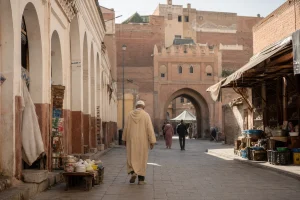
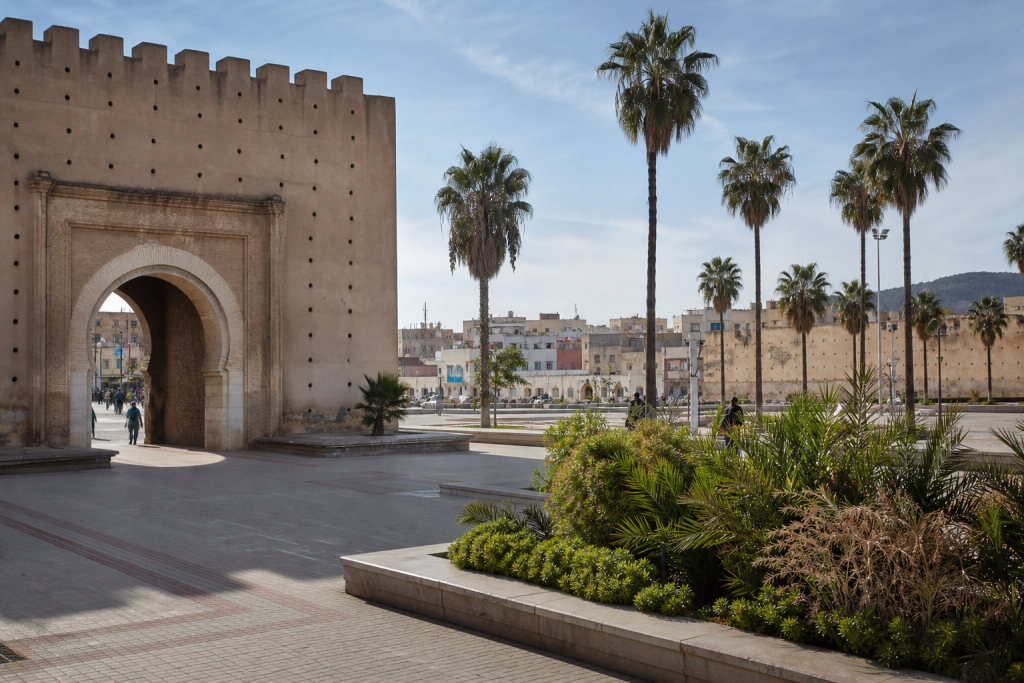
Medina and gates: heritage with a final approach to verify
A property near the medina supports markets, monumental gates and walking. It may also require a drop-off at the edge, narrow lanes or stairs. Ask where the taxi stops and how far luggage must be carried.
In older accommodation, inspect ventilation, hot water, rails, heating and the path to the room. An attractive courtyard cannot replace a precise access description.
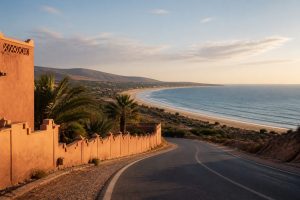
Saidia: another destination, not a neighbourhood
Morocco’s tourism office presents Oujda and Saidia as complementary poles: urban culture and Mediterranean coast. Saidia must not be described as a walkable Oujda district. A day connecting them needs organised transport and a margin.
Choose Saidia when the beach and coastal activities lead the itinerary. Confirm the exact area, seasonal services, supervised swimming, access without a car and the evening return. “Marina” does not ensure that every shop or service operates throughout the year.
A combined trip: one base or two
Over two or three nights, changing base may prevent repeated transfers when city and coast matter equally. On a short trip, one base is simpler if the journey is accepted. Compare transfer time with the work of checking out and in again.
Do not choose an apparently midway property without checking meals, taxis and night access. A map does not document transport frequency.
Families, mobility and season
In Saidia, verify pools, beach access, balconies, beds and the services open on the exact dates. In Oujda, inspect pavements, entrance steps, lifts and noise. Travellers with reduced mobility need the complete route from the street and the shower configuration.
Seasonal equipment, shuttles and activities must be confirmed. Heating, cooling and blackout matter more than decorative photographs.
For several nights, also check pharmacies, early meals, laundry, connectivity and luggage storage. In Saidia, a nearby service may follow a different calendar from the accommodation. In Oujda, a very central address may need genuinely soundproof windows. These everyday details prevent dependence on a taxi for each small need.
Keep the booking address, host contact and return plan offline. This is particularly useful when the day combines the city and coast, because a delayed activity or missed connection should not leave the final transfer unresolved.
Compare on Expedia using the right destination
Run separate searches for Oujda and Saidia. Then check municipality, address, cancellation, late arrival, parking and services. Do not let one search result blend two different trips.
Before payment ask: which base serves the itinerary, what is the final approach, how is the other destination reached, which services operate, and what is the fallback if return transport fails?
Continue with the Oujda destination guide to plan the city and a Mediterranean extension.
Sources consulted
- Moroccan National Tourism Office, Oujda-Saidia: https://www.visitmorocco.com/fr/voyage/oujda-saidia
- Moroccan National Tourism Office, beaches around Oujda-Saidia: https://www.visitmorocco.com/fr/voyage/oujda-saidia/plage