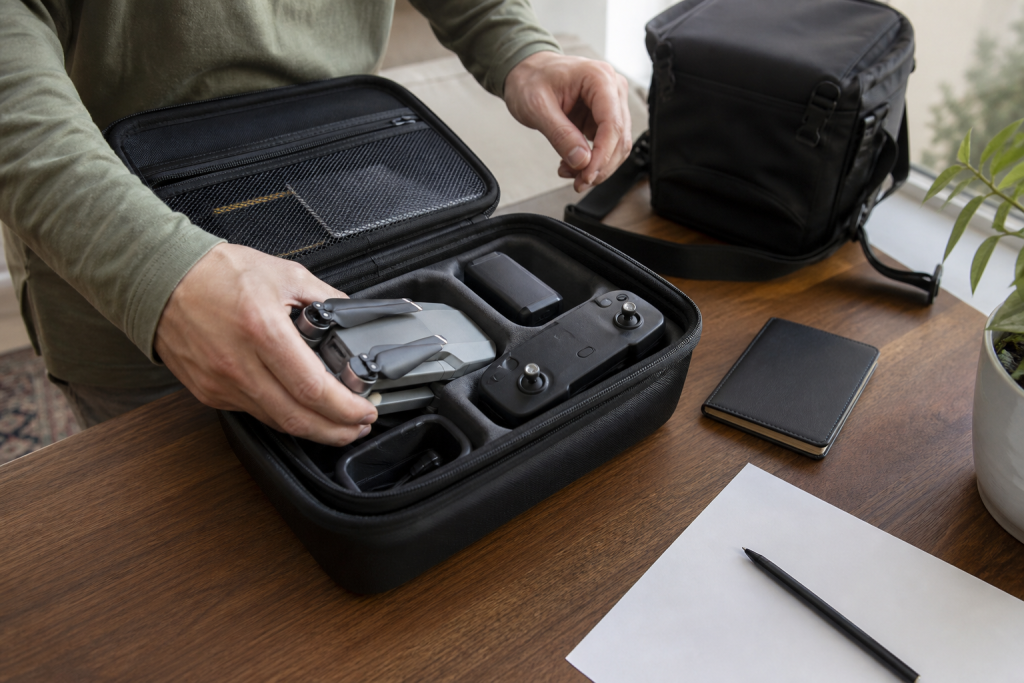
A drone is not just another camera accessory. Morocco’s National Airports Office says a licence is required before departure for drones and unmanned model aircraft.
The same official page states that without authorisation the device may be temporarily confiscated for up to forty-five days. That changes the planning method: obtain a formal answer before travelling, or leave the drone at home.
Start with authorisation, not the flight booking
Do not book a filming project on the assumption that the paperwork can be settled on arrival. The official wording requires a licence before departure. Consult Customs and the competent authorities for the procedure that applies to your equipment and intended use.
An old forum or travel video is not an authorisation. Rules, forms and contacts can change. Keep the official response and supporting documents in a format available without an internet connection.
Record the date of every confirmation so that an outdated answer is never mistaken for current permission.
Separate entry of equipment from permission to fly
Being allowed to carry a device on an aircraft does not automatically mean that it can enter the country or be flown. Airline, security, customs and aviation requirements address different risks.
Seek confirmation for every stage. Battery approval is not permission to fly; an administrative authorisation does not remove the duty to respect local limits, safety and privacy.
Prepare batteries for air transport
Lithium batteries are subject to airline and aviation-security rules. Ask your carrier about permitted quantity, capacity, packaging and location. Do not reuse instructions issued by another airline.
Protect terminals and prevent impact. Do not carry a damaged or swollen battery. These technical precautions remain necessary even after administrative authorisation has been granted.
Open land does not mean unrestricted airspace
A beach, desert or open viewpoint is not automatically an authorised flying area. Nearby airports, infrastructure, protected sites, events and sensitive zones may bring additional restrictions.
Check the exact place and date. If the local rule remains unclear, do not fly. No image justifies a security risk or an intrusion into residents’ lives.
Protect people and heritage
Ask before filming an identifiable person, private space or close-range activity. Avoid crowds and never chase animals for a shot. At archaeological and cultural sites, follow the operator’s own rules.
Noise and the presence of a drone affect other visitors. Responsible practice includes choosing not to take off, even when a general document appears to allow use.
What to do without confirmed permission
The safest option is to travel without the drone. A phone or ground-based camera can create a closer account of a place and avoids temporary confiscation on arrival.
Do not attempt to bypass a declaration or give the device to another traveller. An uncertain requirement must be resolved with the competent authority, not an online workaround.
Build a verifiable file
Gather the equipment description, serial number, intended use, proposed locations and dates. Add the authorisation and contact details for the issuing body. Keep both a paper copy and an offline digital copy.
Before every journey, confirm that the actual location matches the approved request. A changed itinerary may require further approval; never assume one document covers the whole country.
Pre-departure checklist
- Authorisation obtained from the competent authority.
- Entry conditions confirmed with Moroccan Customs.
- Battery rules checked with the operating airline.
- Locations and dates consistent with the accepted file.
- Paper and offline copies available.
- A drone-free travel plan ready if any doubt remains.
For other documents, start with MOP’s Plan your trip, then confirm the conditions for your nationality and journey.
Sources consulted
- National Airports Office, “Travel documents”, drone guidance: official page
- Moroccan Customs and Excise Administration: official portal