A travel photograph can document a skill, place or meeting. It can also expose a person who never agreed to be published. Morocco’s data protection authority explains that sound and images may be personal data when they concern an identified or identifiable person.
This guide is not legal advice and does not claim that every photograph follows an identical legal regime. It offers a cautious working method: distinguish a landscape from a person, ask clearly, explain the use, respect refusal and check the rules of the place separately.
See the person before the subject
Clothing, work and faces are not freely available scenery. Before raising a camera, make simple contact. A greeting, a gesture toward the camera and a question the person understands avoid presenting them with a decision already made.
Silence, an awkward smile or no response is not reliable agreement. If the person does not understand or seems uncertain, leave the portrait. A wide scene without identification may tell the story with less exposure.
Explain the picture and its publication
Agreeing to a souvenir photograph is not necessarily agreement to appear on a website, social network or campaign. Say whether the image will remain private or be shared publicly. When the use becomes professional or commercial, obtain the appropriate recorded permission rather than relying on an ambiguous exchange.
Morocco’s authority defines consent as free, specific and informed. That is a useful practical compass: the person should understand the use and be able to refuse without pressure. MOP does not use an identifiable portrait on the basis of an assumption.
Show the image immediately
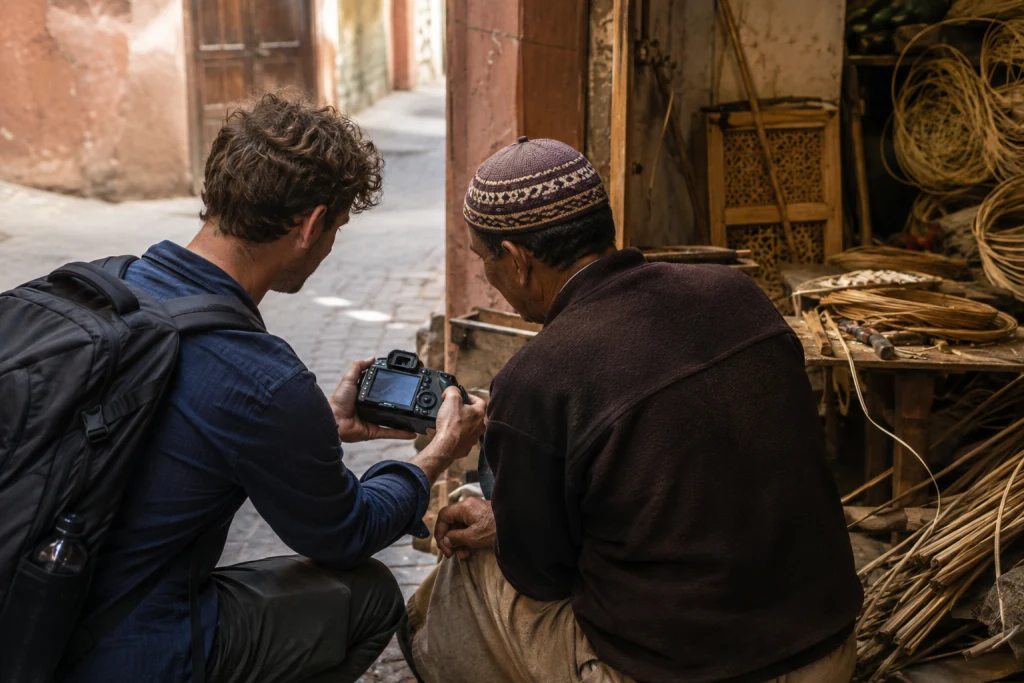
After taking the picture, show the screen. The person can inspect the frame, request another picture or ask for deletion. Delete it in front of them when requested. Do not keep a hidden burst after removing only the displayed file.
If you promise to send the picture, record a contact method with permission and use it only for that purpose. Do not add the person to marketing. Remove the contact when it is no longer needed.
Give children particular protection
Do not photograph an identifiable child merely because they smile or approach the camera. Seek agreement from the legitimate responsible adult, and avoid images revealing a school, home, routine or vulnerable situation. An adult nearby is not automatically entitled to consent for every child.
Prefer hands, actions or wide scenes when identity adds nothing to the story. Never publish a humiliating, medical or intimate image. Omitting a name does not make a person unidentifiable when their face and location are sufficient.
Respect workshops, shops and private places
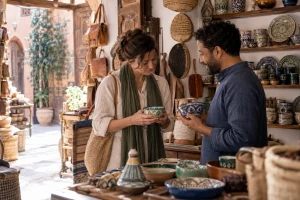
A shop open to customers remains a space managed by someone. Ask before photographing an artisan, tool, customer or valuable object. Buying an item does not purchase the seller’s face or the interior of the workshop.
In a riad, museum, religious site or private property, follow displayed rules and the person in charge. Permission to photograph architecture may exclude flash, tripods, video or people. A venue rule sits beside individual consent; it does not replace it.
Separate stills, video, sound and drones
Video also records voices, conversations and movement. Someone who accepts a still photograph may refuse audio. Explain the format before recording and stop when discussion becomes private. Live streams are especially hard to withdraw once distributed.
Drones involve separate authorisations and formalities addressed in MOP’s guide to travelling with a drone. Never assume that permission given on the ground allows overflight or recording of a property.
Publish the minimum information
Before sharing, ask whether face, exact place and time need to appear together. Removing geolocation, delaying publication or cropping may protect both a person and a site. A caption must not invent a profession, origin, family situation or belief.
Store files securely and limit copies. If a person later requests removal, identify the channels you control and act promptly. You may not be able to recall every copy, which is precisely why caution matters before first publication.
Respond to refusal or a request for payment
A refusal ends the photograph. Do not retreat to use a long lens and do not present the person as an obstacle to your itinerary. Thank them and choose another subject.
When someone offers a portrait for payment, agree on the amount and use first. Payment does not remove the agreed limits or the right to dignity. It also does not prove that every visible third party has consented.
A short routine for every image
Ask four questions: is the person identifiable, have I asked, is the use understood, and does the place permit photography? After the image, show it and consider whether publication creates an unnecessary risk. The routine takes less time than a later dispute.
Responsible photography does not diminish a journey. It improves the relationship and encourages pictures with genuine context. A refusal respected can matter as much as the image obtained.