Intangible cultural heritage is not a cabinet of objects kept unchanged. It lives through gestures, stories, celebrations, knowledge and skills that people continue to learn, adapt and pass on. UNESCO’s periodic reporting mechanism is designed to follow that changing reality.
The official page for Morocco says that a report on the implementation of the Convention will be due on 15 December 2026. It also marks the report overview as “soon available”. The deadline is therefore public, but the report’s content is not. Any account of its findings before publication would be premature.
Read the deadline for what it is
UNESCO explains that States Parties report to the Committee at regular intervals. The process helps them assess implementation of the Convention, evaluate safeguarding capacities, report on inventories and update the status of elements on the Representative List.
Morocco’s page also records earlier cycles, including a report submitted on 15 December 2022 and examined in 2023. The 2026 date is not an automatic new inscription and it is not a ranking. It is a stage in documenting and reviewing safeguarding work.
Report on measures, not only on names
A periodic report does more than count recognised elements. Article 29 of the Convention asks States Parties to report on legislative, regulatory and other measures taken to safeguard intangible cultural heritage in their territories.
That changes the useful question. Instead of asking only which tradition appears on a list, readers can ask how communities practise it now, what makes transmission possible and which pressures affect its continuity. International recognition may increase visibility, but it cannot replace the everyday work of practitioners.
Keep inventories alive
Inventories are among the subjects followed through periodic reporting. Their value depends on whether they can change with the communities concerned. A practice may take new forms, move to different settings, welcome new learners or face constraints that were not present at an earlier survey.
A useful inventory should not turn living culture into a final definition. It offers a documented view at a particular time, creates a basis for listening to bearers and helps identify needs and assess the effects of safeguarding measures.
Sixteen listed elements do not sum up Morocco
UNESCO’s page for Morocco currently presents sixteen elements on the Intangible Cultural Heritage lists. They include national and multinational elements and span foodways, music, craft, celebration and knowledge connected with nature.
That number describes inscriptions within one international framework; it does not measure the full cultural diversity of the country. Many local practices are not on an international list, and a tradition does not need that status to matter deeply to the people who sustain it.
Transmission is the central thread
A practice remains alive when it can be learned, repeated, discussed and sometimes transformed. Families, associations, workshops, schools, master practitioners, performers and organisers may all contribute in different ways.
The 2026 report will be valuable if it helps readers understand those practical conditions: who transmits knowledge, where learning happens, what resources are available and how younger generations choose to participate. Until the document is public, these remain questions for future reading, not answers that can be attributed to UNESCO.
What a traveller can notice responsibly
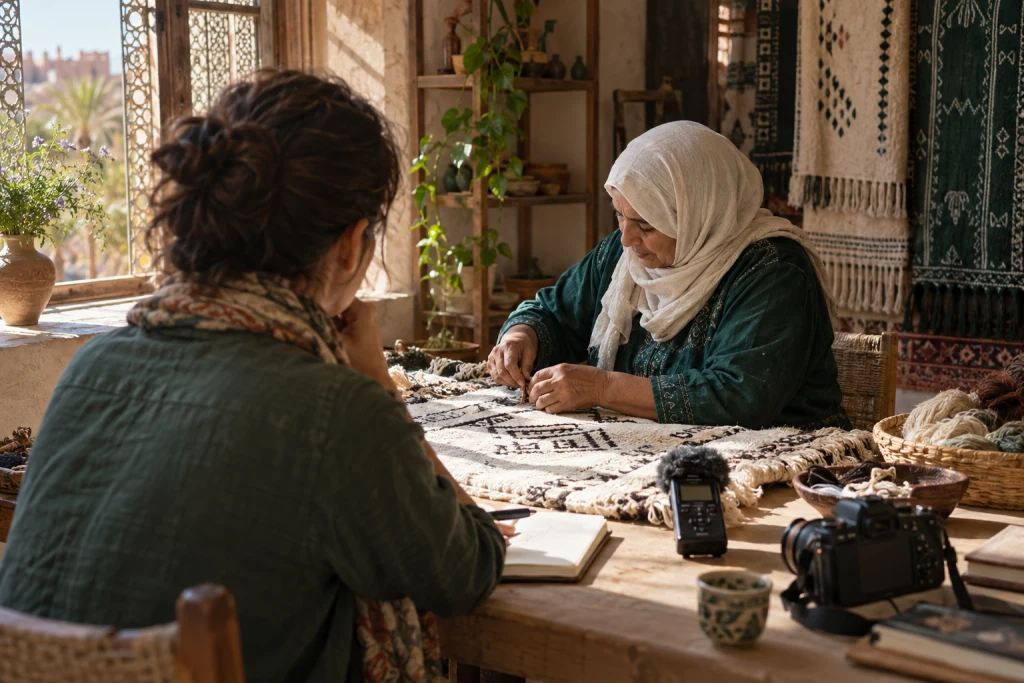
Travel can make transmission visible: the time taken to prepare a celebration, the precision of a workshop gesture, the learning of a musical rhythm or the shared rules surrounding a meal. Observation becomes more meaningful when it pays attention to people and context rather than only to the most photogenic result.
Ask before taking photographs, choose encounters whose payment and purpose are clear, and listen to how practitioners describe their own work. A visitor is not entitled to declare a practice “authentic” merely because it matches an image of the past.
Do not turn safeguarding into scenery
Tourism can support livelihoods and visibility, but it can also flatten stories or compress demonstrations until their meaning is lost. Safeguarding does not mean freezing a practice, nor does it require constant performance for an audience.
MOP favours curiosity with restraint: check who is speaking, distinguish a commercial presentation from a community practice, do not demand access to private moments and accept that a particular encounter may not be available on a chosen date.
What should be checked after 15 December?
When the report is actually published, return to the official source and confirm its date, status and scope. Useful points will include the measures reported, changes to inventories, transmission initiatives and challenges identified. It will also be important to distinguish the State’s submitted report from any later examination by the Committee.
For now, the established fact is narrow: a report is due on 15 December 2026 and its overview is not yet available. That caution does not make the story less interesting. It is what allows living heritage to be followed without inventing its news.