An immobilised car can turn a simple journey into a stressful situation. On Morocco’s motorway network, Autoroutes du Maroc provides the single number 5050 for information, assistance and emergency requests, including those related to breakdowns and accidents.
MOP cannot replace official instructions or an insurance contract. This guide helps travellers prepare the information they may need and avoid improvised decisions when a vehicle cannot continue.
Save the right contacts before departure
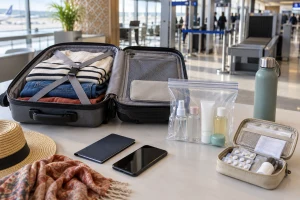
Add 5050 to your phone and retain the assistance number for your insurer or rental company. Keep useful documents available offline: contract, recovery conditions, registration, authorised-driver information and booking reference for a rental car.
Check required safety equipment and the vehicle’s general condition. A dated photograph of the exterior and dashboard at departure may help describe a later issue, but it does not replace an official report or assessment.
Put immediate safety first
If a problem occurs, follow signs, slow down without a sudden movement and try to stop outside traffic lanes when this can be done safely. Switch on hazard lights and follow instructions from the relevant operator.
Do not stand in front of or behind a vehicle exposed to traffic. Where passengers should wait and whether a triangle can be placed safely depend on the location and official directions. Never enter a dangerous area simply to install equipment.
Call 5050 on the motorway
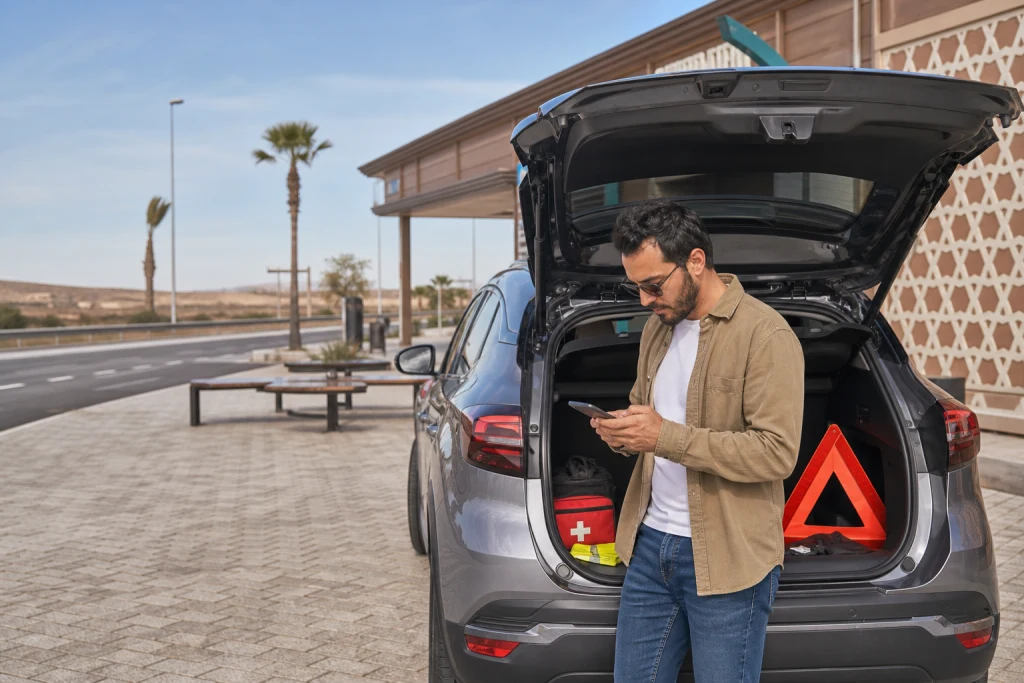
ADM states that its 5050 call centre handles assistance and emergency requests. Be ready to give the direction of travel, last landmark, marker or kilometre point if available, vehicle make and registration, and the apparent nature of the problem.
Also explain how many people are present and whether anyone needs particular support. If there is immediate danger or an injury, say so clearly and follow the operator’s instructions.
Use an authorised recovery operator
ADM explains that interventions on the motorway network are performed by recovery operators authorised for the relevant section. The official service can identify the competent company and provide the applicable tariff.
Avoid accepting an intervention from an unidentified person who arrives without coordination. Ask for the company name, where the vehicle will be taken, the service to be performed and the record supplied afterwards.
Check the tariff before work begins
Recovery and towing tariffs by section and service are published by ADM and can be communicated through 5050. The exact amount depends on the situation, so MOP does not reproduce a price that may become outdated.
Before signing, check what is included: callout, towing, extra distance, storage or another operation. Keep the invoice, payment record and call reference for the insurer or rental company.
Distinguish the motorway from other roads
The 5050 service concerns the motorway network managed by ADM. On a national, provincial or urban road, or on an unpaved route, the responsible authority and assistance procedure may be different.
Use the insurer’s or rental company’s contacts and follow local services. Do not assume that a motorway recovery operator can work outside its authorised area without official confirmation.
Use traffic information carefully
ADM Trafic provides information about incidents, roadworks, traffic and points of interest on the network. Check it before departure and only when a passenger can do so without distracting the driver.
An application cannot guarantee that every event appears immediately. Road signs, official messages and directions from intervention teams take priority.
Protect data and the vehicle
Do not post a photograph that combines the registration, documents, exact location and evidence that the occupants have left. Share details only with people who need them.
Before towing, take medicine, phone, papers and essential belongings when it is safe to do so. Photograph the vehicle’s condition and ask where it is going, without obstructing the intervention.
Build a simple record afterwards
Write down the time, location, calls, recovery company and decisions. Keep the invoice, diagnosis and exchanges with insurer or rental provider. For a rental vehicle, do not authorise a repair outside the contract procedure.
If a charge or intervention seems inconsistent, request a written explanation and use official complaint channels. A dispute beside moving traffic must never delay safety.
Offline checklist
- ADM 5050 saved in the phone.
- Insurer or rental assistance accessible.
- Registration and contract available.
- Direction, landmark and position described precisely.
- Authorised operator and destination confirmed.
- Tariff and scope of service checked.
- Invoice, photographs and call reference retained.
- No unauthorised repair on a rental vehicle.
Sources consulted
- Autoroutes du Maroc, “Notre Centre d’Appel 5050”, accessed 31 August 2026: official call-centre page in French
- Autoroutes du Maroc, “Besoin de dépannage”, accessed 31 August 2026: authorised recovery and tariffs
- Autoroutes du Maroc, “ADM Trafic”, accessed 31 August 2026: official traffic information