Accommodation does not become responsible because a green leaf appears on its page. It should explain its practices, limitations and operation during the dates of the stay. Verification covers water and waste as well as access, local employment and the relationship with the place.
This guide extends Responsible travel in Morocco. MOP creates no label and certifies no property. A stated label must be checked with its issuing body and commercial claims with the accommodation.
Begin with the real location
A remote property may offer quiet while requiring several transfers. Measure the route from station, airport and intended visits, then ask how guests without a car move around. A central address can reduce journeys without automatically being more responsible.
Check integration with the place as well: authorised access, neighbours, noise and pressure on fragile land. A desert or mountain photograph proves neither the legality of a camp nor control of its impact.
Ask concrete questions about water
Determine how safe drinking water is supplied, whether a reliable refill avoids individual bottles and how linen or towel choices operate. A reuse request only makes sense when hygiene, water quality and the guest’s choice are respected.
Water context differs by region and season. Avoid demanding lawns, daily washing or a heated pool while judging the property by conservation language. A credible policy describes actions rather than an absolute promise.
Examine waste and purchasing
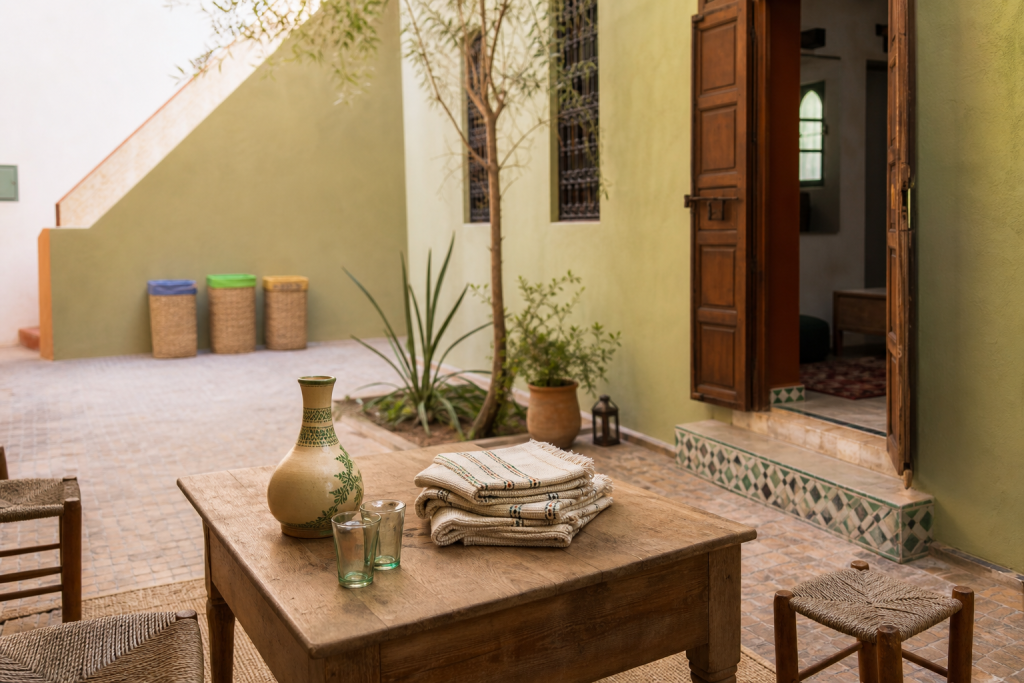
Ask what sorting is actually collected in the municipality, whether refills replace single-use items and how organic waste is handled. Coloured bins without a downstream collection route do not prove recycling.
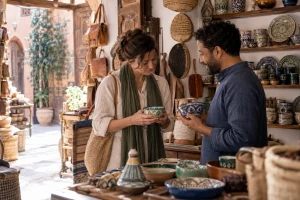
Review food as well: seasonal products, adjustable portions, ingredient information and waste reduction are more testable than the word “local” on its own. Craft purchases should involve clear provenance, price and consent before photography.
Examine energy, comfort and health
Ask which systems operate during the stay: heating, cooling, hot water, ventilation and lighting. Efficiency must not conceal an unsafe or uncomfortable room. A sound arrangement explains the controls and enables reasonable use.
At a camp or isolated property, add backup electricity, device charging, fire safety and emergency procedure. A visible solar panel does not answer every question.
Verify local work and offered experiences
A local-impact claim becomes more credible when the property can describe employment, purchasing and regional partners without presenting workers as scenery. Ask who runs an activity, their qualification, the total price and what remains payable on site.
Reject experiences involving fed wildlife, prohibited access, abandoned waste or intrusive photography. Klook or Viator may show a separate offer, but MOP displays it only when it matches a documented experience; affiliation does not replace provider verification.
Check labels and evidence
Morocco’s tourism office describes initiatives including Green Key and Blue Flag. Verify the precise name, year, scope and issuing organisation. An old logo or an unlinked claim does not prove current certification.
Request proportionate evidence such as a published policy, collection information, recent photographs or a written reply. Do not demand a corporate report from a small guesthouse; look for consistency between promise, practice and acknowledged limits.
Compare and book without false guarantees
After choosing the area and decisive criteria, compare Expedia offers for the exact dates. Read the total, cancellation, room, accessibility and services, then contact the property about important responsible practices. Retain the answer before payment.
MOP does not rank by commission or turn a partner filter into an audit. A simple, well-located and transparent property may be a stronger decision than a spectacular option whose claims cannot be verified.
Sources consulted
- Moroccan National Tourism Office, eco-friendly, fair and sustainable tourism: https://www.visitmorocco.com/en/discover-morocco/eco-friendly-fair-and-sustainable-tourism-morocco
- Moroccan National Tourism Office, eco-friendly options: https://www.visitmorocco.com/en/eco-friendly-options-morocco
- Official Morocco portal, tourism and environmental information: https://www.maroc.ma/fr/touristes