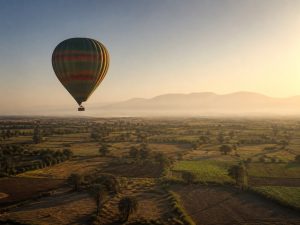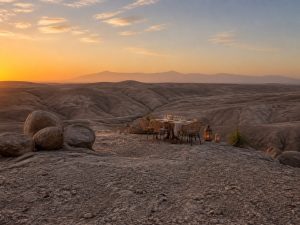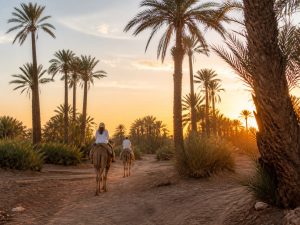
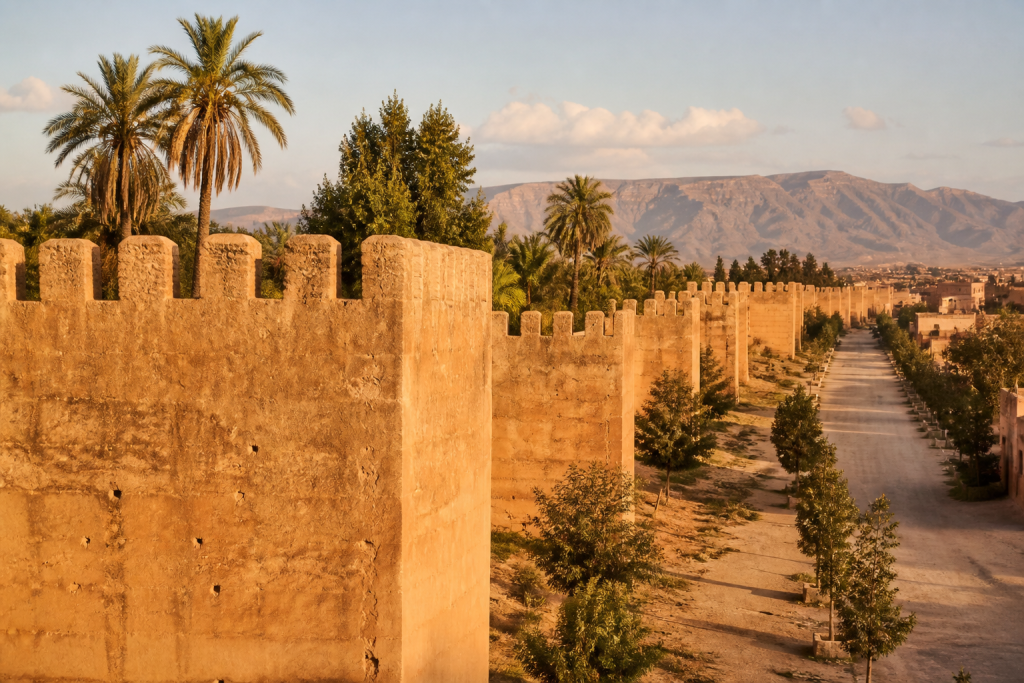
The walled town, the rampart edge and rural Souss properties are not interchangeable. Properties grouped under one destination name can therefore require different itineraries, final transfers and levels of independence. Choose the geography before comparing accommodation.
MOP does not rank properties according to commission. Expedia is used to consult offers for your dates; prices, availability, photographs and terms remain partner data to verify before payment.
Medina and souks
This base brings markets and urban life closer, while final access, noise and stairs need documenting. Ask for a precise landmark, drop-off point and luggage route. Measure the journey to important sights instead of trusting the word “central”.
Check noise, entrance steps, lift, ventilation and bathroom access. A photogenic building does not prove comfort, accessibility or maintenance quality.
Rampart edge
The gates remain accessible and driving may be easier, but the exact side of the walls matters. Verify every journey at the hours you need and confirm taxis or shuttles. Online distance describes neither terrain, road state nor waiting time.
If the area is a compromise, identify the real benefit: quiet, parking, nature access or proximity to a terminal. Without a concrete advantage, a midway location may simply multiply transfers.
Palm groves, Tioute and countryside
A rural property suits quiet stays or excursions when meals, transport and night return are organised. Confirm the administrative address and place name on an independent map. Listings sometimes combine a familiar destination with distant localities.
For outdoor activities, current conditions, qualified supervision and local instructions take priority over commercial copy. Accommodation alone cannot guarantee swimming, hiking, snow, wind or track access.
Arrival, driving and the final approach
Identify the station, airport, terminal or arrival road, then ask about the final transfer. With a car, distinguish private parking, public parking and possible street space. Check hours, height, security and distance to the door.
For a late arrival, keep the address and a contact offline. Ask what happens if a driver cannot find the property, a road closes or the promised shuttle is unavailable.
Season, equipment and services actually operating
Heating, cooling, hot water, meals, pools and shuttles must be confirmed for the exact dates. Equipment visible in an old photograph may be closed, seasonal or restricted to certain hours.
Read cancellation and payment terms as carefully as the room description. Check disclosed taxes, arrival time, any deposit and the rules that apply if the trip changes.
Families, mobility and a responsible stay
Families should inspect beds, windows, balconies, stairs, meals and transfer length. Travellers with reduced mobility need the full route from the street, passage widths, thresholds and shower; “accessible” requires evidence.
In fragile environments, favour accommodation able to explain water, waste, energy and visitor rules. Reject vague promises of exclusive nature that document neither permission, safety nor impact.
For a stay of several nights, examine daily life as well: distance to a pharmacy, early breakfast, laundry, a practical work surface and luggage storage. These details prevent a vehicle journey for every small need. A quiet property that depends entirely on one shuttle can become restrictive as soon as a timetable changes.
Compare on Expedia after choosing the area
Search using the right place, apply filters, then return to the address and real constraints. Compare cancellation, access, equipment, meals, parking and transfers; do not turn a score or photograph into universal proof.
Before payment ask: where is the door, how do guests arrive with luggage, which services operate, how is the itinerary reached, and what is the fallback if planned transport fails?
Continue with the Taroudant destination guide before choosing accommodation.
Sources consulted
- Moroccan National Tourism Office: https://www.visitmorocco.com/fr/voyage/taroudant
- Moroccan National Tourism Office, further reading: https://www.visitmorocco.com/fr/voyage/taroudant/nature