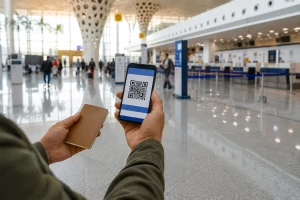
Well-prepared cabin baggage helps a journey begin or end without unnecessary haste. At Moroccan airports, security screening covers liquids, aerosols and gels, sharp objects and certain products needed for medical reasons.
Guidance published by Morocco’s National Airports Office provides a common starting point. It does not replace the airline’s conditions, the destination country’s rules or requirements during an international connection. The safest preparation checks all three before the case is closed.
Start by separating cabin and checked baggage rules
The weight, dimensions and number of cabin items usually depend on the airline and the fare purchased. ONDA advises travellers to use the information shown on their ticket or booking confirmation.
Security rules then determine what can pass through the inspection point. An item may fit the airline’s baggage allowance and still be refused at screening if it falls into a prohibited category.
Put liquids in small containers
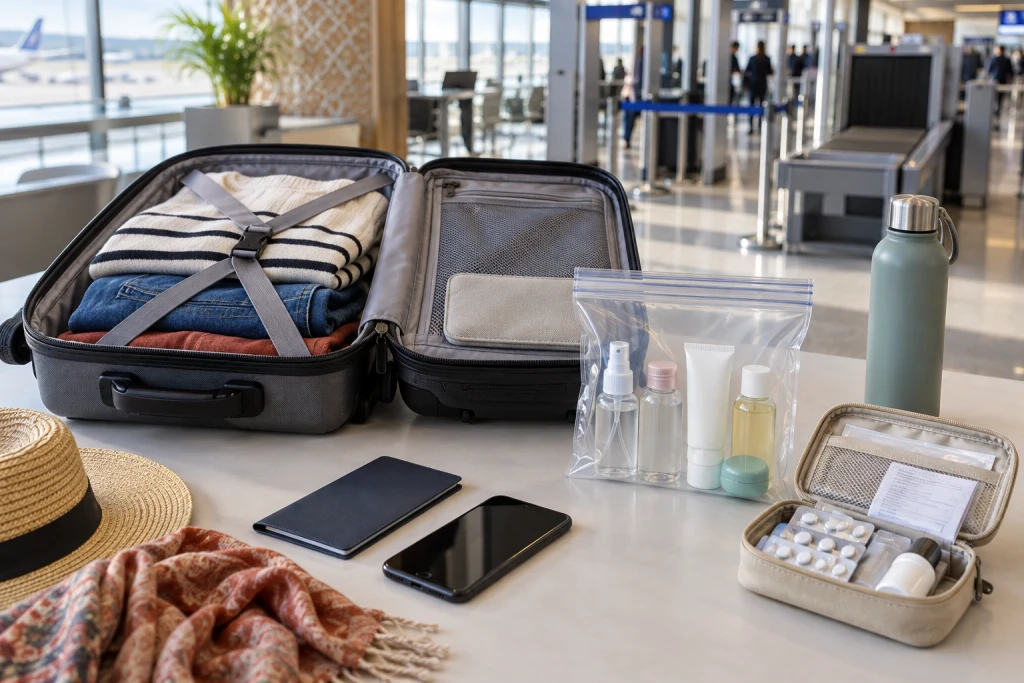
ONDA states that liquids, aerosols and gels must be carried in containers with a maximum capacity of 100 ml. Those containers must fit inside one transparent, resealable plastic bag with a maximum capacity of one litre.
A large bottle that is only partly full does not meet that rule: the container’s capacity matters. An empty reusable bottle can be carried and filled later where terminal rules allow.
Know what may count as a liquid
The category is broader than water and drinks. Creams, gels, pastes, aerosols and mixtures with similar consistency may be included. Preparing the transparent bag before arrival makes it easier to present without unpacking everything.
Products bought after screening or kept in a sealed security bag can be covered by specific exemptions. Keep the receipt and leave the bag sealed until all relevant controls are complete, especially during a connection.
Carry medicines without improvising
Casablanca Mohammed V airport’s FAQ says that medicines or medical products needed during the journey may be accepted in cabin baggage, including a container larger than 100 ml. They are checked at security, and travellers may need to demonstrate their necessity with a prescription or certificate.
Keep supporting documents with the treatment, preferably in a form that can be understood during the journey. Rules may differ at the destination: a medicine permitted in Morocco is not automatically permitted elsewhere. When uncertain, seek advice from a qualified professional and the relevant authorities before departure.
Remove sharp items from hand luggage
ONDA lists pocket knives, scissors, knives, cutters, weapons and items that could be treated as weapons among articles that should not be placed in cabin baggage. Detailed rules may consider an item’s form and blade length.
The practical approach is not to search for the limit by a millimetre, but to remove anything ambiguous. A sharp craft souvenir remains a sharp object at screening, even when it was not bought for use as a tool.
Organise the security check before joining the line
Keep the liquid bag, electronic devices and medical documents accessible. Remove keys and metal objects from pockets, and follow instructions from security staff at the inspection point.
Local procedures can vary with equipment, terminal and security level. The officer present has operational authority at the time of screening. Clear preparation makes the exchange easier without guaranteeing acceptance of a particular item.
Leave a margin during connections
A connection may require another security check, including after a purchase at the first airport. Sealed security bags, receipts and intact packaging then become important.
Do not calculate connection time only from the walk between two gates. Border control, possible baggage collection and another screening point can change the journey through the airport.
Make one final check the day before
Read the allowance shown on the ticket, consult the airline’s information and check the airport’s official pages. Separate items that must remain accessible from those that can travel in the hold.
A short list is enough: baggage format, small containers, transparent bag, treatment documents, no sharp item and a sensible arrival margin. That preparation leaves more attention for the journey itself.
Dated guidance, decision at the checkpoint
This article is based on ONDA information consulted on 12 September 2026. Published guidance can be clarified or strengthened, and a particular situation may require additional inspection.
MOP cannot confirm that a product will be admitted in place of the airport, airline or security authority. The guide helps you prepare coherent baggage; the operational decision remains with the screening team.
Complete the check with MOP’s guide to mobile boarding passes and the offline departure file.