Entry requirements determine whether a journey is possible; a departure file makes the journey executable without searching for every detail at the wrong moment. It brings valid documents, useful bookings, addresses, contacts and fallbacks into a format that remains available when a phone has no signal.
This guide complements MOP’s Morocco entry requirements rather than replacing an authority. Rules depend on nationality and personal circumstances, so the relevant Moroccan consular source and carrier must be checked before departure.
Verify identity before the bookings
Compare names, passport number and validity across every booking. Morocco’s embassy in France explains that a foreign visitor needs a current travel document recognised by Morocco and, where the nationality requires it, the appropriate visa. Never infer an exemption from a forum or another traveller’s experience.
Inspect the physical passport as well. ONDA asks passengers to use a readable, undamaged document. If a visa or electronic authorisation is required, use only the official portal indicated by the authorities and make sure every entry matches the passport exactly.
Create one master journey sheet
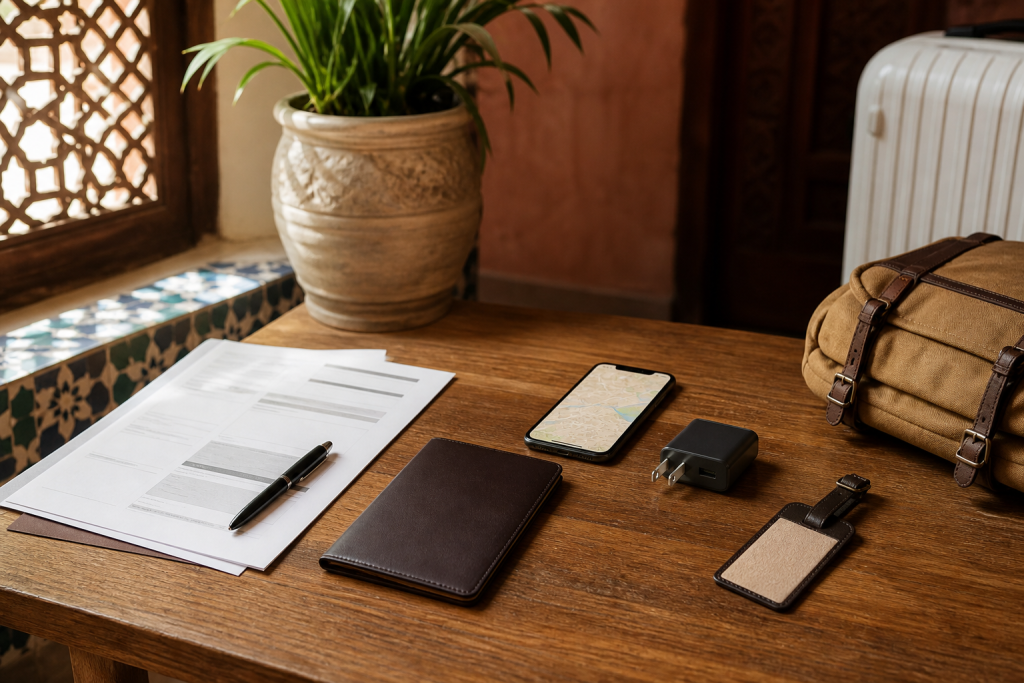
Build a short page listing flights or sailings, terminals, first addresses, working contacts and the next fixed movement. Include booking references without copying card data. A simple chronology prevents confusion between local time, departure time and a carrier’s check-in deadline.
Save the sheet as an offline PDF and print a limited copy containing only what is needed. A trusted person can receive the broad itinerary, not an unnecessary collection of identity files. Lock devices that hold sensitive documents and remove shared copies once they are no longer needed.
Separate original, copy and backup
Keep the original passport accessible during the journey. A copy never replaces an official document, but it can help identify references after loss. Store one copy separately from the passport and bookings, then keep an encrypted backup that can be reached from another trusted device.
Record the consulate or embassy relevant to your nationality, the insurer and an emergency contact. Never post a passport photograph in an uncontrolled group chat or shared folder.
Reconcile luggage with carrier rules
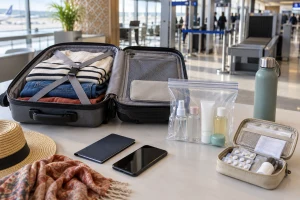
ONDA advises travellers to confirm weight and size limits with the airline because allowances can differ, especially across connections. Remove old labels, identify the bag and retain medication, prescriptions and valuables in personal luggage where the applicable rules allow it.
Review security and liquid restrictions before closing the bag. The carrier remains the reference for special equipment, batteries, pushchairs and mobility aids. Never accept a parcel from another person for transport.
Prepare arrival and the first night
Download the complete address, a map of the final approach and the property contact. For a medina, request the correct gate or drop-off; for a late arrival, confirm reception and the delay procedure. Read MOP’s destination guide before comparing accommodation.
Leave a margin between arrival and any paid activity. Immigration, baggage or ground transport can take longer than expected. A sensible first night is stronger planning than a non-refundable schedule that assumes a perfect arrival.
Perform the final check in three stages
Seventy-two hours before travel, revisit the authorities, carrier and bookings. The day before, download documents, charge devices and confirm the terminal. When leaving home, make one physical check: passport, payment method, medication, telephone and arrival address.
Do not accumulate outdated screenshots for changing information. Replace them with the latest confirmation and record when it was checked. This distinction separates an official current fact from a personal copy that may already be obsolete.
Sources consulted
- Embassy of the Kingdom of Morocco in France, visitor formalities: https://fr.diplomatie.ma/visiter-le-maroc-formalit%C3%A9s-et-proc%C3%A9dures-pour-les-visiteurs-internationaux
- ONDA, travel documents: https://www.onda.ma/en/I-am-passenger/Formalities/Travel-documents
- ONDA, luggage rules: https://www.onda.ma/en/I-am-passenger/Traveller-Guide/Luggage
- ONDA, security and customs: https://www.onda.ma/en/I-am-passenger/Formalities/Security-and-Customs