Moroccan architecture, both majestic and imbued with spirituality, is among the most fascinating in the world. Also read: Morocco’s cultural and natural riches. Its richness lies in a blend of Berber, Arab, Andalusian and African influences, expressed through buildings, mosques, palaces and riads. Discover Morocco’s architectural treasures, which embody the soul and history of the country.
Medinas: A Labyrinth of Heritage
Moroccan medinas, with their narrow lanes and dense architecture, are living remnants of the past. Fez, Marrakech and Meknes, three imperial cities, are home to Morocco’s most famous medinas, which are listed as UNESCO World Heritage Sites. These old districts consist of terracotta houses, colourful souks and finely carved doors. Around every corner, a new facet of traditional Moroccan life is revealed. Exploring a medina means entering a world of artisans, bustling markets and historical heritage.
Riads: Havens of Peace and Refinement
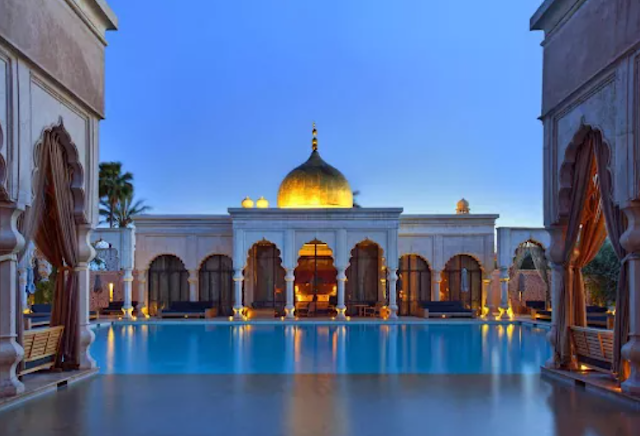
Riads, traditional houses with a garden or inner courtyard, are architectural wonders typical of Moroccan medinas. Their layout is designed to keep them cool in summer and provide their residents with an oasis of tranquillity. Riads are characterised by their zellige tiles (mosaic tiles), stucco and arches, often adorned with intricate details and geometric patterns. Today, many riads have been converted into guesthouses, allowing visitors to enjoy an authentic experience at the heart of Moroccan architecture.
Royal Palaces: Splendour and Grandeur
Moroccan royal palaces, such as the Bahia Palace in Marrakech or the Royal Palace of Rabat, illustrate the opulence of Moroccan architecture. Although reserved for official events, these buildings stand out for their impressive size, lush gardens and sumptuous decorations. Inside are rooms adorned with cedarwood ceilings, multicoloured zellige tiles and stucco stained-glass windows. These palaces embody the refinement of Moroccan craftsmanship and attest to the importance of architectural art in Moroccan royal culture.
Mosques: Places of Contemplation and Beauty
Moroccan mosques are architectural masterpieces combining spirituality and art. The Hassan II Mosque in Casablanca, one of the largest in the world, is a striking example, with its 210-metre-high minaret and meticulous decorations. The Karaouiyine Mosque in Fez, meanwhile, is one of the oldest universities in the world, founded in the 9th century. Its patios, columns and Andalusian arches attest to the importance of mosques not only as places of prayer, but also as centres of learning and culture.
Kasbahs and Ksours: Symbols of Berber History
In Morocco’s desert regions, kasbahs (fortresses) and ksours (fortified villages) bear witness to Berber history and the resilience of local populations in the face of harsh conditions. The Kasbah of Aït Ben Haddou, listed as a UNESCO World Heritage Site, is an emblematic example. Built from rammed earth (a mixture of earth and straw), this kasbah provides a striking setting and attracts many visitors and filmmakers every year. These fortifications with crenellated towers, nestled in desert landscapes, are powerful symbols of Berber history and culture.
Moroccan Gardens: Nature and Architecture in Harmony
Moroccan gardens, such as the Majorelle Garden in Marrakech, are spaces where nature and architecture come together in perfect harmony. Inspired by Islamic gardens, these spaces are designed to offer coolness and serenity, with shaded paths, pools and exotic plants. Gardens often surround mosques, riads and palaces, recalling the importance of nature in Moroccan culture. They are a tribute to beauty and tranquillity, offering a chance to recharge amid the architecture.
Andalusian Influences: An Immortal Legacy
Andalusian influence is omnipresent in Moroccan architecture, inherited from the period of Muslim Andalusia. Patios, arches, inner courtyards and geometric patterns are some of its distinctive features. This influence can be admired in buildings such as the Bou Inania Madrasa in Fez or the Ben Youssef Madrasa in Marrakech. These buildings stand out for their refined architecture and symbolism, linking two cultures and two eras.
Moroccan Architecture with a Thousand Faces
Moroccan architecture is a fascinating world where every detail tells a story and every building embodies the soul of the country. Whether ancient or modern, urban or rural, these buildings symbolise Morocco’s cultural diversity. They attract art enthusiasts, visitors and architects from around the world who come to explore and admire a unique architectural heritage.