Arabic calligraphy in Morocco is much more than simple writing; it is a sacred art that blends aesthetics and spirituality. Rooted in Moroccan history and culture, this form of artistic expression occupies a central place in the country’s architecture, manuscripts and decorative objects. Let us delve into the heart of Moroccan Arabic calligraphy to discover its origins, iconic styles and cultural importance.
The Origins of Arabic Calligraphy in Morocco
Arabic calligraphy has its roots in the Islamic Empire, where it was used to transcribe the Quran with unrivalled precision and beauty. See also: Morocco, between heritage and landscapes. In Morocco, this tradition was enriched by Berber, Andalusian and African influences, creating unique styles that reflect the country’s cultural diversity. Moroccan artisans have preserved and adapted this art form over the centuries, making calligraphy a symbol of Moroccan identity.
Moroccan Arabic Calligraphy Styles
Kufi
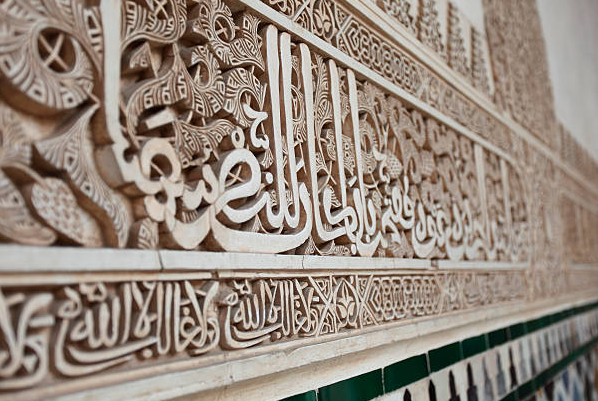
The Kufi style, originating in the ancient city of Kufa in Iraq, is one of the oldest styles of Arabic calligraphy. In Morocco, Kufi is distinguished by its straight, angular lines, often used to decorate mosques and historic monuments. This style imposes symmetry and a rigorous structure, reflecting the majesty and solemnity of sacred places.
Naskh
Naskh is a more fluid and legible style of calligraphy, often used in manuscripts and official documents. In Morocco, Naskh evolved to include decorative elements specific to Moroccan art, incorporating floral and geometric motifs that embellish the text while maintaining its legibility.
Thuluth
Known for its balanced proportions and elegant lines, Thuluth is often used for monumental inscriptions and artistic decorations. In Moroccan architecture, Thuluth adorns mosque walls, palace doors and fountains, adding a touch of sophistication and grace.
Calligraphy in Moroccan Architecture
Arabic calligraphy is omnipresent in Moroccan architecture, where it is used to decorate the walls, ceilings and doors of buildings. Mosques, in particular, are places where calligraphy is showcased through Quranic verses and artistic inscriptions. For example, the Hassan II Mosque in Casablanca is famous for the magnificent calligraphy adorning its façades and interiors, creating a spiritual and aesthetic atmosphere.
Calligraphy in Manuscripts and Books
Moroccan manuscripts are true treasures of Arabic calligraphy. Calligraphy workshops, often located in historic medinas, produce beautifully decorated copies of the Quran and other religious texts. These manuscripts are often enhanced with gilding, floral motifs and geometric designs, demonstrating the exceptional expertise of Moroccan calligraphers.
Calligraphy as a Contemporary Artistic Expression
Today, Arabic calligraphy in Morocco continues to evolve, adapting to modern trends while preserving its traditional roots. Contemporary artists explore new forms and techniques, incorporating calligraphy into modern artworks, installations and digital creations. This fusion of tradition and innovation allows Arabic calligraphy to remain alive and relevant in Morocco’s current artistic landscape.
Learning Arabic Calligraphy in Morocco
For those wishing to begin learning this art, Morocco offers many opportunities. Specialised schools and workshops offer calligraphy courses led by master calligraphers. These courses enable students to master the different techniques and styles while discovering the history and profound meaning of Arabic calligraphy.
Calligraphy as Cultural Heritage
Arabic calligraphy is an essential element of Moroccan cultural heritage. It embodies the fusion of art and faith, reflecting Moroccans’ spiritual devotion and artistic expression. By preserving and promoting this tradition, Morocco ensures that its cultural legacy is passed on to future generations while enriching world heritage.