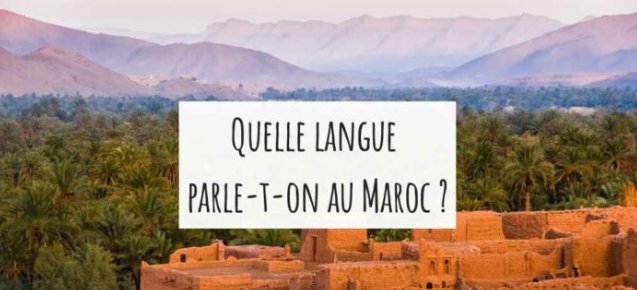
Morocco, at the crossroads of the Arab, Berber and African worlds, is a country where language is much more than a simple means of communication. Also read: an overview of Morocco’s riches. A true cultural treasure, Morocco’s linguistic diversity bears witness to the Kingdom’s complex and rich history. From Darija to Amazigh, as well as French and Classical Arabic, each language and dialect embodies a facet of Moroccan identity. Let us explore this linguistic mosaic, which is essential to Morocco’s culture and traditions.
Darija: The Language of Everyday Life
Darija, or Moroccan Arabic, is the language of everyday life in Morocco. It is a unique dialect, born from the fusion of Classical Arabic with Berber, French, Spanish and even Portuguese influences. Used in daily conversations, popular media and social networks, Darija is a vibrant and dynamic means of expression for the majority of Moroccans.
Although Darija differs from the Classical Arabic used in other Arabic-speaking countries, it retains a structure familiar to Arabic speakers while having distinct phonetics and vocabulary. Today, increasing amounts of audiovisual and literary content are produced in Darija, highlighting its cultural importance and growing popularity among young people.
Amazigh: An Ancient Language with Deep Roots
Amazigh, or the Berber language, is a fundamental component of Moroccan identity. Present long before the arrival of Arabic in Morocco, Amazigh is spoken in several regions of the country, with dialect variants such as Tarifit (North), Tamazight (Centre) and Tachelhit (South). In 2011, Morocco recognised Amazigh as an official language alongside Arabic, a powerful gesture underscoring the essential place of this language in Moroccan cultural heritage.
Amazigh is not only a means of communication, but also a strong link to ancestral customs and traditions. Today, the promotion of this language is reflected in initiatives in schools, television programmes and even literary works in the Tifinagh alphabet, the age-old script used to write this language.
Classical Arabic: The Language of Education and Religion
Classical Arabic, or Literary Arabic, is the official language of Morocco. Used in formal contexts, education, government administration and religious practices, Classical Arabic plays a central role in the Kingdom’s public life. It is also the language of official media and literature, thereby contributing to linguistic unity with the other countries of the Arab world.
Although less commonly used in everyday conversation, Classical Arabic remains important in the academic and cultural spheres. Many Moroccan literary works, as well as newspapers and news websites, are published in Literary Arabic, helping to maintain a strong connection with the wider Arab culture.
French: A Legacy and the Language of Modernity
French has been deeply rooted in Moroccan society since the protectorate era. Although it is not an official language, it is widely used in education, business, science and the media. French is often the language of instruction in universities and schools, particularly for scientific and technical subjects.
Today, French retains a strong presence, particularly in urban areas and among younger generations. Many Moroccans are bilingual in Arabic and French, and this linguistic proficiency opens professional and cultural doors, making Morocco a country where multilingualism is a genuine asset.
Spanish: A Distinctive Influence in Northern Morocco
In the regions of northern Morocco, particularly Tangier, Tetouan and Chefchaouen, Spanish is widely spoken. This influence is explained by the geographical proximity to Spain and the history of the Spanish protectorate in these regions. Although Spanish is less commonly used than French in the rest of the country, it is taught in schools and remains a valued language, particularly in tourism and cultural exchanges with Spain.
English: The New Language of Young People
English is becoming increasingly popular in Morocco, especially among younger generations and in the technology and business sector. More and more Moroccans are learning English, aware of the language’s importance worldwide. Moroccan universities and schools now offer courses in English, and many young people are embracing the language through social media and television series.
Why Linguistic Diversity Is Crucial to Moroccan Culture
Morocco’s linguistic diversity reflects its history and its culture, which is open to multiple influences. This plurality of languages allows Moroccans to embrace different cultural perspectives and preserve a unique heritage. Interaction between these languages fosters mutual enrichment and gives Morocco a valuable cultural asset in an increasingly globalised world.
A Rich Heritage to Preserve and Promote
The diversity of languages and dialects in Morocco is a precious heritage that deserves to be preserved and promoted. Each of these languages—whether spoken daily, taught or passed down through traditions—is a facet of the Moroccan soul, a bridge between past, present and future. In this context, education and awareness play a crucial role in encouraging young people to learn and embrace this linguistic heritage.