Morocco’s medinas, with their winding alleyways, their colourful souks and their centuries-old buildings, are much more than mere historic centres: they embody the soul of the country, blending tradition, art and daily life. Several of these stone labyrinths are listed as UNESCO World Heritage Sites and continue to fascinate visitors and residents with their architectural and cultural richness. Let us discover the history and distinctive artistic features of these urban gems, true witnesses to Moroccan heritage.
A Rich History Spanning a Thousand Years
Morocco’s medinas, particularly those of Fez, Marrakech, Meknes and Essaouira, are living witnesses to the evolution of Moroccan civilisation. Their history sometimes dates back more than a thousand years, to a time when these cities were dynamic political, cultural and commercial centres. Built to defend city dwellers against external attacks, the medinas gradually evolved into neighbourhoods where traditions and expertise were passed down from generation to generation.
Each medina bears the mark of the dynasty that founded or shaped it. For example, the medina of Fez, founded in the 9th century, prospered under the Almoravids and Marinids, who left magnificent monuments there, such as the Al-Qarawiyyin Mosque, one of the oldest universities in the world.
Unique Architecture Blending Styles and Heritage
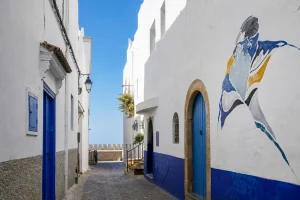
The architecture of Morocco’s medinas is a skilful blend of Islamic, Andalusian, Berber and Moorish influences. Terracotta buildings, carved wooden doors, colourful mosaics (zellige), inner courtyards and stone fountains are all characteristic features of these neighbourhoods. The medinas’ thick walls, painted ochre or white depending on the region, create a unique atmosphere and protect the alleyways from the sun’s heat.
The medina of Marrakech, with its imposing Koutoubia minaret, lush gardens and lively souks, perfectly illustrates this architectural diversity. The medina of Chefchaouen, famous for its houses with sky-blue walls, offers a distinctive style that attracts visitors from around the world. This aesthetic richness makes the medinas essential destinations for art and history enthusiasts.
The Souks: The Pulse of Daily Life
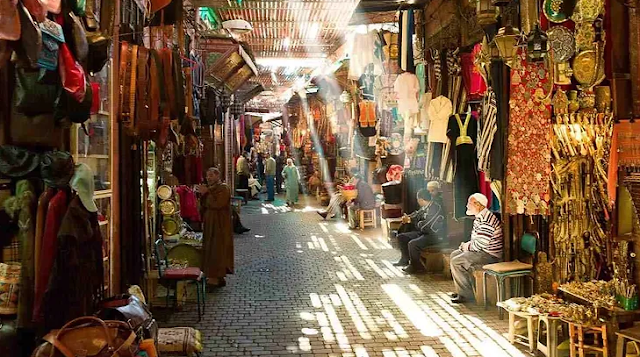
At the heart of each medina, the souk is a place of intense activity where artisans, merchants and local residents mingle. A true centre of exchange, the souk reflects the local economy and Moroccan culture. Everything can be found here: from Berber rugs to spices, from handcrafted lamps to traditional clothing such as the caftan or djellaba, not to mention babouches and leather goods.
The souks are also places for socialising, where residents meet to exchange news, discuss events in the city and share mint tea. In the medinas of Marrakech and Fez, the souks are divided by trade, with each district bringing together artisans according to their speciality, whether dyers, potters or blacksmiths.
Craftsmanship: A Living Heritage
Moroccan craftsmanship is one of the medinas’ greatest treasures. Traditional production techniques, passed down from master to apprentice, turn the medinas into genuine open-air workshops. Visitors can watch artisans at work, whether weaving rugs, carving wood, making silver jewellery or shaping ceramics.
This ancestral expertise is not merely a means of earning a living; it also embodies Moroccan cultural identity. Exploring the medinas reveals a living craft heritage, combining innovation and tradition, in which every object has a history and meaning. Also read: Morocco, between heritage and landscapes.
Daily Life: Between Tradition and Modernity
Despite the influx of tourists, Morocco’s medinas remain authentic places to live, where traditions continue to shape residents’ daily lives. Many families still live in these historic neighbourhoods, perpetuating customs inherited from their ancestors. The medinas also host religious celebrations, such as Ramadan and Eid, as well as cultural events that enliven these places throughout the year.
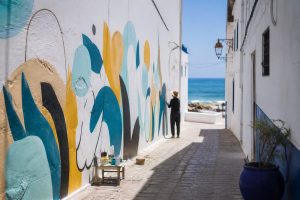
Although the medinas have preserved their traditional character, they are not frozen in the past. Increasing numbers of modern cafés, art galleries and concept stores are opening, offering visitors a fascinating blend of local authenticity and modernity. The medinas of Marrakech and Essaouira, in particular, have become epicentres of contemporary art and attract creators from around the world.
The Medinas and Tourism: A Double-Edged Impact
The growth of tourism has brought new economic momentum to the medinas, but it has also created challenges for heritage preservation. The influx of visitors allows artisans to prosper, but it also raises questions about preserving the authenticity of these places and managing the environment. Several local and international initiatives aim to preserve the integrity of the medinas by restoring historic buildings and promoting sustainable tourism.
The Medinas, Morocco’s Cultural Gems
Morocco’s medinas, with their impressive architecture, lively daily life and wealth of craftsmanship, are living symbols of Moroccan heritage. These historic neighbourhoods continue to tell the story of the Kingdom while adapting to modern realities. Exploring a medina means immersing yourself in a world of unique colours, sounds and scents, where past and present meet harmoniously.