Moroccan art is a vibrant world of colours and patterns, with every shade and design holding a profound meaning. In Moroccan ceramics, rugs, clothing and architecture, colours and patterns express cultural values, spiritual beliefs and centuries-old stories. This article invites you to discover this unique visual language and explore the meanings behind the patterns and colour palettes that define Moroccan art.
Colours in Moroccan Art: A Symbolic Palette
Colour is a fundamental element of Moroccan art, with each shade carrying powerful symbolism. Colour choices are never insignificant and often vary according to region, material and cultural intent.
Red:
Associated with passion, life and power, red is ever-present in Berber rugs and traditional architecture. This colour often evokes protection and strength, and it is regarded as a shade of good luck and positive energy.
Blue:
Representing tranquillity and spirituality, blue is ever-present in the lanes of Chefchaouen and mosaic decorations. In popular belief, blue acts as a symbol of protection by warding off evil spirits.
Green:
The colour of Islam, green is sacred and often used in religious art. It is also a symbol of growth, nature and renewal because of its association with Morocco’s lush landscapes. Also read:
Morocco, between heritage and landscapes.
Yellow and Gold:
Representing light and wisdom, these colours are often used for decorative elements in crafts and textiles. They also evoke prestige and wealth.
Black and White:
The contrast between black and white often symbolises the duality of life: shadow and light, good and evil. Used together, they create harmony in the geometric patterns of zellige tiles and rugs.
Geometric Patterns: An Art of Symmetry and Balance
Geometric patterns are one of the hallmarks of Moroccan art. Islamic tradition favours abstract and repetitive forms, creating a visual balance in which each pattern blends harmoniously.
Stars:
Symbols of unity and divine perfection, eight- or sixteen-pointed stars are ever-present in Moroccan mosaics. Each point represents a spiritual principle, uniting art and faith.
Rosettes and Flowers:
These floral patterns evoke nature and symbolise fertility, life and divine beauty. They bring a touch of softness to zellige tiles and engravings.
Squares and Diamonds:
These geometric shapes are symbols of protection. Indeed, diamonds and squares were traditionally believed to ward off evil spirits and protect homes.
The “Hand of Fatima” (Khamsa) :
Widely featured in jewellery, the khamsa represents protection against the evil eye and brings good luck. It is a powerful symbol of Moroccan craftsmanship, particularly in jewellery making.
Amazigh Art: Ancestral Patterns and Rituals
Amazigh art is rich in symbols and patterns passed down from generation to generation. Engraved into jewellery, rugs and pottery, these patterns tell the stories of tribes, their relationship with nature and their spiritual beliefs.
Berber Rugs:
The patterns on Berber rugs are unique and vary from one region to another. Zigzag patterns symbolise water and fertility, while triangles and diamonds represent femininity and protection. Each rug is a genuine “map” of family history and significant events.
Jewellery and Tattoos:
Amazigh people use symbols for protection and spiritual connection with nature. Berber tattoos, often shaped like triangles or lines, are a form of visual language that protects, heals or emphasises the identity of the person wearing them.
Symbolism in Architecture: Between Spirituality and Aesthetics
Moroccan architecture is rich in symbolic patterns, transforming each building into a spiritual work of art. Zellige tiles, arabesques and mashrabiya screens are elements of undeniable visual beauty, but they also carry meaning.
Zellige Tiles:
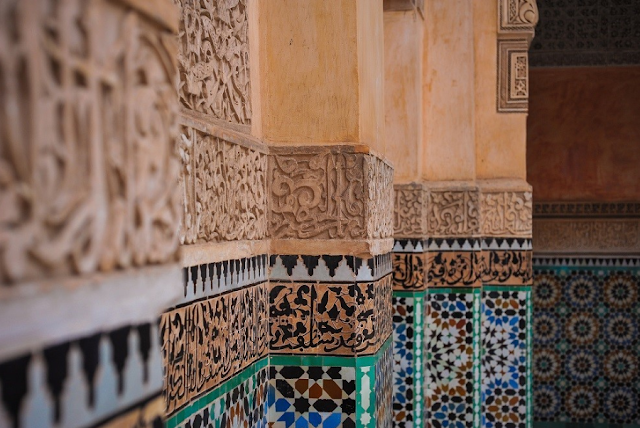
These colourful, geometrically shaped mosaics are ever-present in mosques, palaces and riads. Star and rosette patterns symbolise the unity and structure of the universe, creating a spiritual and soothing atmosphere.
Mashrabiya Screens:
These carved wooden windows, which allow people to see without being seen, symbolise privacy and protection. They create an interplay of shadow and light, recalling the duality of the physical and spiritual worlds.
Columns and Arches:
Twisted columns and horseshoe arches recall Andalusian and Islamic influences. They are often decorated with floral patterns or calligraphic verses, combining aesthetics with spiritual meaning.
Moroccan Art, a Profound and Universal Language
The richness of Moroccan art lies in its colours and patterns, which tell the story of a country where tradition and modernity meet. The symbols used in crafts, textiles and architecture are not merely decorations, but messages, prayers and forms of protection.
Through this art, Morocco shares with the world a unique identity, vibrant with harmony and stories. Every colour and every pattern is an invitation to immerse yourself in Moroccan symbolism and appreciate the cultural depth that makes this art so fascinating and timeless.