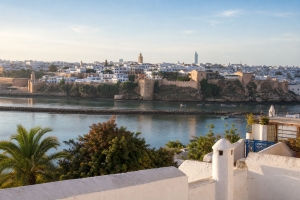
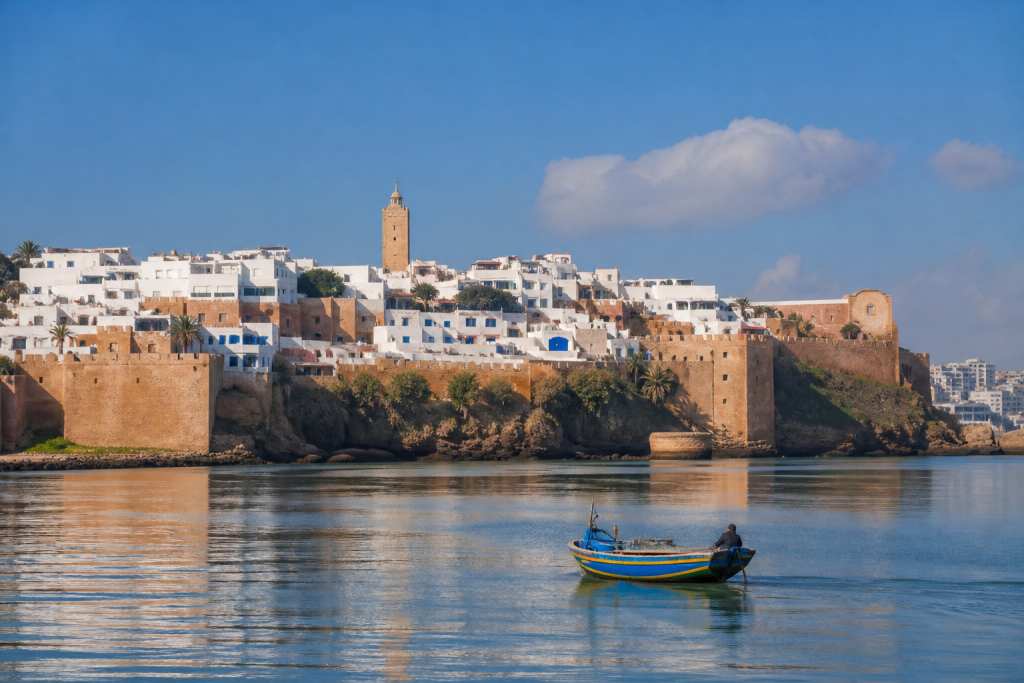
Rabat combines Almohad heritage, Andalusian inheritance, a twentieth-century city and capital functions. Sale, across the Bouregreg, has its own history. Linking them needs geography rather than a list.
This guide promises neither permanent opening hours nor guaranteed access. It offers a way to plan: understand distances, separate the city from its excursions, book only what adds clear value and check conditions shortly before travel. Future MOP commercial selections must remain readable, comparable and consistent with that editorial framework.
Understand the territory before booking
The UNESCO property includes old areas and the modern city. Oudayas, Hassan and Chellah are not adjacent. Tram and river crossings help build a coherent reading.
A map and an honest duration are more useful than a checklist. The three anchors are the Oudayas, the Hassan-Chellah axis and the Bouregreg toward Sale. They do not have to fit into one day. The aim is to preserve time to observe, walk and understand, without treating every transfer as invisible time.
Build a realistic pace
Keep the first day for medina, Oudayas and river. Use the second for Hassan, Chellah and modern Rabat, adding Sale only when time remains.
Keep at least one unscheduled period. It can absorb changing weather, a longer visit or a delayed journey. Unallocated time is also a quality signal: a credible programme says what it deliberately leaves out and does not describe every detour as essential.
First sequence: begin with context
Begin at the Oudayas and notice gates, gardens and river relationship. The neighbouring medina is inhabited; residential streets are not a monument extension.
Start early without rushing. Choose a clear return point, notice how spaces are actually used and ask before photographing a person, workshop or interior. A guided visit can make sense when the guide is licensed, the duration is stated and the content goes beyond a route through shops.
Second sequence: deepen rather than accumulate
Hassan, the mausoleum and Chellah connect several periods. Check each access and divide time; gardens and archaeology deserve more than a last-minute arrival.
The second sequence should add a different landscape, district or practice rather than repeat the first promise. Confirm access conditions and opening times with the relevant site or operator. Variable information is never presented as permanent in this guide.
Add an excursion only when it fits the day
Sale offers a counterpoint, not extra scenery. Cross with a clear purpose and return. A river ride does not replace understanding both cities.
Before paying, ask for the exact departure point, real time on site, vehicle, group size and cancellation terms. A useful excursion makes distance visible. It does not use a spectacular photograph to conceal several hours on the road or a visit reduced to a short stop.
Move around without multiplying transfers
The tram simplifies several links but walking remains. Identify the exact station, connection and useful last service. For Chellah, check final access from the stop.
Group visits by area and keep a margin for the return. For a taxi or private transfer, agree on price, waiting time and pickup point. For a rental car, check parking, insurance, road conditions and night driving before building the itinerary.
Choose the season and equipment
The coast can be windy and archaeological areas exposed. Adapt walking and sun protection. Events can alter roads and access, so use recent information.
Use a recent forecast rather than an annual average. Carry water, sun protection and a layer suited to wind or temperature changes. For sea and mountain activities, the local instructions of the day take priority over an editorial description, even when conditions appear calm.
Decide where to stay
Near the station, regional journeys are simple; around the medina, heritage sequences are close. Compare noise, station and actual tram distance.
Compare the real address, access time, cancellation conditions, recent reviews and services actually included. MOP will not confuse proximity on a map with easy access on the ground. A commercial recommendation must explain who it suits, its limitations and the exact reason it was selected.
Assess a commercial experience
A heritage tour should separate evidence from anecdote. A river trip must state duration, boarding and weather. No official access should be presented as permanent.
A sound offer documents the provider, duration, meeting point, language, insurance where relevant and remaining costs. The cheapest price is not always the best choice. An activity may be editorially relevant without being commercially recommended until these details can be verified.
Reduce the impact of the stay
Use the tram, respect memorial places and limit noise in residential areas. Select purchases and meals for traceable origin rather than capital-city staging.
Use authorised access, take waste away and limit noise. Do not buy wildlife, plants or objects described as old without clear provenance. In inhabited places, daily life takes priority over photography; in natural areas, the siteʼs fragility takes priority over finding a dramatic viewpoint.
Points of caution
Temporary closures, heat and traffic can change order. Keep an urban alternative and never cross a closed official area.
Decline an activity when conditions, insurance or the return remain unclear. Tell someone your plan for an isolated outing and keep a simple alternative. This caution does not diminish the experience: it allows attention to remain on the place rather than on improvised logistics.
Practical checklist
- Check opening, closures and access on a recent official source.
- Confirm total price, meeting point, duration and cancellation before payment.
- Distinguish an independent walk from an activity requiring a guide, equipment or insurance.
- Allow a transport margin and keep a simple alternative.
- Respect residents, workers, paths and local instructions.
Sources consulted
- https://www.visitmorocco.com/fr/voyage/rabat
- https://www.visitmorocco.com/fr/voyage/rabat/medina
- https://whc.unesco.org/en/list/1401/