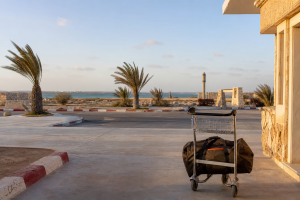
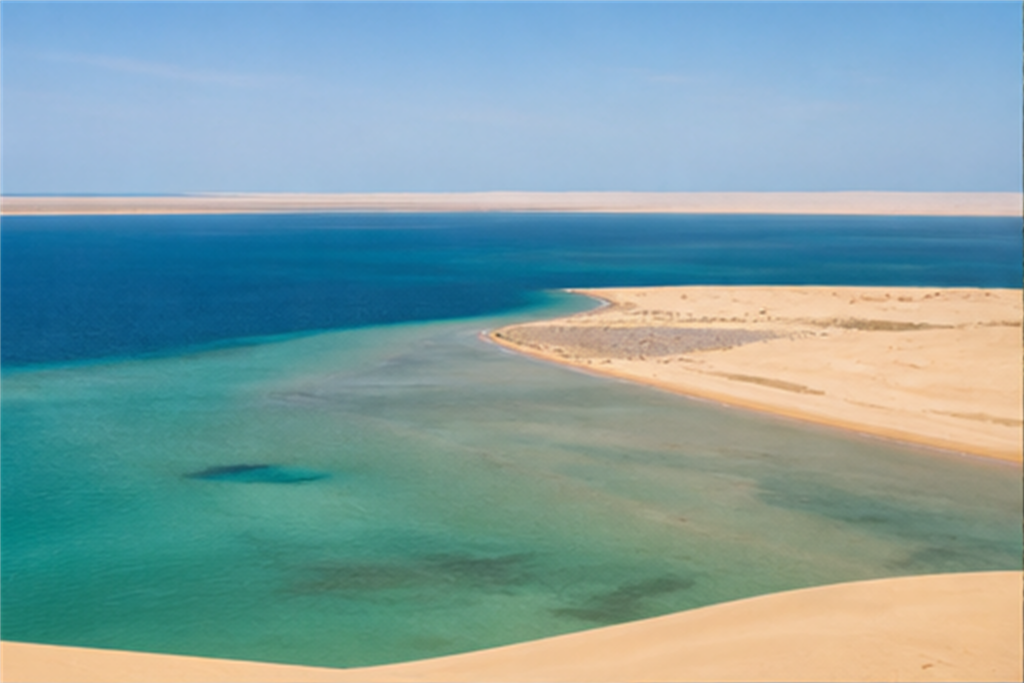
Dakhla lies on a long peninsula between the Atlantic and the Sahara. The destination is famous for its wind and kitesurfing, but its geography deserves a broader stay: the port city, lagoon, sandbanks, cliffs, desert and Saharan cultures are discovered at different paces.
The distances from the north of the country are considerable. A credible itinerary therefore begins with transport and the choice between accommodation in the city or by the lagoon. It continues with excursions whose routes, safety conditions and impact on natural environments are clearly stated.
Understand the peninsula before booking
The city of Dakhla occupies the peninsula; several water sports camps are located farther north, beside the lagoon. Staying in the city makes it easier to access restaurants, the market and everyday scenes. Staying in a camp provides direct access to the water but may make every trip into the city dependent on a transfer.
Ask for the exact location, not just the word “Dakhla”. Check the driving time from the airport, shuttle frequency and what is included. A full-board offer beside the lagoon cannot be compared directly with a room in the city.
For a first stay, splitting the nights between the city and the lagoon can work if the transfer is organised. With only two nights, choosing a single base avoids wasting time on changes.
Arrive by air or road
Flying is the most common option from major Moroccan cities. Schedules and frequencies change; check directly with the airline and the National Airports Office. Confirm the transfer with your accommodation, especially for a late arrival.
The road from Agadir is well over a thousand kilometres. It crosses long, sparsely urbanised stretches and should not be treated as a single improvised leg. A vehicle in good condition, fuel, water, breaks and accommodation along the way are essential.
To compare transport options and precautions, also use our guide to getting around Morocco Do not drive at night on an unfamiliar route solely to keep a booking.
Choose the right time
Wind is part of Dakhla’s identity. It attracts board sports enthusiasts but may surprise a traveller who has come only for the beach. Ask the water sports centre about the conditions usually encountered during your chosen month and the level actually required.
Temperatures often remain moderate on the coast, while the sun, glare and dry air require protection, hydration and covering clothing. The desert can experience significant temperature differences between day and evening.
Visitor numbers increase during sporting events and certain holidays. At these times, book equipment, lessons and transfers, without scheduling every hour rigidly: activities dependent on wind or tide need some flexibility.
Discover the lagoon beyond kitesurfing
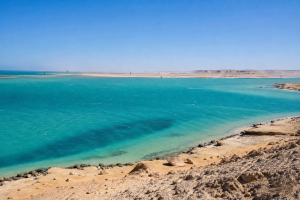
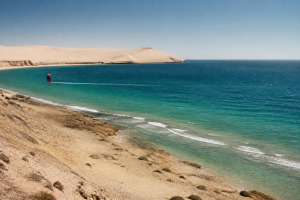
The lagoon offers different perspectives depending on the light and tide. A guided outing may provide an opportunity to observe the sandbanks, birds and shape of the bay. Ask whether the guide maintains observation distances and avoids sensitive areas.
PK25 is known for its calm water and water sports; Foum El Bouir is more open to the Atlantic. These names refer to different environments. Swimming and wind conditions must be checked on site, because a beautiful surface does not guarantee the absence of currents.
Do not approach a marine animal to get a photograph. Do not feed wildlife or ask the boat to pursue a group. Seeing no animals is part of a respectful outing.
Take a land excursion with clear limits
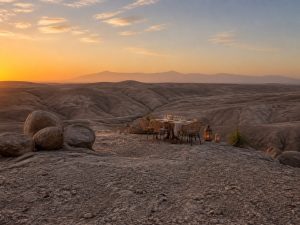
The White Dune, springs and desert landscapes feature in many excursions. Before paying, ask for the exact route, the actual time spent outside the vehicle, the group size and the required permits. A succession of 4×4 journeys is not automatically an immersive experience.
Staying on existing tracks limits marks and erosion. The driver must adapt the speed to other users, animals and the terrain. Refuse a route that enters an area marked as protected or promises to get close to wildlife.
A lunch or tea becomes more worthwhile when the provider explains where the products come from and clearly pays its partners. A staged “nomadic” experience without context is no substitute for a respectful encounter.
Make time for the city
The port, market, residential neighbourhoods and seafront reveal a Dakhla different from the water sports brochures. Walk during the cooler hours, ask before photographing people and respect work areas.
Oysters from the bay are often highlighted. Choose an establishment where the cold chain and hygiene are visible. Fish, seafood and Saharan recipes provide varied meals beyond camp menus.
The city is also the best place to buy water, visit a pharmacy or resolve a SIM card problem. Our SIM and eSIM guide helps you prepare your connection, but coverage must be confirmed for an isolated camp.
Choose a reputable water sports operator
Ask who provides the supervision, what certification they hold, what safety equipment is supplied and how beginners are separated from independent participants. Personal insurance may exclude certain sports; check it before departure.
A helmet, an appropriate buoyancy aid and equipment checks are not optional. The lesson must include right-of-way rules and a recovery procedure. A low price is not worthwhile if supervision disappears once the kite is launched.
For a boat excursion, ask about capacity, communication equipment and the weather policy. The departure must be cancellable or adjustable when conditions deteriorate.
Plan a four-day itinerary
The first day can be devoted to arrival, the city and the seafront. The second allows you to discover the lagoon and, depending on conditions, try a water sport. The third is suitable for a full land excursion, with an early departure and breaks.
Keep the fourth day flexible for a second activity, an accessible beach or rest. This leeway absorbs a change in wind without turning the stay into a race. With more time, add a day in the city or a supervised workshop rather than another long journey.
Do not schedule a long excursion on the morning of a flight. Tracks, weather and a vehicle can cause a delay. Spending the final night near the city simplifies departure.
Budget, bookings and payment
Compare the total price: airport transfer, board, equipment rental, lessons, excursions and drinks. A cheaper camp may become more expensive if every outing requires a private vehicle. Ask for the weather-related cancellation terms in writing.
Keep a backup payment method. Cards are accepted in the city, but cash remains useful; outside the city, do not rely on a permanently available card terminal. The money in Morocco guide provides details on withdrawals and official currency exchange.
Avoid paying a large sum to an intermediary without a verifiable identity. The contract must name the accommodation or operator that will actually provide the service.
Pre-departure checklist
- Exact accommodation location and transfer confirmed.
- Flight times rechecked with the airline.
- Sun protection, windbreaker and warm clothing for the evening.
- Insurance covering the chosen water sports.
- Level, supervision and safety equipment described in writing.
- Water and a backup payment method for outings.
- Excursion limited to authorised tracks and areas.
- No activity on the final day that could cause you to miss the flight.
Sources consulted
- Moroccan National Tourist Office, Dakhla destination: https://www.visitmorocco.com/en/travel/dakhla
- Moroccan National Tourist Office, Dakhla beaches: https://www.visitmorocco.com/en/travel/dakhla/beach
- Moroccan National Tourist Office, nature and lagoon: https://www.visitmorocco.com/en/travel/dakhla/nature
- UNESCO, Dakhla National Park Tentative List: https://whc.unesco.org/fr/etatsparties/ma
- National Airports Office, Dakhla Airport: https://www.onda.ma/