Marjane inaugurated its first hypermarket in Dakhla on October 31, 2026. The store becomes the group’s 45th hypermarket in Morocco. Its opening delivers the first operational component of a broader programme whose other announced elements should not be confused with the facilities already available within the newly opened retail location.
The development is Marjane’s third hypermarket location in the southern provinces. It follows the opening of the Guelmim hypermarket in 2014 and the Laayoune store in 2024. This sequence places Dakhla within the network’s geographic development, without establishing the new site’s commercial performance or determining its effects on local retailers.
A 260 million dirham programme with two phases
The announced overall investment totals 260 million dirhams, but it covers two separate components: the operating hypermarket and a retail park planned for a later phase. It would therefore be inaccurate to describe the entire amount as the cost of the inaugurated store alone. The first phase represents an investment of 180 million dirhams and corresponds to the facility now in operation.
The hypermarket has 4,500 square metres of sales space, excluding the shops in the adjoining gallery. According to the group, it offers more than 30,000 permanent and seasonal product references, including food, fresh goods, appliances, home equipment, clothing, books and textiles. These figures describe the range announced when the store opened.
Projected employment rather than an audited count
Marjane projects more than 200 direct and indirect jobs from the first phase. This number is a company projection, not an independently audited count of people already employed. That distinction is important when interpreting the announcement: it indicates the scale envisaged by the operator, but does not by itself establish how many positions had effectively been created by the opening date.
The complete programme is presented as potentially generating more than 500 direct and indirect jobs across both phases. This total combines the more than 200 jobs projected around the hypermarket with 300 expected from the future retail park. While that second phase remains pending, its employment contribution must be described as a projection and explicitly attributed to Marjane.
A retail park that remains in the planning stage
The announced second phase consists of a retail park covering more than 12,000 square metres, backed by an additional investment of 80 million dirhams. The reviewed sources provide no confirmed opening date. This component therefore remains a future project, unlike the hypermarket inaugurated on October 31, 2026, which constitutes the programme’s completed first phase.
According to Marjane’s presentation, the future development is expected to include national and international brands, restaurants, lagoon-facing cafés, leisure activities and services. This proposed composition remains prospective until the park is completed. It nevertheless clarifies the intended nature of the project and explains why the overall programme exceeds the investment allocated to the hypermarket alone.
Regional sourcing partnerships to be developed
Marjane says it intends to develop sourcing partnerships with regional fisheries operators, cooperatives, and producers of meat, milk and related products. This is a stated company intention. The verified information does not specify how many partners have already been engaged, what volumes may be involved or when these proposed commercial relationships will become operational.
The stated objective is to increase regional sourcing while giving products from the Dakhla area greater visibility and more distribution opportunities. This direction does not yet amount to a verified measure of achieved results. Assessing it would require further information about suppliers effectively listed by the store and the presence of their products within its distribution channels.
Environmental measures scheduled for later
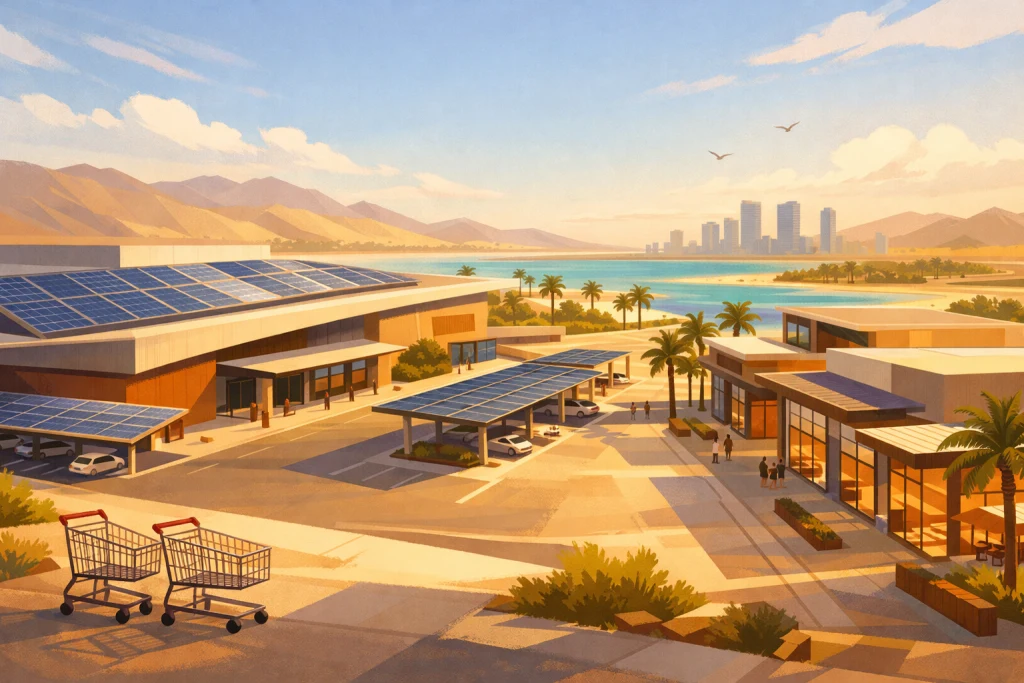
The group plans to install photovoltaic panels at the Dakhla hypermarket during 2027. The equipment was therefore not presented as operational when the store opened. Marjane says 22 of its hypermarkets already use photovoltaic energy and that it aims to extend this technology to every eligible store by 2030. Both points remain company-reported claims and targets.
Marjane also says that reusable crates for fruit and vegetables avoid between 2,000 and 3,000 tonnes of cardboard packaging each year across its network. This estimate is not a result measured specifically at the Dakhla location. It provides context about the practices claimed by the group, but does not establish the individual environmental footprint of the new hypermarket.
What remains to be confirmed
The inauguration establishes the store’s existence, its position within the network, its sales area and the announced division of investment. However, the verified sources do not confirm an opening date for the retail park or turn employment projections and local sourcing intentions into completed outcomes. Accurate coverage must preserve these distinctions between an operational facility, a future project and stated corporate objectives.
The available information also does not document customer traffic, sales, prices, the programme’s financing terms or its effects on local retailers. None of these points can be inferred from the inauguration. Future verifiable milestones include completion of the retail park, installation of the photovoltaic panels planned for 2027 and evidence that the announced regional partnerships have become operational.