The Moroccan caftan is much more than a traditional garment; it is a work of art, a symbol of Moroccan culture and an international fashion icon. Also read: an overview of Morocco’s riches. For centuries, the caftan has evolved while preserving its timeless elegance and refined character. Here is a look back at the history of this legendary garment, its many influences and the transformations that have made it a sought-after piece in the world of haute couture today.
Origins and Early Influences: The Caftan, an Ancestral Heritage
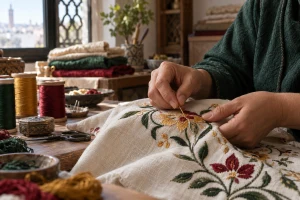
The history of the Moroccan caftan dates back to the era of the Marinid dynasty in the 13th century, when it was worn by members of the royal court and prominent noble families. Inspired by Persian and Ottoman influences, the caftan became a symbol of social status, reserved for royal occasions and ceremonies. Adorned with embroidery and precious stones, from the outset this garment embodied the refinement of Moroccan craftsmanship.
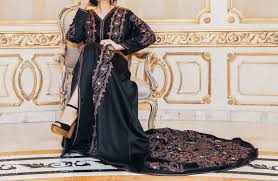
The caftan was also influenced by Andalusian styles, introduced to Morocco with the waves of migration by the Moors from medieval Spain. This cultural blend enriched the caftan’s design with refined details, intricate embroidery and harmonious cuts, giving it a unique and authentic character.
The Moroccan Caftan: From Craft Techniques to Exceptional Details
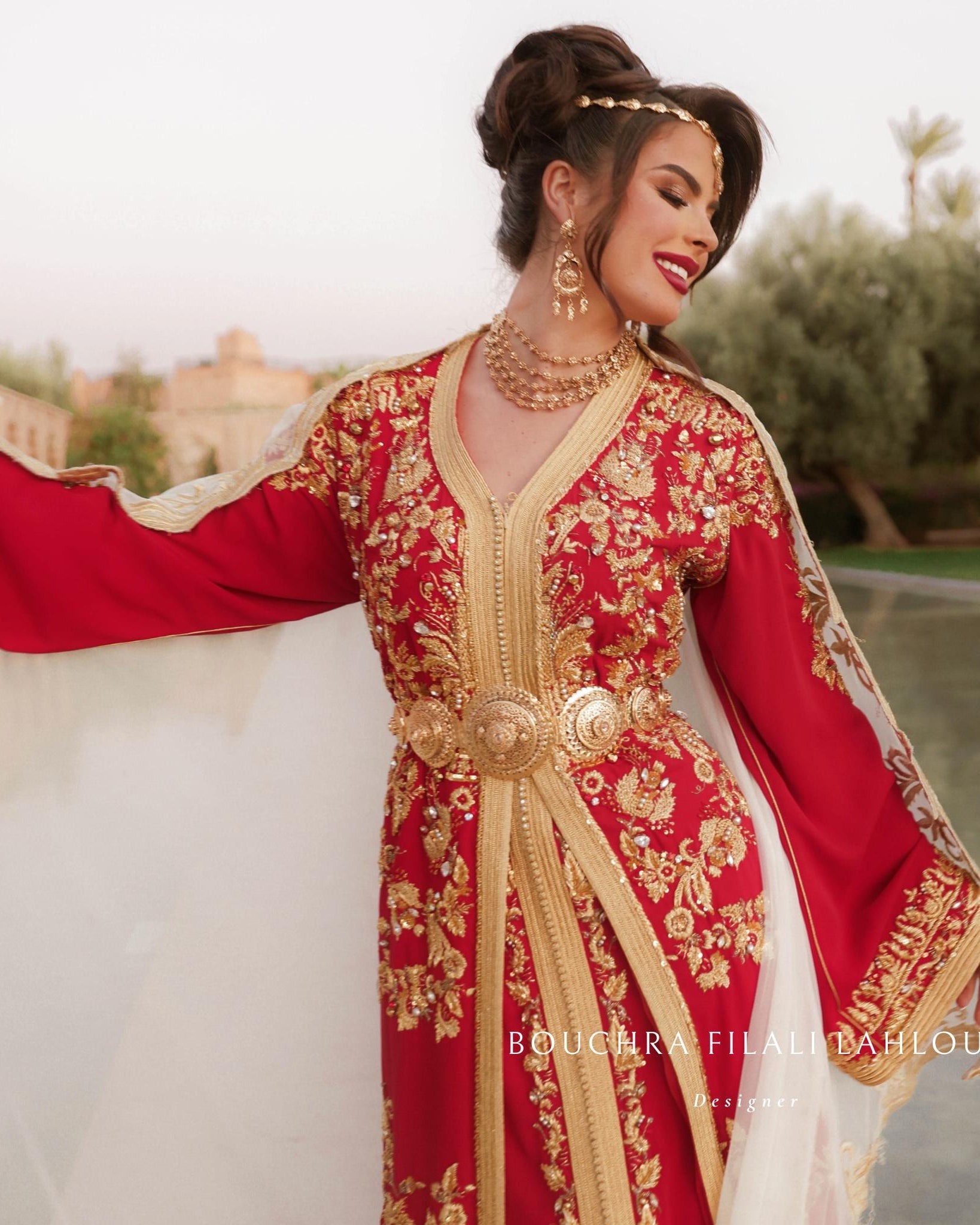
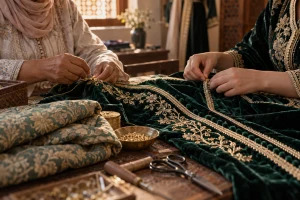
The materials used also play a central role. Fabrics are carefully selected: velvet, silk, chiffon, satin and brocade are favoured for their aesthetic qualities and comfort. Combined with rich colours and traditional patterns, these materials give the caftan an unrivalled elegance that adapts to contemporary tastes while respecting traditional codes.
The Evolution of the Caftan: From Tradition to Haute Couture
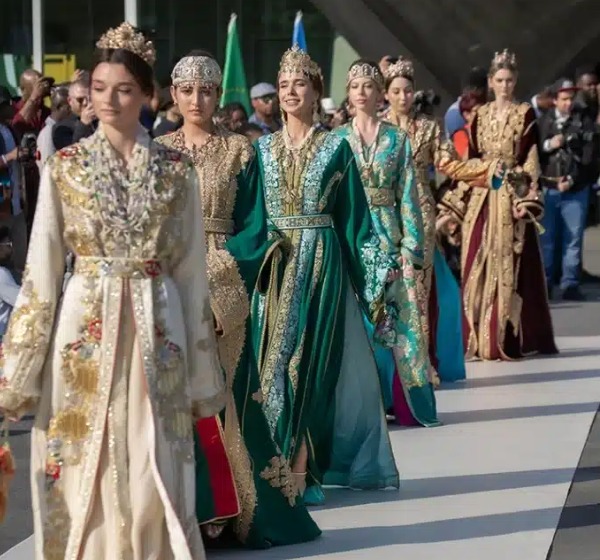
Over the decades, the Moroccan caftan has evolved to adapt to modern fashion trends while retaining its traditional essence. Moroccan designers such as Nourredine Amir, Fadila El Gadi and Zhor Raïs, as well as international designers, have reinterpreted the caftan with bold touches, asymmetrical cuts and plays on transparency. These reinventions have transformed the caftan into a haute couture piece capable of captivating the catwalks of Paris, Milan and New York.
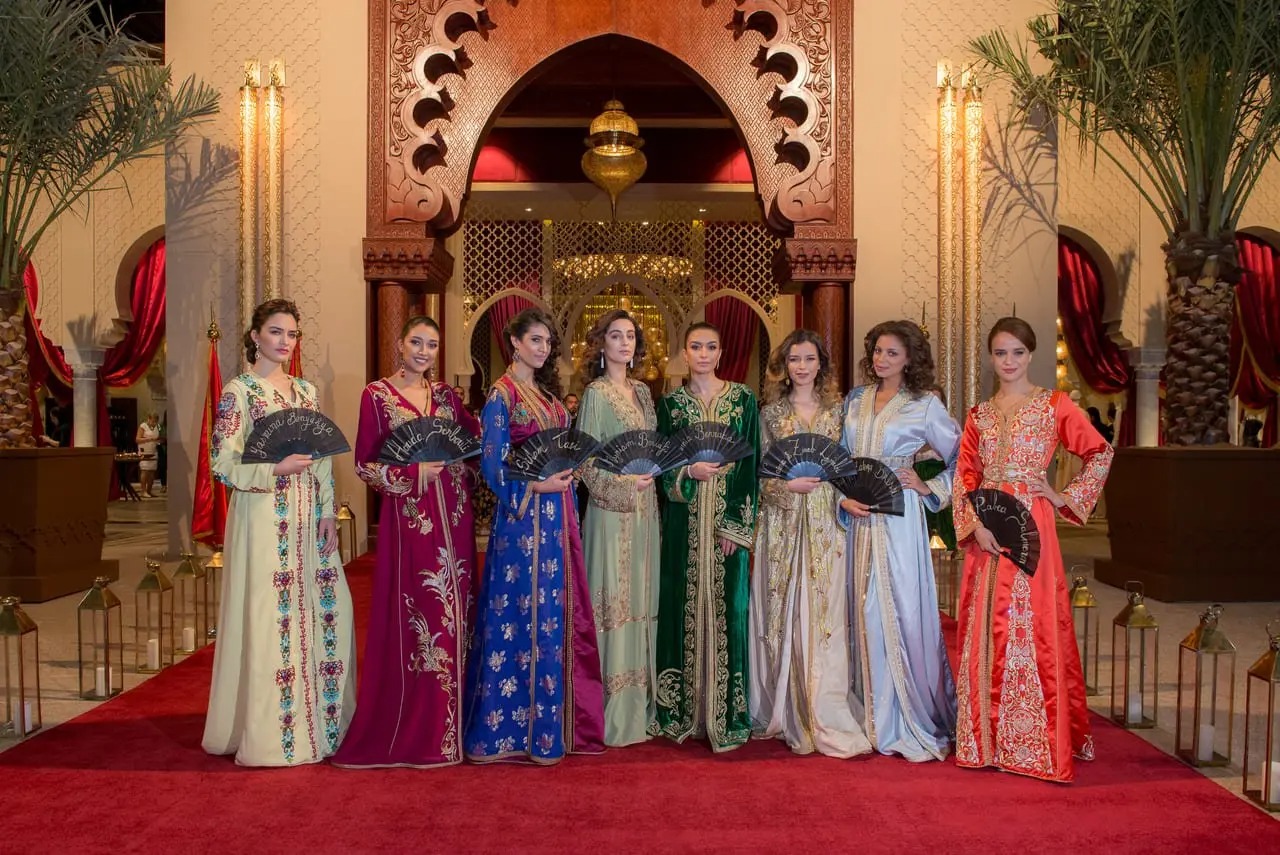
Today, caftans are worn not only at Moroccan celebrations and weddings, but also at international fashion shows and on red carpets, where they are enjoying growing success. This evolution has introduced the beauty and richness of Moroccan culture to the whole world, while strengthening the caftan’s status as an emblem of elegance.
The Caftan at the Heart of Modern Fashion: A Global Phenomenon
The caftan has now been embraced by celebrities and influential figures around the world, from Hollywood actresses to fashion figures. With its timeless charm and ability to blend into a variety of styles, the caftan has established itself as an elegant evening outfit imbued with sophistication.
Modern caftan collections play with colours and textures, incorporating contemporary elements such as clean-cut designs, geometric patterns and even minimalist influences. Some designers add an avant-garde touch, transforming the caftan into a piece that is both traditional and resolutely modern.
The Caftan: More Than a Garment, a Source of Cultural Pride
Wearing a caftan means not only embracing elegance, but also asserting a strong cultural identity. Each caftan tells a story: that of the artisan who created it, the region that inspired it and the traditions it perpetuates. In a multifaceted Morocco, the caftan remains a symbol of the country’s national unity and cultural diversity.
The Caftan, a Timeless Fashion That Makes Morocco Shine
Today, the Moroccan caftan is much more than a simple garment. A symbol of tradition, pride and elegance, it has become a fashion icon that inspires designers and captivates style enthusiasts around the world. From its royal roots to its success on international stages, the caftan embodies the soul of Morocco, a land of culture and infinite creativity.