Moroccan cuisine, renowned for its intense, spicy flavours, is among the most refined in the world. You may also like: Morocco’s cultural and natural riches. Blending Arab, Berber, Andalusian and even French influences, each dish embodies Morocco’s history and culture. In this article, let us delve into the Moroccan culinary world through its iconic recipes and the traditions surrounding them.
1. Couscous: More Than a Dish, a Family Heritage
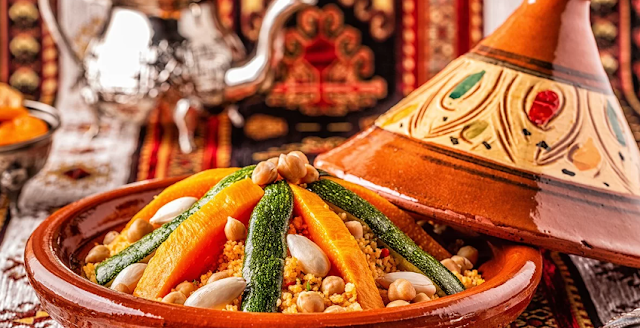
Couscous is undoubtedly one of Morocco’s most iconic dishes. Traditionally served on Fridays, this dish is much more than a simple meal—it is a true ritual. Made with wheat semolina, seasonal vegetables, chickpeas and often a piece of meat, couscous embodies the generosity of Moroccan cuisine. Its secret? Steam, which allows every grain of semolina to become light and fluffy. Prepared as a family, couscous is an opportunity to bring young and old together around the table in a warm atmosphere.
2. Tajine: An Infusion of Flavours, Slowly Cooked for Pleasure
The tajine, named after the earthenware dish in which it is cooked, is another symbol of Moroccan cuisine. Its preparation varies by region and family, but it generally consists of meat (lamb, chicken or beef) simmered with spices, vegetables and dried fruits such as prunes or apricots. Slow cooking allows the flavours to blend, creating a rich and comforting taste. The Moroccan touch? A unique blend of spices: cumin, saffron, ginger and cinnamon give the tajine its incomparable flavour.
3. Pastilla: Between Sweet and Savoury, a Moroccan-Spanish Delicacy
Pastilla is a true culinary masterpiece that reflects Andalusian influences. Traditionally prepared with pigeon meat (or chicken today), almonds, eggs and thin, crispy pastry, this dish perfectly combines sweet and savoury flavours. Dusted with icing sugar and cinnamon, pastilla is often served during celebrations. It is both a sophisticated and delicate dish that continues to surprise and delight palates around the world.
4. Harira: The Comforting Soup of Ramadan Evenings
Served mainly during Ramadan to break the fast, harira is a nourishing soup made with tomatoes, chickpeas, lentils, meat and vermicelli. Flavoured with celery, parsley and coriander, this creamy, fragrant soup is accompanied by dates and chebakia (honey pastries) for a comforting meal. Harira is a perfect example of the generosity of Moroccan cuisine, nourishing both body and soul.
5. Moroccan Mezzes and Salads: A Festival of Colours and Flavours
Moroccan mezzes and salads offer an explosion of flavours and textures. Whether it is zaalouk salad, made with grilled aubergines and spices, or taktouka, a mixture of tomatoes and peppers, each dish offers a subtle balance of spices and fresh ingredients. These dishes are often served as starters, allowing diners to discover the flavours of Morocco from the very first bites.
6. Moroccan Desserts: Honey and Almond Delights
Moroccan desserts, often made with honey, almonds and cinnamon, are the perfect expression of indulgence. Gazelle horns, delicate crescent-shaped pastries filled with almond paste, are emblematic Moroccan sweets. Ghribas, shortbread biscuits made with almonds or coconut, and chebakias, pastries coated in honey and sesame seeds, are essential during religious festivals and ceremonies.
Moroccan Cuisine: A Unique Experience Not to Be Missed
Every Moroccan dish, whether simple or complex, tells a story and embodies the values of sharing, conviviality and generosity. Whether you visit a colourful souk or a Moroccan home, let yourself be tempted by these delights, which will awaken your senses and leave you with an unforgettable memory.