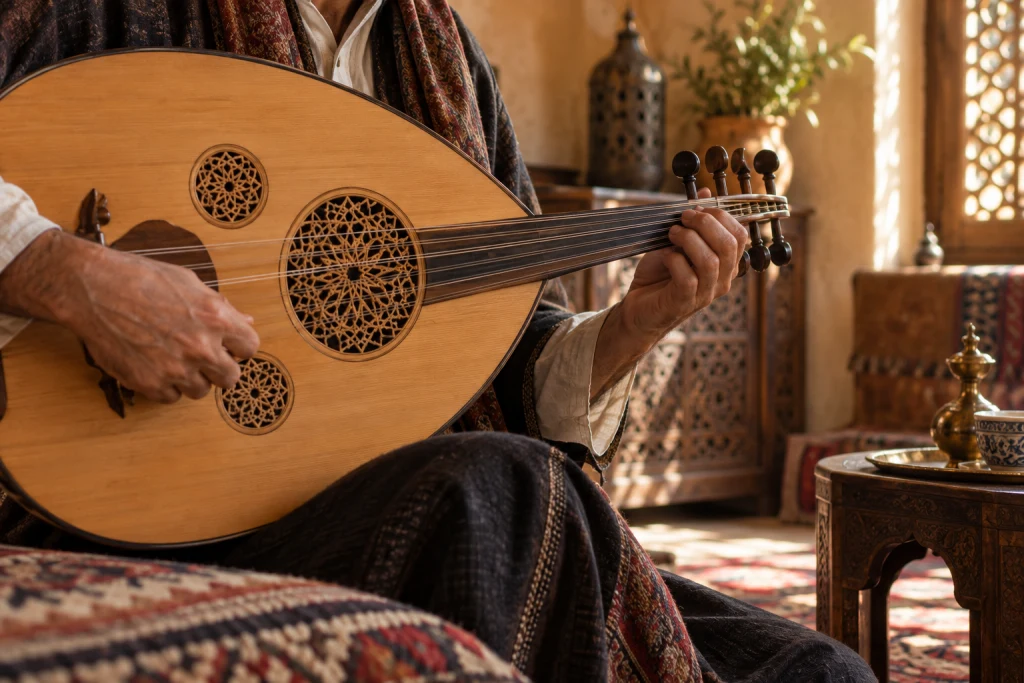
The oud first attracts attention through its shape: a rounded body, short neck, strings and carved rosettes where wood becomes pattern. Yet the instrument is more than a beautiful object. It exists through making, tuning, posture, listening and the transmission of repertoire.
In 2026, “Oud instrument: practices, skills and performing arts” is among the nominations under examination for UNESCO’s Representative List of the Intangible Cultural Heritage of Humanity. Morocco is taking part in the multinational file with fifteen other States. That process gives the subject a current context, but it is not an inscription yet.
A nomination in progress, not a label already granted
UNESCO states that the files in the 2026 cycle are due to be examined by the Committee at its twenty-first session in November and December 2026. The oud nomination carries reference 2245.
Using the word nomination protects the timeline. Communities and States have documented practices; the Committee makes its decision later. This distinction lets us appreciate the submitted work without announcing an outcome before examination.
Look at the wood before the decoration
An oud’s body is built to carry sound. Joined ribs, soundboard, rosettes, bridge and neck create a balance in which each intervention affects the instrument’s response.
In a workshop, watch the tools, measuring gestures and time needed for adjustment. A demonstration becomes richer when it explains why a piece is selected, how it is worked and what the musician expects from the result.
Hear tuning as the beginning
Before melody comes tuning. The player listens to intervals, adjusts the pegs and checks string tension. This quiet moment reveals an attentive relationship with the instrument.
Tunings and habits can vary between repertoires and individuals. Asking a musician to explain a choice is more useful than searching for one formula that supposedly represents every oud practice in Morocco.
Listen to the place given to silence
The oud’s tone is often described as warm or deep, but those words cannot replace listening. The way a string is attacked, a note is allowed to resonate and a silence is held all shape the musical phrase.
During an encounter, resist filming immediately. A few screen-free minutes make it easier to notice breath, repetition and the exchange between musicians when performance is shared.
Understand that repertoire travels
The nomination’s multinational character reminds us that the oud crosses borders, languages and musical traditions. That movement does not erase local styles; it makes their differences worth hearing.
In Morocco, one evening may bring learned traditions, songs, improvisation and contemporary creation into conversation. Avoid turning that diversity into an overly simple family tree. Musicians, teachers and instrument makers usually offer a more nuanced account.
Transmission happens between people
Learning the oud is not only the reproduction of a sequence of notes. Posture, rhythm, memory, collective listening and knowledge of repertoire are passed on through presence and repetition.
A lesson, an open rehearsal or a conversation after a concert can reveal this dimension. When meeting a practitioner, ask how they learned, what they teach and what they see changing between generations.
Buy an instrument patiently
A decorative oud and an instrument intended for regular playing do not meet the same requirements. Before buying, ask about materials, the condition of the soundboard, tuning stability and possibilities for adjustment or repair.
Ask to hear the instrument and, if you are a beginner, seek help from someone knowledgeable. Value lies not only in visible ornament, but in workmanship, sound and a lasting relationship with the maker.
Attend a performance respectfully
Check whether photography or recording is allowed. Silence phone alerts and wait until the end of a piece before moving. In an intimate venue, these simple gestures protect the shared attention.
If an encounter is presented as an act of transmission, leave room for speech as well. The story of an instrument and repertoire can be as valuable as the performance itself.
Follow the decision without reducing the practice to a file
The 2026 nomination gives visibility to practices, knowledge and performing arts associated with the oud. Whatever the future decision, the instrument will continue to live in workshops, classrooms, families and on stages.
MOP will follow the official decision when it is published. Until then, attentive listening is the best entry point: watch the hands, understand the wood, hear the silences and recognise the people who keep the music alive.
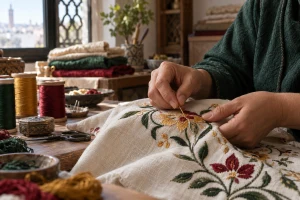
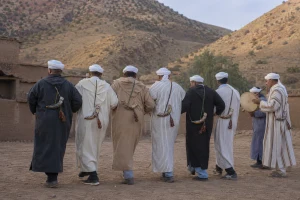
The same attention to people and practice runs through MOP’s articles on Rabat embroidery and the Taskiwin of the High Atlas.