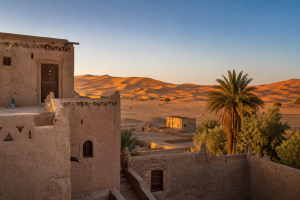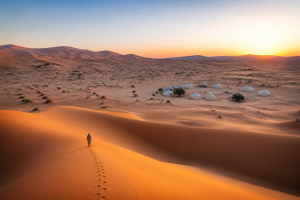
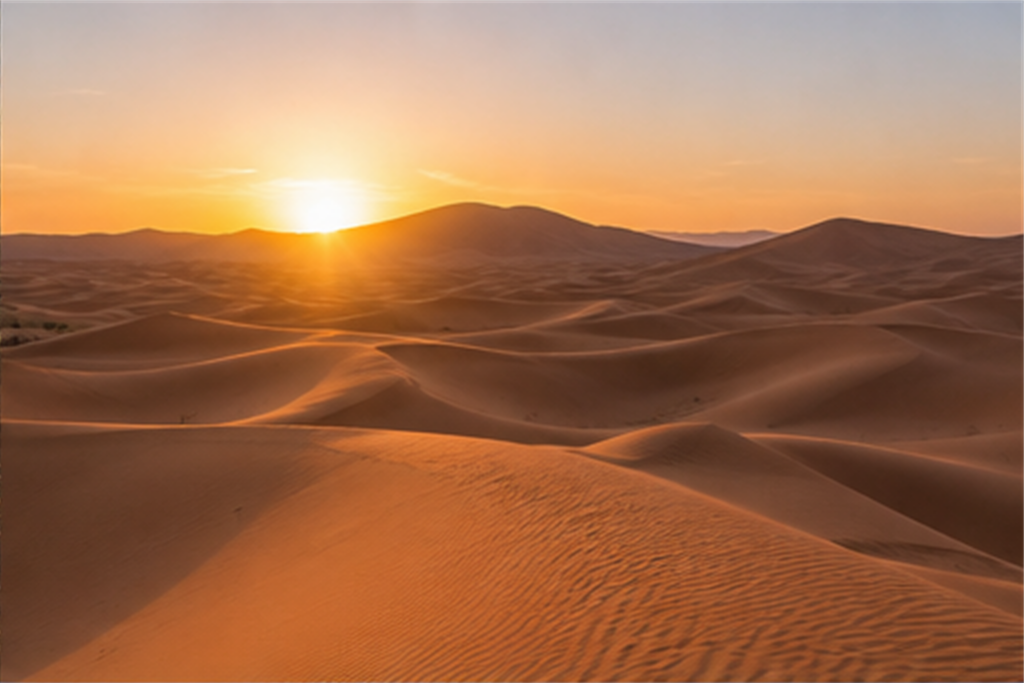
Merzouga is one of the gateways to Erg Chebbi, a group of large dunes in Tafilalet. The image of the sun over the sand is real, but it should not obscure the distance, the heat, the fragility of the environment and the diversity of the villages around the erg.
A successful visit does not depend on a night supposedly “in the middle of nowhere”. It requires a realistic journey, identifiable accommodation, an activity suited to the weather and time to understand the area beyond a sunset.
Assess distances before planning the itinerary
Merzouga is far from Marrakech, Fez and Ouarzazate. Very short tours involve many hours on the road for just a few hours there. Look at the day-by-day details, not just the advertised number of days.
From Fez, the road crosses the Middle Atlas and the Ziz Valley; from Marrakech, it generally passes through the High Atlas, Ouarzazate and the pre-Saharan valleys. In both cases, planning stops along the way makes it possible to explore rather than endure.
Buses connect the region with several cities according to company timetables. A vehicle or transfer allows for other stops, but night driving and fatigue should be avoided. See our guide to getting around Morocco
Choose a manageable season
Summer temperatures can be extreme. An activity sold for midday is not necessarily sensible. Spring and autumn are often more comfortable, while winter brings cold nights despite sunny days.
The wind can raise sand and alter a departure. A reputable provider adjusts the schedule or cancels when conditions deteriorate. Ask about the rules before paying.
Sun protection, water, sunglasses and covering clothing remain essential. In the evening, a warm layer is useful. Vulnerable people, children and travellers undergoing treatment should plan their stay with a greater safety margin.
Distinguish between a village, guesthouse and bivouac
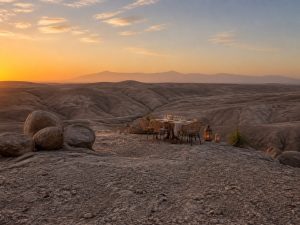
Merzouga and the neighbouring villages offer guesthouses, hotels and camps. A “luxury bivouac” may be set up on the edge of the dunes and accessible by track; its description should not suggest complete isolation if it is surrounded by other camps.
Ask for the coordinates, transfer details, type of toilet facilities, electricity, bedding, any heating and the waste policy. Also check whether dinner, water and the return journey are included.
A night in a guesthouse may offer greater comfort and allow for an excursion into the dunes without sleeping in a camp. The responsible choice is the one that meets actual needs, not the one that imitates a famous photograph.
Walk safely in the dunes
On foot, the distance seems longer than it does on a map. The sand is tiring, the heat causes dehydration and landmarks change. To venture farther away, go with a local guide, share your itinerary and carry water.
The hours around sunrise and sunset offer soft light and often more favourable temperatures. Return before dark if you do not know the terrain. A torch and an offline route are safeguards, not an invitation to improvise.
Do not climb every ridge simply to avoid human footprints in the photograph. Follow the areas already in use and avoid vegetation that stabilises the ground.
Assess motorised activities
Quad bikes, buggies and 4x4s create noise, dust and tracks. Before booking, ask where the route goes, how many vehicles depart together and which areas are excluded. An excursion that crosses a village at high speed or leaves the tracks is not acceptable.
A helmet, briefing and clear insurance are essential. A guide must maintain a speed suited to the least experienced participant and be able to stop the activity.
It is also possible to explore the landscape on foot or with a vehicle used only to reach a starting point. Choosing fewer motorised kilometres often provides more time for observation.
Consider camel welfare
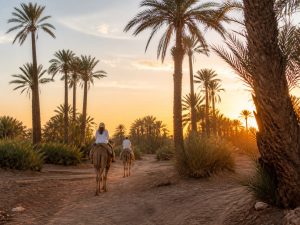
A camel ride should be assessed like any activity involving an animal. Observe its body condition, injuries, harness, access to water and rest periods. Refuse an animal that is visibly injured or overloaded.
Ask about the actual duration and accepted weight. A responsible operator answers without downplaying the issue. Riding is not compulsory: you can walk with the group or choose an activity without animals.
Do not demand quick return trips to take more photographs. A slow pace is part of the experience and reduces pressure on the animals.
Explore the region beyond the dunes
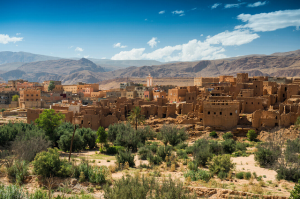
The villages, palm groves, markets and music of Tafilalet provide context. Encounters centred on Gnawa and Saharan culture may be offered; ask who organises them, who is paid and whether the occasion is a performance or an explained practice.
The seasonal lake of Dayet Srij varies considerably. Neither its presence nor that of birds is ever guaranteed. Observe from a distance and do not drive on a dried-out wetland.
Local products, dates and family meals are more interesting when presented without forced folklore. Ask before taking photographs and accept that an occasion may not be open to visitors.
Plan a three-night stay
The first night allows you to arrive and recover after the journey. The second day can combine a village visit with an excursion into the dunes late in the day. The night in a camp, if chosen, then follows without the constraint of an immediate departure.
The third day should remain relaxed: walking, a local visit or rest. With four nights, add a regional stop rather than a second similar motorised activity.
Avoid setting off on a very long journey immediately after waking before dawn. Reduced sleep and driving are a poor combination. A driver must also have time to rest.
Transparent budgets and bookings
Ask for a total price including the transfer, meals, water, activity, taxes and return journey. “From” may conceal an additional charge for reaching the camp. Weather and cancellation conditions should be provided in writing.
Check the operator’s identity and recent reviews without relying on a single platform. A direct conversation allows you to assess the precision of the answers. Avoid paying the full amount into an account with no clear connection to the company.
Keep cash and cards separate. The guide to money in Morocco explains withdrawal and currency exchange practices.
Erg Chebbi checklist
- Driving time calculated with stops and breaks.
- Daytime and night-time temperatures checked.
- Exact camp location and included services confirmed.
- Water, sun protection, sunglasses and a warm layer.
- Motorised activities restricted to the stated tracks.
- Animal welfare checked before riding.
- Waste removal organised by the operator.
- Long departure postponed after a short night.
Sources consulted
- Moroccan National Tourist Office, geography and the Merzouga desert: https://www.visitmorocco.com/en/discover-morocco/geography-morocco
- Moroccan National Tourist Office, Errachidia, Midelt and Merzouga destinations: https://www.visitmorocco.com/en/travel/destinations
- National Road Safety Agency: https://www.narsa.ma/
- Moroccan National Tourist Office, sustainable tourism: https://www.visitmorocco.com/sites/default/files/atoms/files/maroc_durable_0810_pbi251101-en_1.pdf