The term Gnawa refers to much more than a musical style. UNESCO describes a set of musical productions, performances, brotherhood practices and therapeutic rituals where the sacred and the secular meet. Inscribed in 2019 on the Representative List of the Intangible Cultural Heritage of Humanity, this heritage is now one of the many components of Moroccan identity.
For travellers, listening requires context. A festival concert, restaurant entertainment and a lila organised by a brotherhood do not serve the same function. Confusing them creates a decorative image that erases history, spirituality and transmission.
Roots linked to slavery and African exchanges
UNESCO links Gnawa origins to groups and individuals descended from slavery and the slave trade, documented since at least the 16th century. The practices incorporated African heritage, Arab-Muslim influences and Amazigh expressions.
This history must be told without folklore or simplification. There is no single line connecting every contemporary musician to the same origin. Communities, cities, lineages and repertoires have evolved.
Saying “African music” is not enough: Morocco is itself in Africa, and Gnawa culture developed within its own social and religious history.
The maâlem and the group
The maâlem is a master musician who knows the repertoire, rhythms, sequences and codes of the practice. This title does not simply refer to a virtuoso soloist; it requires learning, memory and the ability to lead the group.
Around him, the musicians sing, respond, play the qraqeb and perform steps. The structure is based on collective listening. A piece therefore cannot be reduced to the deep sound of the guembri in isolation.
Transmission takes place through close contact with elders, rehearsals and ceremonies, and today also through associations, schools, recordings and festivals.
The guembri, the musical backbone
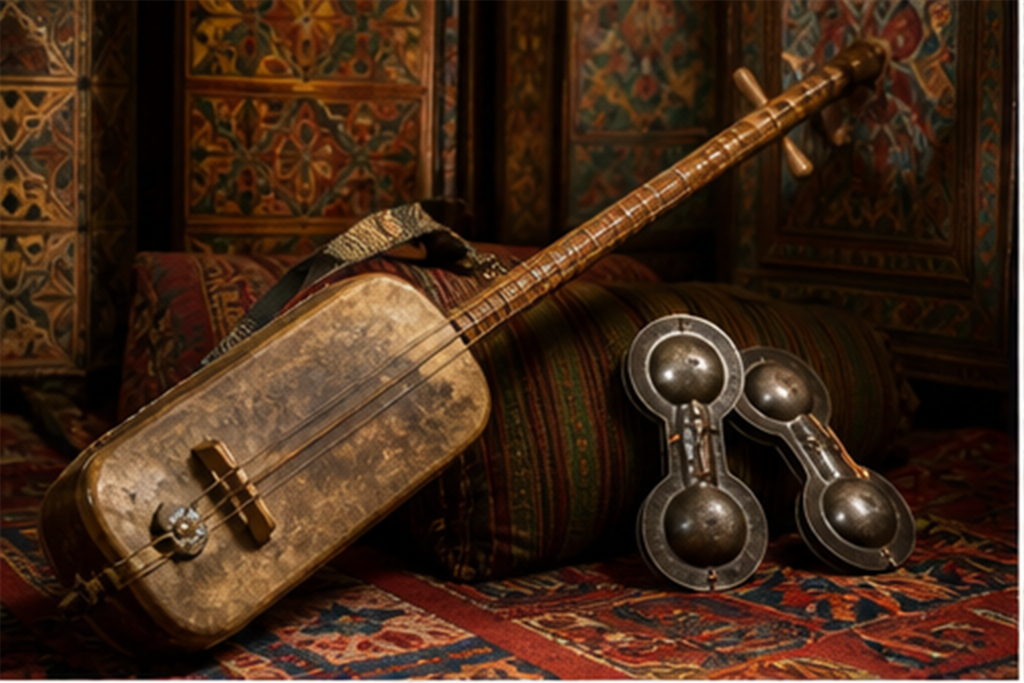
The guembri, also called hajhouj depending on the context, is a three-stringed lute with a skin-covered body. It produces a deep line that is both rhythmic and melodic. The maâlem combines it with singing and the group’s responses.
The instrument is made by artisans who select the wood, skin, strings and dimensions. A decorative piece sold as an “antique guembri” is not necessarily playable or documented.
During a concert, listen to how a short phrase establishes the cycle, transforms and interacts with the percussion. The apparent repetition contains many variations.
Qraqeb, drums and collective pulse
Qraqeb are large metal castanets held in each hand. Their dense sound creates a cyclical pulse. UNESCO also distinguishes the use of large drums, particularly in certain rural practices.
The volume can be surprising in a small venue. Standing slightly farther back makes it possible to hear the balance between metal, strings and voices. Discreet hearing protection is sensible for a child or a long evening.
Do not handle an instrument without the musician’s permission. Its sturdy appearance does not turn it into a photography prop.
The lila is not an ordinary show
The lila is a ritual vigil that can last all night, with sequences, invocations, colours, incense, music and dance. It is associated with brotherhood and therapeutic functions. An outsider’s explanation cannot replace the meaning given by the participants.
Some sequences may be open to visitors, while others may not. The invitation, photography rules and expected behaviour must be confirmed by the organiser. Paying an intermediary does not automatically grant access to a private ceremony.
If you are welcomed, observe before acting, dress modestly and put your phone away whenever there is any doubt. Discretion is part of listening.
Essaouira, but not only
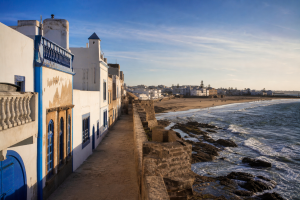
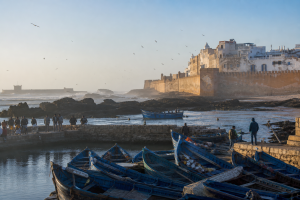
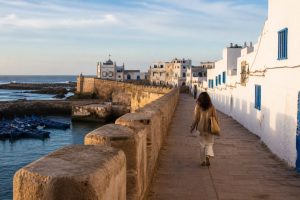
Essaouira is strongly associated with Gnawa culture and hosts an international festival. The event has contributed to the visibility of maâlems and to encounters with jazz, African music and global music scenes.
Groups also exist in many cities and rural areas. Marrakech, Casablanca, Rabat and other places offer concerts, associations or gatherings. There is no single “authentic place”.
An amplified concert is not less worthy because it is contemporary. The useful questions are who is playing, how the programme is presented, and whether the artists are clearly credited and paid.
Choosing a place to listen
Check the programme of a festival, cultural centre or identifiable venue. Verify the maâlem’s name, the time, the type of performance and the access conditions. An announcement promising tourists a “secret ceremony” should be treated with caution.
In a restaurant, ask whether the music is a concert or entertainment, and whether a contribution is expected. Do not request a specific piece as though the group were a jukebox.
For a small-group encounter, go through an association or a recognised intermediary. The price should include payment for the musicians, not only the seller’s commission.
Photographing and recording with permission
The right to watch is not the right to record. Ask before filming an intimate concert, and follow a festival’s guidelines. Flash photography disturbs the artists and the audience.
A ceremony requires greater caution. Some people may enter a state that they do not want to see shared publicly. Never publish a sensitive image without explicit consent.
Credit the artists correctly when sharing is permitted. Avoid vague captions such as “desert musicians”, which erase their names and their tradition.
Listening to contemporary developments
Collaborations with jazz, rock, electronic or African music do not automatically constitute dilution. They can extend a history of exchanges, provided that the masters, repertoires and power relationships are acknowledged.
Compare a traditional recording, a maâlem’s concert and a fusion performance. Listen to what remains: the guembri motif, vocal response, qraqeb cycle, language and structure.
To continue exploring the culture, our article on Morocco’s imperial cities helps place the music scenes within their regions.
Guidelines for respectful listening
- Identify the maâlem and the type of performance.
- Distinguish between a concert, entertainment and a ceremony.
- Ask before taking photographs or recording.
- Do not handle instruments without permission.
- Pay the artists through the stated channel.
- Avoid promises of access to a “secret” ritual.
- Credit the people and location accurately.
- Accept that part of the practice is not intended for visitors.
Sources consulted
- UNESCO, “Gnawa”, 2019 inscription: https://ich.unesco.org/fr/RL/gnaoua-01170
- UNESCO, intangible cultural heritage elements in Morocco: https://ich.unesco.org/fr/etat/maroc-MA?cp=MA&info=elements-sur-les-listes
- Moroccan National Tourist Office, culture and Essaouira destination: https://www.visitmorocco.com/en/travel/essaouira-mogador
- Ministry of Youth, Culture and Communication: https://mjcc.gov.ma/