The Jewish presence in Morocco is part of a history spanning more than two millennia, enriched by different migrations, particularly after the expulsions from the Iberian Peninsula. It produced languages, music, trades, cuisines, rituals, architecture and networks connecting imperial cities, ports, mountains and oases.
Discovering this heritage is not simply a matter of visiting a few empty buildings. These places evoke communities, departures, family continuities and contemporary restorations. Precise language and respect for customs are essential.
A diverse history across regions
Communities did not have the same experience in Fez, Essaouira, Tetouan, Marrakech, Sefrou or the south. Statuses, trades, languages and neighbourly relations varied according to the period and those in power.
Jews known as toshavim had long been established there; megorashim arrived after the Iberian expulsions. These historical categories came into contact, changed and were sometimes maintained in rituals.
A local chronology is better than an overly smooth national narrative. Museums, qualified guides and academic publications help distinguish documents, oral memory and legend.
The mellah is not a miniature medina
The term mellah refers to the historic Jewish quarters of several Moroccan cities. The first is generally associated with Fez in the 15th century. Other cities created their mellahs in different contexts.
These neighbourhoods combined housing, commerce, worship, schools and community institutions. They were neither closed off in the same way during every period nor separated from the urban economy.
Today, many are inhabited by other populations. Visit them as living neighbourhoods: do not photograph a door or private interior without permission, and avoid expressions such as “abandoned neighbourhood”.
Synagogues: worship, architecture and restoration
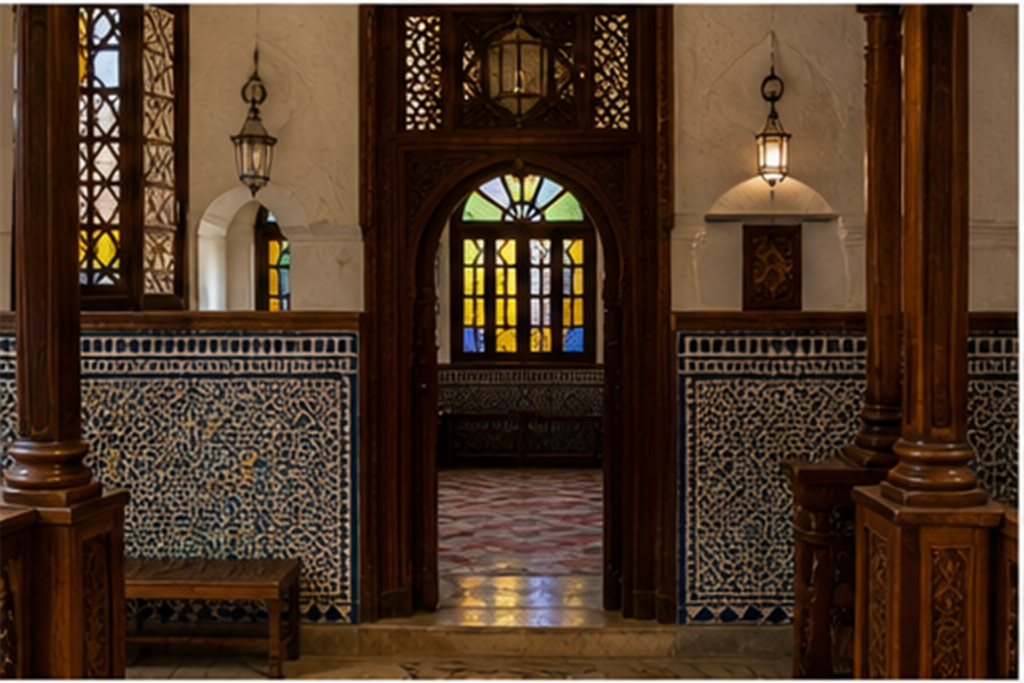
A synagogue may be active, converted into a place of remembrance or accessible by appointment only. Check opening hours, dress requirements and whether photography is permitted. Security checks must be accepted without argument.
In Marrakech, the Slat Al Azama Synagogue is among the well-known sites; in Fez, Ibn Danan bears witness to a long urban history. Essaouira is home to several restored spaces connected with Moroccan Jewish memory.
Do not generalise from one interior: layout, furnishings and ritual vary. A guide should explain the visible features without handling a liturgical object.
Essaouira and Bayt Dakira
Essaouira, formerly Mogador, was a major port where Jewish and Muslim merchants participated in international trade. UNESCO lists the medina as an example of a late-18th-century fortified town open to the Atlantic.
Bayt Dakira, the House of Memory, documents Essaouira’s Moroccan Jewish history and the role of its communities. A visit is best combined with the medina, the port and an exploration of the houses and synagogues.
Avoid presenting coexistence as a picture postcard without tensions or changes. The value of the site comes precisely from its archives, individual journeys and current work to pass on this heritage.
Museums, objects and archives
The Museum of Moroccan Judaism in Casablanca preserves ritual objects, clothing, documents and architectural elements. A museum provides context that the alleyways alone cannot offer.
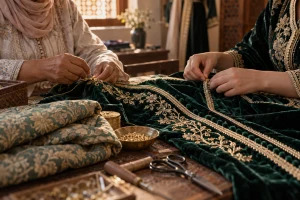
Read the labels before taking photographs. A piece of jewellery or a caftan may have shared regional uses; classifying it exclusively within one community without documentation creates a false boundary.
Buy catalogues and books from institutions or booksellers. A manuscript, candlestick or antique object sold without provenance may be connected to trafficking or a fanciful attribution.
Cemeteries and pilgrimages
Jewish cemeteries are places of remembrance and sometimes pilgrimage. They require modest dress and restrained behaviour. Do not walk on a grave, move a stone or photograph a person praying.
Some hiloulot bring families together around the memory of a saint. Access and dates must be checked with the organisers. A celebration is not an attraction where a commercial ticket grants every right.
If a caretaker accompanies the visit, agree on the donation or fee. Ask before publishing any images of names or family inscriptions.
Music, cuisine and language
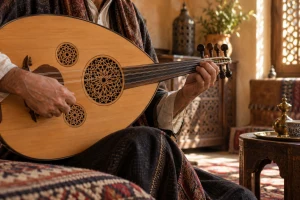
Moroccan Jewish heritage also lives on in Andalusian repertoires, malhoun, liturgical songs, family recipes and languages such as Haketia in the north. These forms circulated between communities.
A dish sold as a “Moroccan Jewish recipe” may have several regional versions. Ask who prepares it, for what occasion and where the recipe comes from rather than seeking a single exclusive origin.
A contemporary concert continues this transmission, even outside a historic venue. Identify the artists and programme, then distinguish between heritage research, creation and entertainment.
Departures and transnational ties
In the 20th century, the vast majority of Moroccan Jews left the country, particularly for Israel, France, Canada and other destinations. These departures transformed neighbourhoods and institutions without erasing family and cultural ties.
Descendants return to visit homes, graves and cities. Their memory should not be used as an emotional backdrop by an outside visitor. Listen to their stories with consent and do not record them automatically.
Recent restorations and official promotion are part of the present. It is important to document what has been completed, what is accessible and what is still planned.
Creating a well-documented itinerary
In Casablanca, begin with the museum to gain context. In Fez or Marrakech, choose a guide who can cite dates and distinguish between a mellah, a synagogue and a palace. In Essaouira, connect Bayt Dakira with the port’s history.
Do not attempt to visit four cities in two days. A slow itinerary leaves time to read, meet people and observe how the neighbourhoods are changing.
Our guides to the imperial cities and Moulay Idriss and Volubilis help place the dynasties and neighbouring territories in context.
Rules for respectful visits
- Check whether the site is active, a museum or private.
- Accept security checks and instructions.
- Ask before taking any interior photographs.
- Do not handle liturgical objects or archives.
- Respect graves, prayers and pilgrimages.
- Use dates and sources rather than legends.
- Do not buy an antique object without provenance.
- Refer to communities in the plural and according to their context.
Sources consulted
- UNESCO, Medina of Essaouira: https://whc.unesco.org/en/list/753/
- National Foundation of Museums, Museum of Moroccan Judaism: https://fnm.ma/
- Bayt Dakira, Essaouira House of Memory: https://baytdakira.ma/
- Ministry of Youth, Culture and Communication: https://mjcc.gov.ma/
- UNESCO, World Heritage properties in Morocco: https://whc.unesco.org/fr/etatsparties/ma