Why Morocco Is a Unique Country in the World
The Kingdom of Morocco is a semi-parliamentary monarchy. Rabat is its administrative capital and Casablanca its economic capital.
Morocco is a magnificent empire, with splendours and a thousand-year-old cultural heritage. Its beauty, history and traditions fascinate the entire world.
Morocco: A Historic Crossroads of Civilisations
Morocco has a very ancient history. Its first inhabitants lived more than 700,000 years ago. The remains of Homo sapiens found at Jebel Irhoud date back more than 300,000 years. This demonstrates the richness of its heritage.
Since Antiquity, Morocco has been a meeting place for cultures. The Berbers lived there, with agricultural and nomadic societies. The Kingdom of Mauretania subsequently incorporated Morocco into the Roman Empire.
The ancient city of Volubilis demonstrates the Roman influence. It bears witness to that period.
The Legacy of Ancient Dynasties
The Arabs arrived in the 7th century, bringing Islam. Berber dynasties such as the Almoravids and Almohads left their mark. The Arab Marinid and Saadian dynasties also enriched Morocco’s heritage.
The Birth of the Moroccan State
In 789, Idris I founded the first Moroccan state. This gave rise to the Sharifian dynasty. Since the 17th century, the Alaouites have ruled Morocco. Today, the country is a constitutional monarchy combining modernity and tradition.
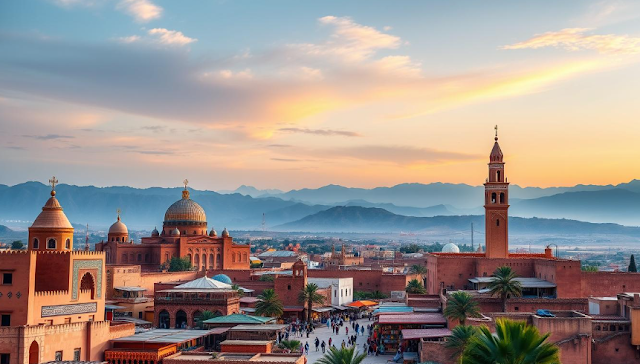
“Morocco is a crossroads of civilisations, where Berber, Arab, Ottoman, Andalusian, French and Spanish influences intersect.”
The Sharifian Empire: From Its Foundation to Its Golden Age
Morocco’s history is rich and fascinating. Several dynasties helped the country grow and prosper. The Almoravids, Almohads, Marinids and Saadians all played an important role. Their reigns saw the emergence of architecture, the arts and trade.
The Alaouite dynasty has ruled Morocco since the 13th century. Moulay Sharif was the first of this dynasty in 1631. His son, Moulay Mohammed, expanded the dynasty’s influence.
The reign of Moulay Rachid (1664-1672) brought stability to Morocco. Moulay Ismail (1672-1727) achieved victories against the English and Portuguese. He also reformed the Moroccan army.
| Dynasty | Period | Key Events |
|---|---|---|
| Almoravids | 11th-12th century | Expansion of the empire into Spain and West Africa |
| Almohads | 12th-13th century | Cultural and architectural influence |
| Marinids | 13th-15th century | Development of trade and crafts |
| Saadians | 16th-17th century | Control of trans-Saharan trade routes |
| Alaouites | 17th century to the present day | Stabilisation of power and economic development |
The Alaouite dynasty marked an era of prosperity for Morocco. The reigns of Moulay Rachid and Moulay Ismail were particularly brilliant. The art and architecture of this period display a taste for grandeur.
Today, Morocco celebrates its history and independence. Recent celebrations in London and Toronto are an example. They mark the anniversaries of the Green March and Independence Day.
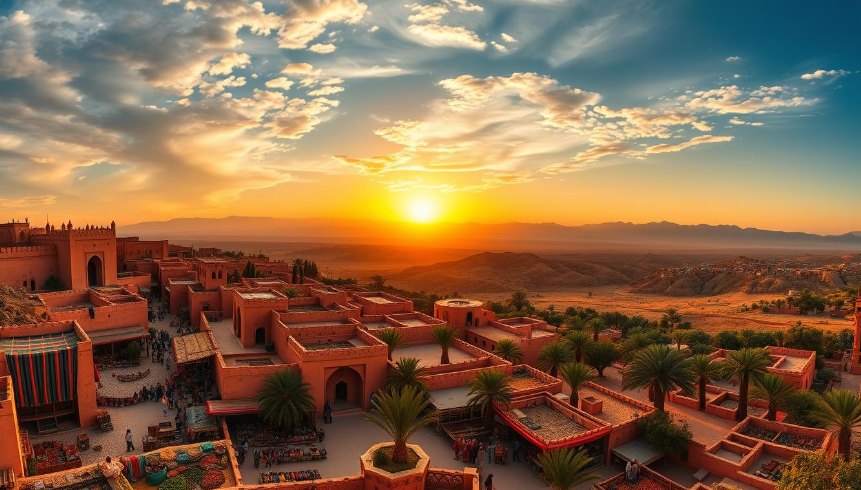
“Under Moulay Ismail, Morocco became an important trading partner for Europe.”
Moroccan Dynasties: A Thousand-Year-Old Royal Heritage
Morocco is proud of its dynastic heritage, which spans more than a thousand years. Since 789, with the Idrisids, the country has been shaped by great dynasties. They extended its influence throughout the region.
The Idrisid Period and Its Foundations
The Idrisids founded the first Moroccan dynasty. They established Fez as the capital. Their reign created Morocco’s national identity and the Sharifian monarchy.
The Era of the Great Dynasties
After the Idrisids, Morocco experienced the Almoravid and Almohad dynasties. These dynasties extended the kingdom’s influence. Their architectural and cultural legacy is still visible today.
The Rise of the Alaouites
The Alaouites have ruled the Kingdom of Morocco since 1666. Their reign has brought stability and development. King Mohammed VI continues the work of his ancestors for a modern and prosperous Morocco.
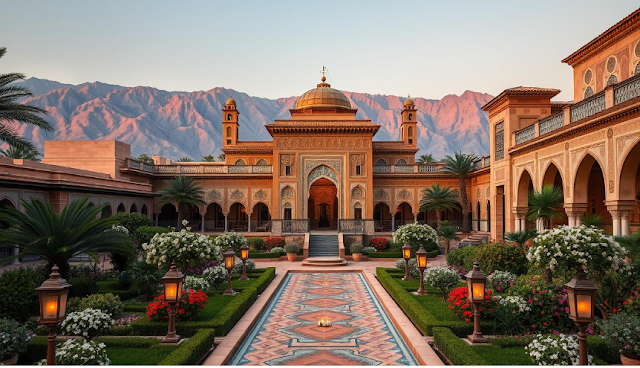
“Morocco is a thousand-year-old monarchy whose stability and continuity are major assets for its development.”
Geography and Territory: Between Sea and Desert
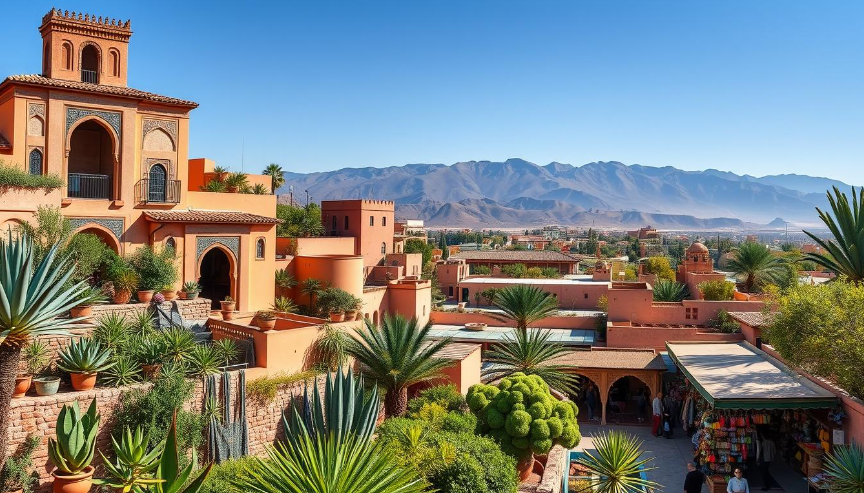
Morocco is a unique country with varied landscapes. It stretches from the Mediterranean and Atlantic coasts to the Atlas Mountains and the Moroccan Sahara Desert. It is located between Europe and Africa, making it an important strategic point.
The Atlas Mountains are impressive, offering incredible views. Jebel Toubkal, the highest peak, reaches 4,167 metres. To the south, the Moroccan Sahara Desert is vast and mysterious.
Morocco is rich in fauna and flora. From the Rif forests to desert oases, it is home to numerous ecosystems. This makes the country’s biodiversity exceptional.
Morocco combines sea, mountains and deserts, offering a unique experience. Visitors discover magnificent and fragile landscapes.
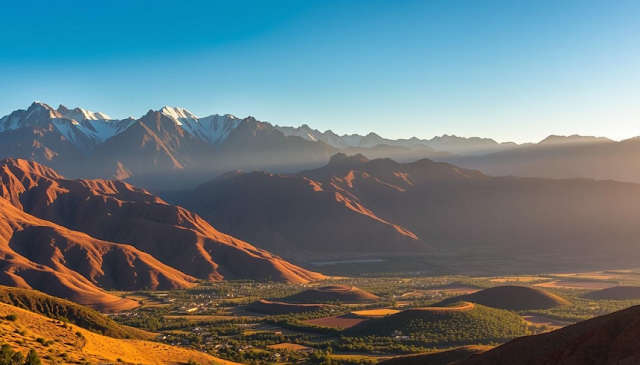
“Morocco is a country where nature expresses itself in all its splendour, from the Moroccan Sahara to the snow-covered peaks of the Atlas.”
With an area of 710,850 km2, Morocco is a true paradise for nature lovers. Its population density is 48.27 inhabitants per km2. This leaves vast, unspoilt natural areas.
The Territory’s Resources
Morocco contains many natural resources. These resources have shaped its economic development. Its mineral, agricultural and fisheries wealth makes it a country with many assets.Its deposits of phosphates, cobalt, copper and gold make Morocco one of the world leaders in these fields.
Its agricultural expanses, particularly in the Gharb and Souss plains, allow fruit, vegetables and cereals to be grown in abundance.
Its fish-rich waters, bordered by the Atlantic Ocean and the Mediterranean, provide a major fisheries resource.
Despite the challenges associated with preserving its environment, Morocco strives to develop its natural resources sustainably. It seeks to reconcile economic development with protecting biodiversity.
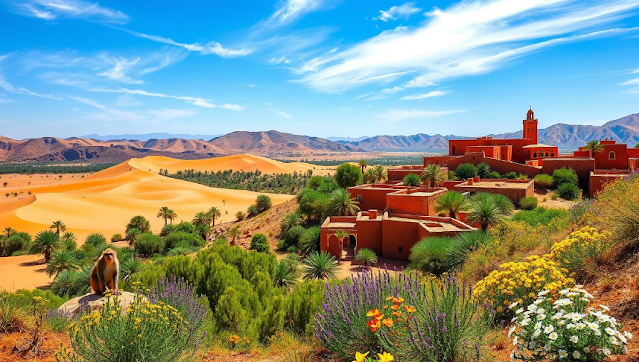
Moroccan Architecture: A Thousand-Year-Old Art
Moroccan architecture is a cultural treasure. It has been shaped by Berber, Arab, Andalusian and French influences. Morocco displays fascinating architectural diversity, from the medina of Fez to the kasbahs of the Atlas.
Iconic monuments include the Koutoubia in Marrakesh and the Hassan II Mosque in Casablanca. The medinas of Fez and Tetouan are labyrinths of lanes and shops.
. The kasbahs, clay fortresses, demonstrate the power of the Moroccan dynasties.
. The medinas retain their charm with their narrow lanes and picturesque shops.
. The Hispano-Moorish mosques are masterpieces with their slender minarets.
This thousand-year-old architecture is a blend of tradition and modernity. It makes Morocco an open-air museum.
| Iconic Monument | Location | Architectural Features |
|---|---|---|
| Koutoubia of Marrakesh | Marrakesh | 77-metre-high minaret, Hispano-Moorish style |
| Hassan II Mosque | Casablanca | Engineering feat with its retractable roof, Moorish style |
| Medina of Fez | Fez | Largest protected area in the world, a labyrinth of lanes dating from the 9th century |
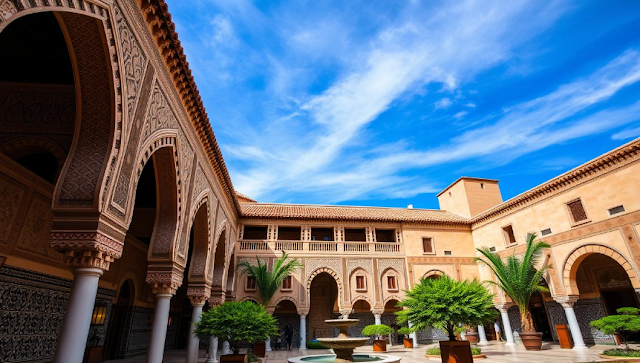
Culture and Traditions: The Moroccan Mosaic
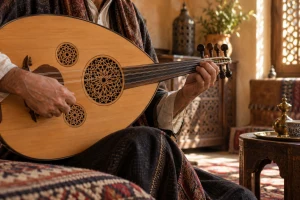
Morocco is a country rich in culture, influenced by various civilisations. Berber, Arab, African and Mediterranean influences intermingle. This can be seen in the Moroccan way of life, festivals and celebrations. Also read: Moroccan crafts.
The Moroccan Way of Life
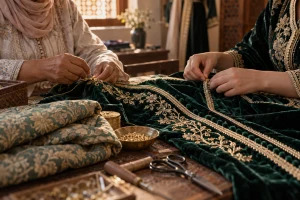
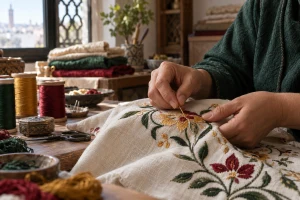
Moroccan craftsmanship is famous throughout the world. It includes magnificent rugs and pottery. The souks, these traditional markets, are at the heart of social life. There, the scents of spices, the colours of textiles and the bustle of vendors create a unique atmosphere.
Moroccans have a distinctive way of life, combining ancient traditions and modernity. From architecture and cuisine to hospitality, Moroccan culture captivates many people.
Festivals and Celebrations
Morocco celebrates its culture throughout the year with numerous international festivals. The Fez Festival of World Sacred Music and the Marrakesh Film Festival are very important. They attract large crowds.
These festivals demonstrate the diversity of Moroccan art. Everything is represented, from traditional music to modern performing arts. They offer a way to discover the richness of Moroccan culture.
“Morocco is a cultural mosaic, a crossroads of civilisations where tradition and modernity meet in harmonious dialogue.”
| Must-See Festivals in Morocco | Location | Period |
|---|---|---|
| Fez Festival of World Sacred Music | Fez | June |
| Marrakesh Film Festival | Marrakesh | December |
| Kelaat M’Gouna Rose Festival | Kelaat M’Gouna | May |
| Meknes International Street Art Festival | Meknes | July |
The Kingdom’s Economy: Between Tradition and Modernity
Morocco has a diversified economy, combining tradition and modernity. Its key sectors are agriculture, industry and tourism. These sectors shape its dynamic Moroccan economy.
Agriculture is very important, with Morocco being the world’s leading exporter of phosphates. The country also invests in renewable energy and modern infrastructure. It also maintains its traditional sectors, such as craftsmanship.
Trade between Africa and China has increased considerably. It rose from 10.6 billion dollars in 2000 to 201.1 billion dollars in 2014. This demonstrates the growing importance of Morocco’s economic relations with the world.
“The Kingdom’s Economy: Between Tradition and Modernity” highlights the efforts of nearly one hundred Arab and French researchers and academics over the past two centuries to promote constructive dialogue between the two shores of the Mediterranean.
Contemporary Morocco: A Nation on the Move
Morocco is undergoing a major transformation. Major development projects are changing its future. The Tanger Med port, the high-speed railway line and the Noor solar power plant demonstrate this modernisation.
The country faces major challenges. It is working on urbanisation, education and sustainable development. It also seeks to reduce social and regional inequalities.
Major Development Projects
Morocco is launching ambitious projects for its economy. The Tanger Med port has become a major port platform in Africa. This has strengthened the kingdom’s logistics capabilities and attracted investment.
The high-speed railway line between Tangier and Casablanca has transformed transport. It has considerably reduced journey times.
Morocco has also distinguished itself in renewable energy. The Noor solar power plant aims to make the country a leader in solar electricity production. These projects demonstrate the kingdom’s determination to become a benchmark in urbanisation and sustainable development.
The Challenges of the 21st Century
Morocco has made progress, but it faces challenges. Rapid urbanisation creates problems in infrastructure management and housing. The kingdom is working to improve access to education, especially in rural areas.
Morocco is committed to sustainable development. It emphasises environmental protection and natural resource management. If these challenges are overcome, they will make Morocco a modern and prosperous nation.
Moroccan Diplomacy: A Bridge Between Cultures
Morocco is very important in foreign policy and international cooperation. It is a member of the UN, the Arab League, the African Union and the Organisation of Islamic Cooperation. It has good relations with Europe and the United States, and it also works with sub-Saharan Africa.
Moroccan diplomacy is dynamic and covers several areas. It helps Morocco to be a key player on the international stage. The Kingdom has created strategic partnerships to encourage cultural, economic and political exchanges.
Morocco has strengthened its ties with sub-Saharan Africa. Rwandan President Paul Kagame’s visit to Morocco in June 2016 was a major step. It paved the way for greater cooperation in areas such as investment and agriculture.
Morocco also has good relations with Europe. Since 1996, it has had an association agreement with the European Union. In 2008, it obtained “Advanced” status. This helped diversify bilateral cooperation, covering the economy and education.
Moroccan diplomacy is a bridge between cultures. It promotes mutual understanding and helps create a fairer world.
The Imperial Cities: Jewels of the Kingdom
Morocco is proud of its four capital cities: Fez, Marrakesh, Rabat and Meknes. Each is a treasure of history and architecture. They demonstrate Morocco’s glory.
Fez is a wonder of the Arab world, with its 9,400 lanes. Its medina is a UNESCO World Heritage Site. Visitors find artisans, mosques and palaces there.
Marrakesh, the “Pearl of the South”, was the capital of several dynasties. Its Jemaa el-Fnaa square and gardens are magnificent. El Badi Palace showcases Moroccan decorative art.
Rabat, the present-day capital, has monuments such as the Hassan Tower. It combines history and modernity, offering a unique experience.
Meknes, the “Moroccan Versailles”, impresses with its gates and souks. It is rich and diverse.
These imperial cities attract millions of visitors every year. They are jewels of Morocco, with their beauty and authenticity.
FAQ
What are the main dynasties that have shaped Morocco’s history?
Morocco has experienced several important dynasties. The Idrisids, Almoravids, Almohads, Marinids, Saadians and Alaouites played a crucial role. They helped Morocco grow, prosper and influence the region for more than a millennium.
How geographically diverse is Morocco?
Morocco is very geographically diverse. It has coastlines on the Atlantic and the Mediterranean. It also has mountains such as the Rif and Atlas, and deserts in the south. The highest peak, Jebel Toubkal, reaches 4,167 metres.
What are the main elements of Morocco’s cultural heritage?
Morocco’s cultural heritage is rich and varied. It blends Berber, Arab, Andalusian and French influences. Medinas, kasbahs and mosques are symbols of this culture. Crafts, souks, festivals and traditions also play a major role.
What are the main challenges facing contemporary Morocco?
Modern Morocco faces several challenges. It is tackling urbanisation, improving education and seeking sustainable development. The country also aims to reduce social and regional inequalities. It is working to modernise the country with major infrastructure and renewable energy projects.