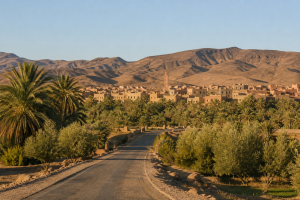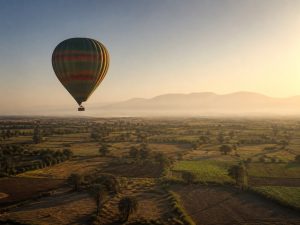
Zagora is a base in the Draa Valley, not a dune beside the road. The city belongs to a territory of oases, farms, villages and earthen architecture. M’Hamid lies farther south and provides a starting point for some desert experiences. Distance, heat and track conditions make every promise of an “express” desert circuit questionable.
This guide helps build a realistic stage and assess an excursion or camp. It does not endorse an unaudited operator or present the desert as an empty space available for every activity.
Understand the valley before looking for dunes
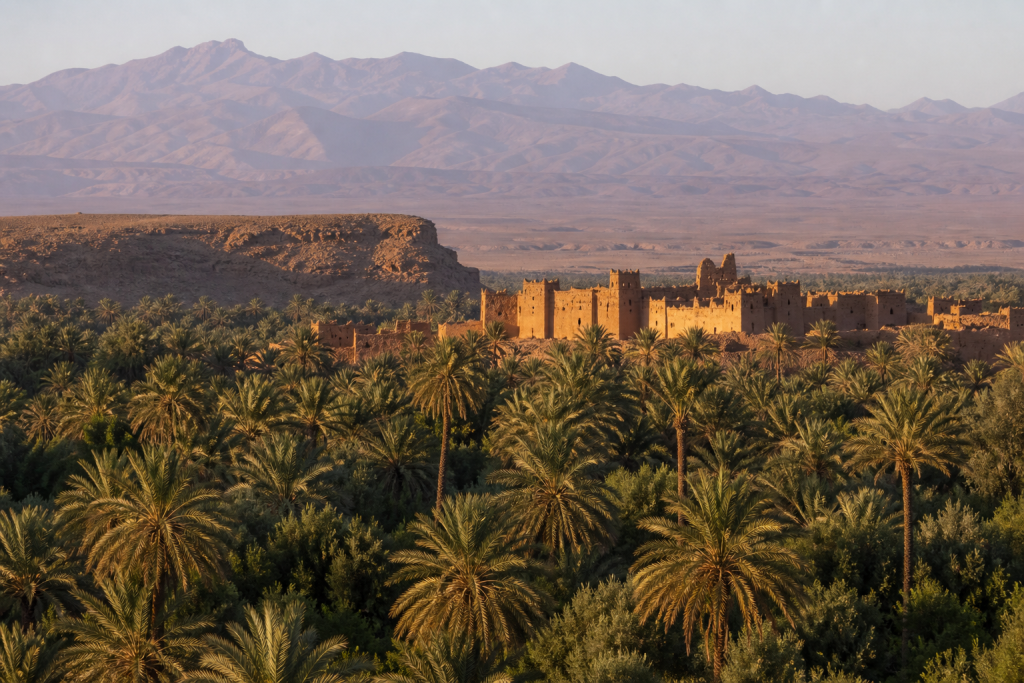
Morocco’s National Tourist Office highlights the oases, kasbahs and landscapes of the Ouarzazate–Zagora–Tinghir area. The Draa Valley depends on water, palm groves and communities that maintain them. A scenic road reveals only part of that system.
Plan a limited number of meaningful stops. Calling at every village for a few minutes adds driving and turns places into scenery. Accompaniment can explain irrigation, crops and architecture when fields are respected and contributors are paid.
A first day around Zagora
Keep the programme light after arrival. Heat and the journey from Ouarzazate or Marrakech affect the day. Visit one identified palm-grove sector or heritage place rather than immediately adding a long track.
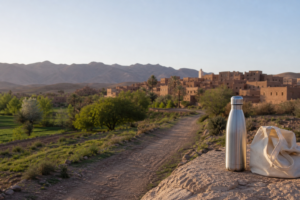
For a walk, ask about time, shade and level. Stay on paths, do not pick produce and avoid private gardens. Earthen buildings are fragile: never climb a wall and follow permitted access.
M’Hamid is not a short excursion from everywhere
The journey to M’Hamid belongs inside the programme. Confirm vehicle, road time, stops and the return margin. A late departure followed by night driving does not become safe because sunset appears in the brochure.
An offer must distinguish M’Hamid, nearby dune areas and more distant ergs. “Big desert” and “Sahara” provide no logistical information. Ask for the real place, camp or meeting-point coordinates and track duration.
Choosing an operator and vehicle
Verify the operator’s identity, insurance, driver, vehicle type, passenger count and communications. Seat belts and vehicle condition matter more than a photograph of a four-wheel drive.
Off-road traffic damages surfaces and multiplies tracks. A responsible operator uses accepted routes, controls speed and never chases wildlife. Our guide to responsible travel in Morocco sets out these criteria.
Camp: what the price should cover
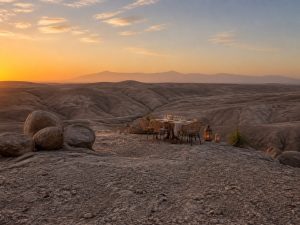
Ask about camp type, bedding, toilets, water, meals, waste, electricity, possible heating and evacuation. A “luxury” tent guarantees neither safety nor low impact.
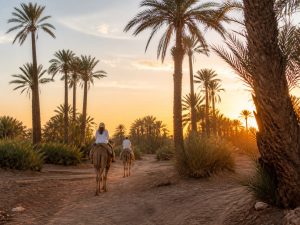
Clarify luggage, activities, drinks and tips. If an animal ride is offered, observe condition, load, duration and equipment. Refusing it should not remove the rest of the experience.
Water, heat and temperature changes
Water quantities should be planned for the journey, not improvised at camp. Ask where water is stored and how bottles or containers are recovered. Do not leave waste even when a fire is planned; burning plastic is not disposal.
Nights can be cold and days extremely hot depending on season. Request an equipment list for the date. Physical activity must be adjustable; disclose relevant medical needs and keep essential medicine with you.
Earthen architecture and local commerce
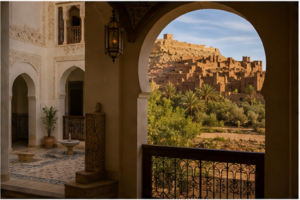
Kasbahs, ksour and earthen homes require maintenance and knowledge. Our guide to Moroccan architecture explains distinct forms and functions. A paid visit should state who manages the place and how admission supports upkeep.
For dates, rugs or objects sold as local, ask for origin and maker. A compulsory sales stop must be disclosed by the operator. MOP always separates editorial recommendation from commission.
Request a receipt for a substantial purchase and clarify shipping before payment. Desert dust, vehicle loading and repeated transfers can damage fragile goods, so packaging and responsibility for breakage must be explicit.
Building a three-day plan
Day 1: arrival and an introduction to Zagora or one valley sector. Day 2: travel to M’Hamid and the selected desert experience. Day 3: return with a margin and no additional long excursion. The framework can change, but it makes distance visible.
The Zagora hub gathers related material. If time is short, remove the camp instead of compressing the road.
Booking and payment evidence
Keep a written itinerary with dates, pickup, camp location, vehicle, meals and total price. Confirm which currency applies and whether a deposit is refundable. If the route changes because of weather or track conditions, the operator should explain the alternative and its effect on price. A messaging conversation is useful evidence; save it offline because mobile coverage may fail.
Operator checklist
- Real camp location and track duration.
- Driver, insurance, belts and communications.
- Water, meals, toilets and waste handling.
- Group size and optional activities.
- Weather, cancellation and evacuation terms.
- Disclosed commissions and sales stops.
Sources consulted
- Moroccan National Tourist Office, Route of the Kasbahs: https://www.visitmorocco.com/en/suggested-tours/road-kasbahs
- Moroccan National Tourist Office, desert stop: https://www.visitmorocco.com/en/suggested-tours/desert-break