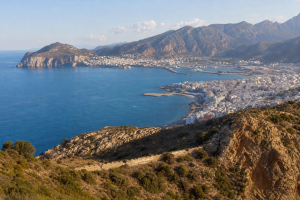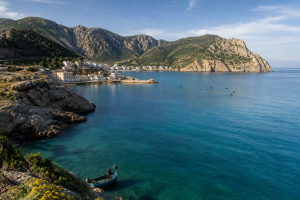
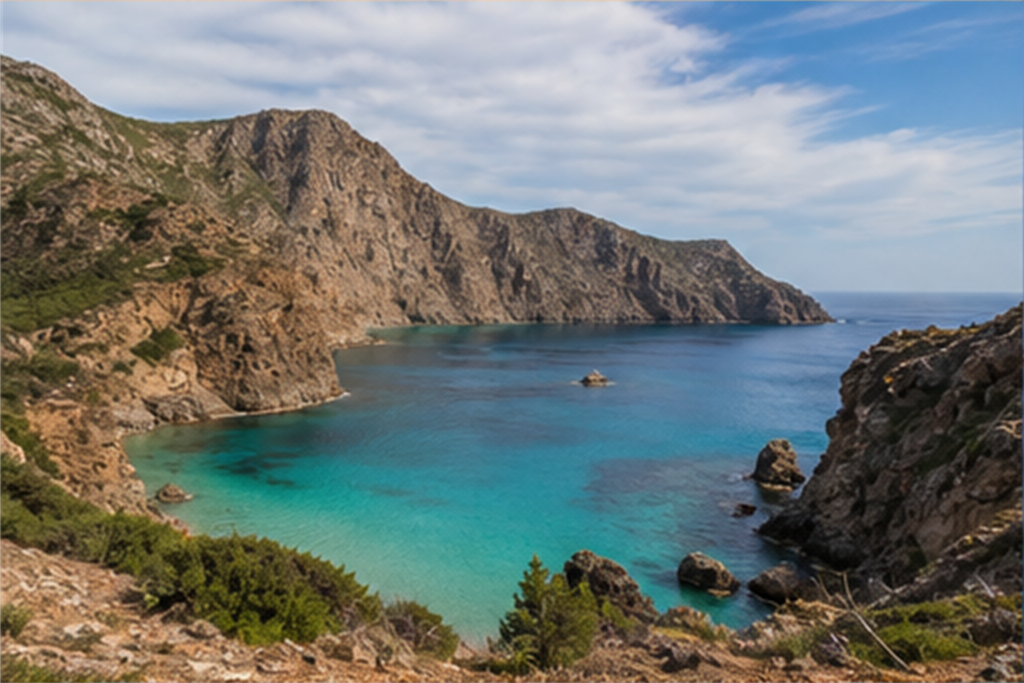
Al Hoceïma combines a city facing the Mediterranean, urban beaches and a spectacular Rif hinterland. Its national park protects a coastline of cliffs, terrestrial and marine environments, and villages whose access involves more than just a scenic road.
The destination is suited to a leisurely stay: a base in the city, outings chosen according to sea conditions and a well-prepared hike. Trying to reach every cove in one day mainly results in more journeys along winding roads.
Choosing between a lively summer and quieter seasons
Summer brings the highest concentration of swimming, entertainment and visitors, particularly Moroccans living abroad. Accommodation and beaches can be very busy. Booking early is useful, but parking and travel times must also be anticipated.
Spring and early autumn are better suited to walking, although sea and weather conditions remain variable. In winter, some tourist services slow down and rain can affect the trails.
Check a marine weather forecast before a boat trip or a visit to an isolated beach. A sunny day guarantees neither a calm sea nor safe access.
Getting to Al Hoceïma
Cherif Al Idrissi Airport serves the region according to seasonal and scheduled timetables that should be checked with ONDA and the airlines. The transfer to the city should be confirmed for a late arrival.
The road from Fez, Tangier or Nador crosses mountainous terrain and takes longer than the distance alone might suggest. Plan breaks and avoid driving at night on an unfamiliar route.
Coaches connect Al Hoceïma with several cities. Check the exact terminal, arrival time and final transport arrangements. Our guide to transport in Morocco helps you compare.
Discovering the city and its port
The port, squares, seafront and Moro Viejo corniche provide an initial perspective on the landscape. Walk early or at the end of the day, then choose a viewpoint without blocking traffic or crossing a barrier.
The port remains a working area. Ask before photographing fishermen and respect access restrictions. Fish restaurants are worthwhile when prices, weight and preparation are stated clearly.
An evening in the city complements days at the beach. Do not reduce Al Hoceïma to a dormitory for excursions: its shops, cafés and neighbourhoods also tell the story of the destination.
Choosing a beach according to access
Quemado is near the city; Cala Bonita, Sfiha and other beaches offer different atmospheres. Some coves require a drive, a walk or a boat trip. Check how you will return before heading down.
The absence of visible waves does not mean the absence of currents. Look for local information, watch children and do not swim alone in an isolated area. Emergency services and network coverage may be far away.
Bring water and take your waste with you. On a beach without waste collection, everything must leave with you. Do not take sand, plants or any marine material.
Entering the national park with a suitable guide
Al Hoceïma National Park covers coastal terrain characterised by cliffs and the Bokkoyas massif. A trail may cross rural areas and lead to guesthouses; its condition should have been confirmed recently.
Choose a guide who knows the regulations, the landowners and the conditions that day. Ask about distance, elevation gain, shade, water points and the possibility of shortening the route. An “easy walk” does not mean the same thing to every group.
Stay on the paths, keep your distance from wildlife and do not share the precise location of a nest or sensitive species. The park is not a place for off-road motorised activities.
Viewing the coast from the sea
A boat trip offers another perspective on the cliffs, but it should be run by an identifiable operator. Ask about capacity, life jackets, means of communication, the route and weather-related decisions.
Do not ask the skipper to enter a cave or approach a cliff when the swell makes it unsafe. A trip modified for safety reasons is not an incomplete service.
For wildlife watching, no sighting should be guaranteed. Do not pursue a group of dolphins or throw anything into the water.
Exploring the surrounding area without accumulating kilometres
Coastal villages, the historic towers near Torres de Alcalá and Bades Bay appear in guidebooks. Access and rules may change; seek local information before setting out.
Devote a full day to a single area. A slow journey along a mountain road, lunch and a walk are more meaningful than four quick stops.
In a village, park without causing an obstruction, ask before taking photographs and pay for the service actually provided. An invitation is not a performance included in the excursion.
Planning a four-day stay
The first day is suitable for the city, the port and a nearby beach. The second can be devoted to the park with a guide. The third leaves room for an accessible cove or a sea trip, depending on conditions.
Keep the fourth day flexible for a short excursion or rest. With a week, add a stop in the Rif rather than making daily return journeys.
A person with reduced mobility should request photos and information about slopes and toilets: the topography creates many obstacles. Our accessible Morocco guide provides a checklist.
Accommodation and budget
Check the actual distance from the beach, parking, air conditioning and accessibility. “Sea view” can mean there is a steep road between the room and the water. In high season, confirm the booking directly.
The budget depends on transfers to the coves and the guide. Compare a hire car, a driver and an organised trip, adding fuel, parking and driving time.
Keep cash for small expenses, but use traceable channels for a major booking. Always ask for the total price before a boat trip.
Al Hoceïma checklist
- Marine weather and beach access checked on the day.
- Return arranged before heading down to an isolated cove.
- Suitable water, footwear and sun protection.
- Park guide informed of the group’s actual fitness level.
- Boat equipped with life jackets for all passengers.
- Waste taken away when no collection service is available.
- Driving time calculated with the terrain in mind.
- Flexible itinerary in case of swell or rain.
Sources consulted
- Moroccan National Tourist Office, Al Hoceïma destination: https://www.visitmorocco.com/en/travel/al-hoceima
- Moroccan National Tourist Office, nature and park: https://www.visitmorocco.com/en/travel/al-hoceima/nature
- Moroccan National Tourist Office, beaches: https://www.visitmorocco.com/en/travel/al-hoceima/beach
- National Agency for Water and Forests: https://www.eauxetforets.gov.ma/
- National Airports Office: https://www.onda.ma/