Amazigh culture is one of the foundations of Moroccan identity. It refers neither to a single region, nor to a uniform form of dress, nor to an unchanging past. Languages, agricultural practices, architecture, music, stories and contemporary creative works vary from the Rif to the Souss, and from the Middle Atlas to the oases.
The 2011 Constitution recognises Amazigh as an official language of the State and a common heritage of all Moroccans. This recognition provides a national framework, while everyday usage remains diverse and continues to evolve.
Amazigh, Berber and terminology
“Amazigh” is now the term preferred by Moroccan institutions and many of the people concerned. “Berber” is still used in historical or linguistic publications, but may be rejected depending on the context.
The plural “Imazighen” refers to the people; “Tamazight” may refer to the standard language or, depending on the context, to a variety. The safest approach is to listen to how a person describes themselves.
Avoid explaining someone’s own identity to them based on a definition read in a guidebook. Regional, national, family and linguistic identities can overlap.
One official language and several varieties
In Morocco, the main linguistic groups include Tarifit in the Rif, Tamazight in the centre of the country and Tachelhit in the Souss and the south-west. The boundaries are more complex than a three-colour map suggests.
IRCAM works on language planning, terminology, dictionaries and the integration of Amazigh into education and public life. A standard language facilitates these uses without erasing local ways of speaking.
Travellers can learn a few greetings, but should accept variations and corrections. Pronouncing words imperfectly but respectfully is better than pretending to be fluent.
Contemporary Tifinagh
In 2003, Morocco adopted Tifinagh as the official script for Amazigh. IRCAM contributed to its standardisation, Unicode integration, digital tools and educational materials.
It can be seen on public buildings, signs, textbooks and graphic works. Its presence does not mean that every speaker uses it daily: some also read Arabic or the Latin alphabet.
A Tifinagh character should not be copied as a decorative motif without knowing its meaning. For a tattoo, logo or personalised object, request a reliable translation and the creator’s permission.
Territories, not a single backdrop
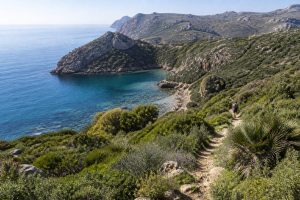
The landscapes associated with Amazigh cultures range from the Rif mountains to the valleys of the High Atlas, and from the plains of the Souss to the pre-Saharan oases. Housing, clothing and resources respond to the climate, materials and local history.
A stone house in the Middle Atlas and an earthen structure in the south are not two versions of the same model. A local guide can explain the techniques, seasonal uses and recent changes.
To prepare for a mountain trip, consult our Ifrane and Azrou guide which focuses on the forest and urban life rather than on a folkloric image.
Textiles and motifs: ask about their origin
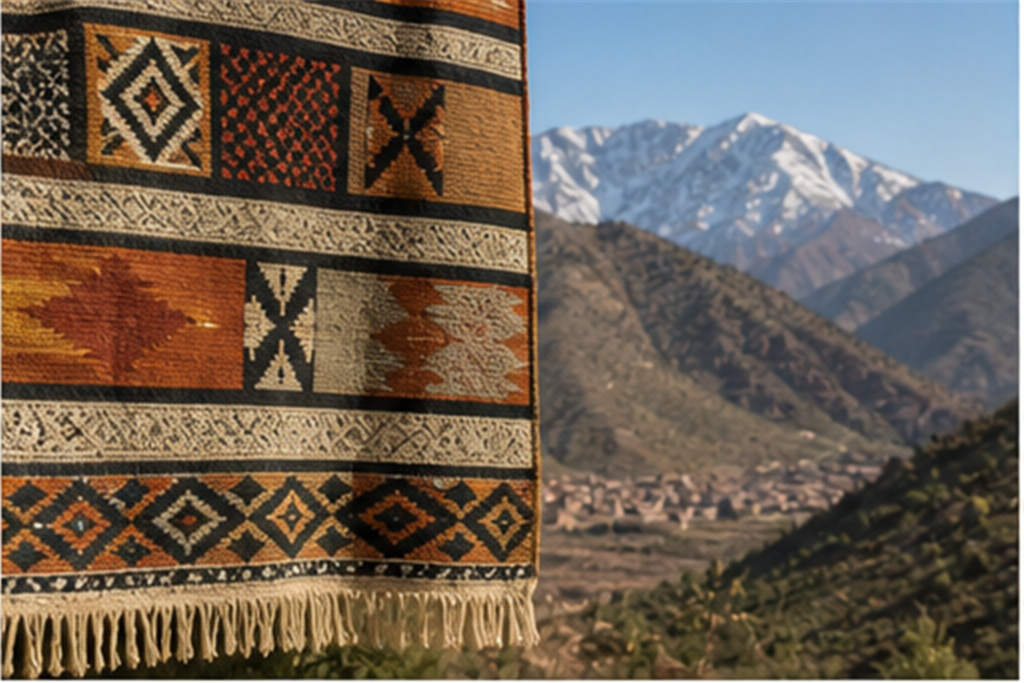
Rugs, woven fabrics, embroidery and jewellery feature regional techniques and repertoires. A female vendor or craftsperson should be able to explain the material, location, working time and use. An “authentic Amazigh” label does not establish provenance.
Ready-made symbolic interpretations are widespread. A diamond does not necessarily have the same meaning in every workshop, and some explanations are created for sales purposes. Present them as context-specific narratives, not as a universal dictionary.
For an expensive piece, request an invoice and the name of the cooperative or workshop. Bargaining does not require devaluing the work.
Music, dance and poetry
Ahidous, ahwash, Rif songs and Amazigh poetry belong to different contexts. Performances combine words, rhythm, movement, celebration and memory. They should not be grouped under a generic label.
A public festival often provides an initial opportunity to listen with some context. Identify the group and its region, ask before filming and credit the artists. Tourist entertainment can be appreciated while still being described as such.
Contemporary creative work uses radio, cinema, rap, rock, literature and digital media. Living Amazigh culture is not limited to old rural forms.
Calendar, Yennayer and social customs
Yennayer, the Amazigh New Year, is celebrated around January with a variety of family and regional practices. In Morocco, the Amazigh New Year has become an official public holiday, increasing its national visibility.
There is no single menu or ceremony that is identical everywhere. If you are invited, ask what the family is celebrating and do not turn the meal into a report without permission.
Other moussems, agricultural festivals and gatherings combine local, religious and economic dimensions. Their dates must be checked each year.
Museums, institutions and interpretation
IRCAM in Rabat produces resources and publications. Regional museums, cultural centres and associations provide access to collections, languages and arts. Check opening hours and visiting conditions with the institution.
In a village, use a guide or an identifiable organisation rather than entering a home in search of “authenticity”. A visit must be agreed to and paid for when it takes up someone’s time.
Books, catalogues and recordings purchased from their publishers extend the discovery without removing an old object of uncertain provenance.
Taking photographs without freezing culture in time
Ask permission before taking a portrait, particularly of a child, a ceremony or domestic work. An item of clothing is not a costume available for a visitor’s photograph.
Write precise captions: region, artist, technique and date when this information is known. Avoid “Berber woman” or “timeless village”, phrases that erase people and the present.
Also show schools, cities, creative works and digital uses. A living culture encompasses tradition, change, choices and debates.
Guidelines for a respectful discovery
- Use the term chosen by the people you meet.
- Distinguish between linguistic varieties and the standard language.
- Check the meaning of a character before reproducing it.
- Ask about the origin, material and workshop behind a textile.
- Identify the artists, region and context of a performance.
- Obtain permission before taking a portrait or making a recording.
- Avoid “timeless” captions.
- Consult local institutions and cultural mediators.
Sources consulted
- IRCAM, Constitution of the Kingdom and the official status of Amazigh: https://www.ircam.ma/fr/textes-fondateurs/constitution-du-royaume
- IRCAM, the Institute’s missions: https://www.ircam.ma/fr/ircam/missions-de-ircam
- IRCAM, adoption and standardisation of Tifinagh: https://www.ircam.ma/fr/activites/celebration/celebration-de-la-12eme-commemoration-de-la-promulgation-royale-pour-adopter-tifinaghe-la-graphie-officielle-de-la-langue-amazighe
- IRCAM, language planning centre: https://www.ircam.ma/fr/node/1607
- UNESCO, Morocco’s intangible cultural heritage: https://ich.unesco.org/fr/etat/maroc-MA?cp=MA&info=elements-sur-les-listes