Ceramics provide one of the most concrete ways to understand Safi. The craft links raw material, gestures, workshops, kilns, sales channels and urban identity. A quick stop in a shop, however, cannot reveal whether an object was made locally, designed only for decoration or produced somewhere else.
This guide prepares a more attentive visit. It does not rank sellers or claim to authenticate an object remotely. It explains what to observe, ask and verify before buying while respecting the working conditions of artisans.
Why Safi is associated with pottery
Morocco’s National Tourist Office presents Safi as an Atlantic city strongly connected to ceramics. Its tradition rests on clay, transmitted skills and a concentration of workshops. It also changes over time: forms, colours, uses and commercial channels are not frozen.
“Safi pottery” therefore covers several realities. Some pieces are thrown and painted locally; others move between specialised workshops. Asking who shaped, decorated and fired an item says more than a generic label.
Preparing a workshop visit
A workshop is a production space. Ask whether visits are possible, whether there is a fee and which areas are accessible. Kilns, dust, tools and drying work require visitors to follow instructions. Do not touch a piece without being invited and keep children close.
Photography requires explicit permission, especially when a person is working. If a demonstration is arranged, ask whether the artisan is paid or whether a purchase is expected in return. Transparent terms prevent hidden commercial pressure.
Reading the production stages
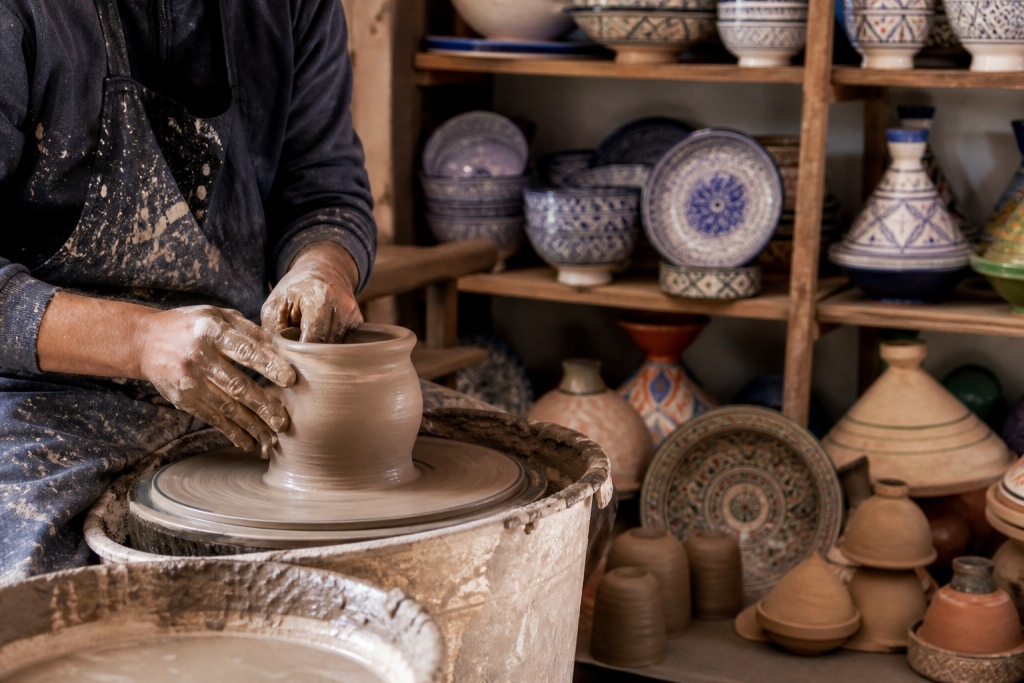
Depending on the object, clay may be shaped on a wheel, in a mould or by hand. Drying, an initial firing, decoration, glazing and another firing may follow. Not every piece uses exactly the same process.
Look at consistency without confusing craft with industrial perfection. A small variation can record the maker’s hand; a structural crack, flaking glaze or unstable base is different. For a functional object, performance matters as much as appearance.
Decorative pieces and food use
A wall plate does not face the same requirements as a bowl intended for food. Ask clearly whether the glaze and pigments are suitable for food contact, a dishwasher, an oven or a microwave. Without reliable information, treat the piece as decorative.
The word “natural” is not a certification. For a significant tableware purchase, look for written information from the producer or seller. MOP does not turn a craft story into an undocumented safety guarantee.
Comparing prices without devaluing work
Price reflects size, shaping time, decoration, firing, losses and the sales chain. Two similar-looking items may involve different amounts of work. Ask the price before bargaining and compare pieces with similar quality and intended use.
Respectful negotiation may be appropriate in a particular setting. It should not deny working time or make a discount the only proof of a good purchase. If the price does not suit you, thank the seller and leave calmly.
Packaging, weight and transport
A large piece can cost more to carry than to buy. Ask how it will be protected, who carries the risk of breakage and whether shipping includes tracking and insurance. For checked or cabin baggage, measure the wrapped object and verify the airline allowance.
Photograph the item before packaging and keep the invoice. For international shipping, clarify taxes, formalities and timing. A spoken delivery promise is not a substitute for a document stating the address, contents and responsibilities.
Building a coherent day in Safi
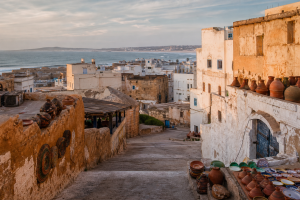
Give one sequence to workshops and another to the city and coast. The National Tourist Office also highlights Safi’s historic heritage and Atlantic identity. Moving between repeated sales demonstrations gives a narrower view than observing the port, ramparts and neighbourhoods.
The Safi hub brings together the general destination guide, our feature on Moroccan medinas and the guide to craft materials and techniques.
Commerce aligned with the MOP method
A future ceramics experience must identify the workshop, duration, group size, language, activities genuinely included and payment terms. It cannot promise an “authentic encounter” without describing how artisans are paid and how visitors are received.
For online objects, dimensions, weight, material, intended use, origin, possible variation and breakage policy must be visible. An affiliate relationship can never replace those facts.
If a class is offered, distinguish watching from actually using the wheel, decorating a prepared piece and collecting a fired object later. Firing can take longer than a short visit, so delivery or collection terms need to be realistic. Ask about clothing, clay dust, minimum age, group size and language before paying. A photograph of hands on a wheel does not prove that every participant receives individual instruction.
Checklist before buying
- Who shaped, decorated and fired the piece?
- Is it decorative or intended for food use?
- Does it have a crack, chip or unstable base?
- Are price, packaging and shipping itemised?
- Is there an invoice and breakage policy?
- Does it fit the trip’s budget and baggage limits?
Sources consulted
- Moroccan National Tourist Office, Safi: https://www.visitmorocco.com/en/travel/safi
- Moroccan National Tourist Office, Moroccan craftsmanship: https://www.visitmorocco.com/en/experiences/culture/craftsmanship