Morocco obtained a score of zero in the Global Terrorism Index 2026, published by the Institute for Economics & Peace. This result means that the index measured no impact of terrorism in the country for the reference year 2025, taking into account its multi-year methodology.
It does not mean that all risks are zero, that Morocco is automatically one of the safest countries in the world or that no future threat exists. The GTI measures a specific phenomenon: the impact of terrorism. To understand a country’s safety, it must be supplemented with other indicators and up-to-date practical recommendations.
Morocco’s result in the GTI 2026
The 2026 report ranks 163 countries and territories. Morocco is part of the group with a score of 0, identified in the tables as “no impact of terrorism.” Several countries share this result and the same tied ranking.
The data relates to events recorded in 2025, even though the report was published in March 2026. This distinction between dates is important: an annual index looks at a past period and does not constitute a real-time alert.
The score of zero is a favourable result. It indicates the absence of any incident that produced a measured impact according to the report’s criteria during the year studied, after its weighting was applied.
How the Global Terrorism Index is calculated
The GTI uses four indicators: the number of terrorist incidents, the number of deaths, the number of people injured and the number of hostages. The values are weighted and incorporated into a five-year average to account for the lasting effect of events.
The report draws on an international database cataloguing terrorist attacks. Like any global indicator, it depends on the definitions, data quality and chosen ranking rules.
The 2026 edition therefore does not calculate a “safety percentage.” It measures the recorded impact of terrorism according to a specific methodology.
Why a score of zero does not mean “zero risk”
The absence of a measured impact during a period does not make it possible to predict that no event will occur afterwards. A threat may be detected or neutralised without appearing as an attack in the index. The regional and international context may also change.
France Diplomatie describes Morocco as a safe country under the control of the authorities, while noting that it remains exposed to the terrorist threat. This wording does not contradict the GTI: it distinguishes a past statistical record from a preventive risk assessment.
Presenting the situation as “maximum safety” or an absolute guarantee would create a false sense of certainty. Prevention relies precisely on maintaining vigilance.
Terrorism, crime and road safety are not the same issue
A traveller may stay in a country that is little affected by terrorism and still be exposed to theft, a scam, a road accident or a natural hazard. The GTI does not measure these situations.
Travel advice for Morocco mentions bag snatching and pickpocketing in busy areas, particularly in major cities and tourist sites. Violent attacks against visitors are less common, but they do occur.
Traffic represents another tangible risk. Pedestrian safety, driving at night and secondary roads require particular attention. Comparing these dangers with a terrorism score would amount to mixing categories that use different methodologies.
What the Global Peace Index 2026 says
The same institute publishes the Global Peace Index, which covers a much broader scope. It combines 23 indicators divided among societal safety, ongoing conflicts and militarisation.
In the 2026 edition, Morocco ranks 65th with a score of 1.887. This is a respectable ranking globally, but it does not place the Kingdom among the index’s very top nations.
The comparison illustrates precisely the problem with the title “one of the safest countries in the world.” Morocco may obtain a score of zero for the impact of terrorism while ranking in the upper-middle section of a broader peace ranking. The two results do not measure the same thing.
Areas requiring particular vigilance
Official recommendations do not treat the entire territory uniformly. France Diplomatie formally advises against travel along the border with Mauritania outside the designated road crossing and places certain areas near the borders, as well as routes in Western Sahara, under heightened vigilance.
Travellers must remain on authorised routes, avoid unverified isolated tracks and follow the instructions of local authorities. The risk of mines in certain southern areas also means that travellers must not improvise an off-road route.
These geographical precautions do not call into question tourist visits to the major destinations. They simply serve as a reminder that a national score is no substitute for a vigilance map.
The role of Moroccan prevention
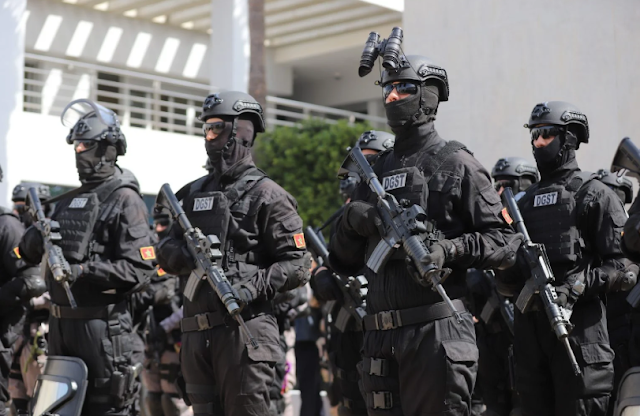
Morocco has developed a prevention policy that combines intelligence, international cooperation, network monitoring and institutional oversight of the religious sphere. The authorities regularly report the dismantling of cells suspected of preparing actions.
It is reasonable to consider this preventive capacity as part of the context. However, it would be difficult to attribute the GTI score mathematically to a single policy, because the index does not measure the individual effectiveness of each service or programme.
A rigorous assessment should examine procedures, court decisions, cooperation, social prevention and respect for rights, rather than turning a ranking into an overall endorsement of all public policies.
The regional context remains important
The 2026 edition of the GTI shows that the global impact of terrorism remains concentrated in several areas, particularly the Sahel, Pakistan and Nigeria. The geographical proximity of the Sahel does not mean that the situation in Morocco is identical, but it justifies ongoing monitoring of networks, borders and movements.
Direct comparisons between neighbouring countries should remain cautious. A ranking can change with a small number of events, and institutional or territorial realities differ greatly.
A useful article should explain Morocco’s result without using it to disparage other countries or present safety as a diplomatic competition.
What impact does this have on tourism and the economy?
Stability and the perception of safety contribute to tourist appeal and business confidence. They facilitate travel, event organisation and investment decisions.
However, the GTI alone does not demonstrate a causal relationship with tourist arrivals or investment. These flows also depend on prices, air connectivity, infrastructure, the economic context and service quality.
Using the score of zero as an element of context is relevant. Presenting it as the sole proof of economic performance would be excessive.
Good practices for travellers
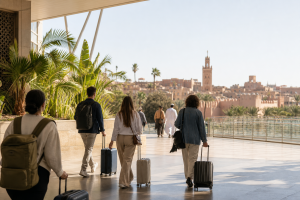
Before departure, travellers should consult the official advice corresponding to their nationality, check their insurance and follow recent alerts. Once there, the usual precautions remain necessary: protect valuables, use identifiable transport and avoid isolated places at night.
For an itinerary in a desert or border area, local information and any required authorisations take precedence over a general article. Weather, road and security conditions can change quickly.
A travel recommendation should always be dated. The GTI 2026 score does not replace alerts from the authorities or instructions received locally.
A positive interpretation, but without superlatives
Morocco’s score of zero in the Global Terrorism Index 2026 is positive data and deserves to be presented. It describes the absence of a measured terrorist impact for the year 2025 according to the criteria of the Institute for Economics & Peace.
The correct conclusion is not that the risk has disappeared. It is that the country experienced a period with no impact recorded by this index, while remaining subject to the usual requirements of prevention and vigilance.
To discuss safety in general, this result must be cross-referenced with the Global Peace Index, crime data, road safety and travel advisories. This method provides a more useful picture than the impossible promise of “zero risk.”
Institutional sources
- Institute for Economics & Peace, Global Terrorism Index 2026: https://www.economicsandpeace.org/report/global-terrorism-index-2026/
- Institute for Economics & Peace, full Global Terrorism Index 2026 report: https://www.economicsandpeace.org/wp-content/uploads/2026/03/Global-Terrorism-Index-2026-Report.pdf
- Institute for Economics & Peace, Global Peace Index 2026 and Morocco’s ranking: https://gpi.economicsandpeace.org/
- France Diplomatie, safety advice for Morocco, updated in August 2026: https://www.diplomatie.gouv.fr/fr/information-par-pays/maroc/conseils-aux-voyageurs-securite
- US Department of State, travel advice for Morocco: https://travel.state.gov/en/international-travel/travel-advisories/destination.mar.html