Morocco brings together very different experiences in a single trip: high-speed train, pedestrian medina, Atlantic beach, mountains and desert. This diversity appeals to families, provided the trip is not planned as a race between famous places.
A child-friendly itinerary is not a watered-down version of the trip. It reduces unnecessary transfers, allows for breaks and includes activities that everyone can understand. Age, sleep, heat and tolerance for travel should guide decisions more than the number of stops.
Start with age and actual pace
A baby, a five-year-old and a teenager do not have the same needs. Note sleeping times, the maximum time they can tolerate in a car, meals and the activities that genuinely interest each person. Keep at least half a day free after a late arrival.
Alternate a structured visit with unplanned time: a garden, supervised pool, suitable beach or break at the riad. A full day in a medina can be fascinating for an adult and exhausting for a young child.
Limit accommodation changes. Three nights in the same place allow you to discover more than a succession of suitcases and night-time arrivals.
Check each child’s documents
Each minor must have the travel document required for their nationality. When travelling alone, with only one parent or with a third party, additional authorisations and supporting documents may be required.
The rules of the country of departure apply in addition to Moroccan requirements. Ask the relevant consulate for the exact list for your family circumstances and keep the originals accessible during the journey.
Our guide https://www.lemarocouvresesportes.com/en/morocco-entry-requirements-passport-visa/ details passport, visa and arrival checks. Do not store the only copy of the documents on one parent’s phone.
Choose family-friendly stops
For a first trip, two or three well-connected bases are often enough. A city with a train service reduces driving fatigue. A rural stop can then provide nature and tranquillity if the transfer is confirmed.
Marrakech offers gardens, museums and excursions, but its heat and bustle require breaks. Essaouira is more compact and temperate, with frequent wind. Rabat combines open spaces, trams and heritage. Each destination must be assessed according to the season, not according to a universal promise.
Avoid a long drive to the desert simply for one night. Merzouga deserves an itinerary that takes account of the distances and heat; it should not be treated as a quick excursion from Marrakech.
Train, car and transfer: reduce disruptions
The train works well between several major cities and allows children to move around more than in a car. Book seats together when that option is available and arrive with enough time to reach the platform.
A car offers flexibility, but check the appropriate seat before collection. Ask for a photo, the category and the attachment method; “child seat available” is too vague. For an initial arrival, a pre-booked transfer can avoid having to negotiate with luggage and tired children.
The guide https://www.lemarocouvresesportes.com/en/getting-around-morocco-train-bus-taxi-car/ compares modes of transport, and https://www.lemarocouvresesportes.com/en/driving-morocco-licence-tolls-fuel-safety/ covers driving.
Accommodation: ask the right questions
A riad may have a magnificent patio, but also steep stairs, open galleries and a pool without a barrier. Ask for recent photos of the room, access, stairs and pool. Check whether a cot or extra bed is provided and whether it significantly reduces the available space.
A “family” room does not always mean separate beds. Confirm the number of beds, their size, air conditioning or heating, sound insulation and whether it is possible to prepare or reheat a simple meal.
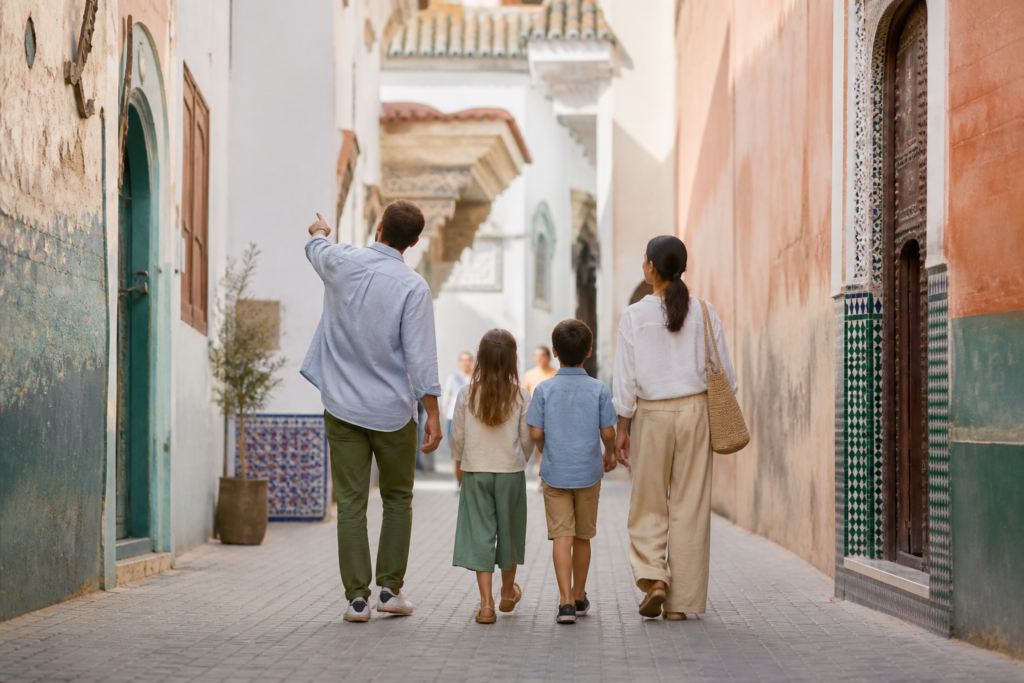
Ask for the walking distance from the point where a taxi can actually drop off the family. In a medina, 300 metres of alleyways with a pushchair and suitcases is not the same as 300 metres on an even pavement.
Pushchair or baby carrier
A lightweight pushchair works on avenues and in some gardens, but cobblestones, steps, crowded alleyways and uneven surfaces can make it difficult to use. A suitable baby carrier offers more flexibility, without being comfortable in intense heat.
The decision may vary depending on the day. Keep a compact pushchair for modern spaces and use another form of carrying in the medina. Check sun protection and do not completely cover a pushchair with fabric that traps heat.
Pack a minimal bag: water, a change of clothes, sun protection, a snack and personal medication. An overly heavy bag slows down the whole family.
Health, water and food
Consult a professional before departure for recommendations suited to the child. Check insurance, vaccinations, treatments and paediatric care at the main stops. Doses should never be improvised using adult medication.
Wash hands, choose thoroughly cooked food and use safe water when quality is uncertain. Moroccan cuisine offers simple dishes: soup, bread, rice, cooked vegetables or thoroughly cooked skewers, depending on the child’s habits.
The heat requires particular attention. Offer water regularly, avoid the hottest hours and watch for tiredness, headaches or unusual behaviour. The guide https://www.lemarocouvresesportes.com/en/travel-health-morocco-insurance-pharmacies-emergencies/ brings together key health information.
Activities that give children a role
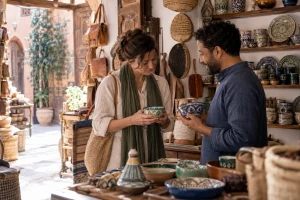
A visit becomes more engaging with a task: spot the shapes in zellige tilework, identify spices, draw a door or choose a pastry. A workshop should state the minimum age, duration, language and actual level of participation.
In a souk, set a meeting point and put a card with a parent’s number and the accommodation address in the child’s pocket. For a teenager, agree on the rules before allowing free time.
Prioritise experiences that respect people and animals. Do not force a photograph or activity that makes the child or an animal uncomfortable.
Beach, pool and water activities
The presence of other swimmers does not guarantee a supervised area. The Atlantic can have powerful currents. Ask about local conditions, choose a supervised area and remain within reach of the child.
A riad pool may be decorative, deep and without a lifeguard. Check access and maintain constant supervision. Armbands are not a substitute for an attentive adult.
For surfing or a boat trip, choose an identifiable operator, suitable equipment and insurance that covers the activity. Ask about cancellation conditions if the weather becomes unfavourable.
Desert, mountains and animals
A night in the desert requires consideration of the journey, temperatures, toilets and time spent in the vehicle. Ask for the actual distance between the last road access and the camp, as well as the solution in the event of illness.
In the mountains, weather and altitude change quickly. A qualified local guide, suitable footwear and a short route are better than an overly ambitious goal. Inform a third party of the itinerary.
Avoid contact with dogs, cats and monkeys. A bite or scratch requires immediate washing and urgent medical advice. Explain the rule without frightening the child.
Manage the souk and purchase requests
Give the child a small budget or define a single souvenir purchase. This turns bargaining into a simple exercise and avoids repeated decisions under pressure.
Always ask the price before a service, staged photograph or personalised item. A “gift” that is handed over and then charged for creates a confusing situation; the child can learn to respond politely without accepting.
In crowds, hold younger children by the hand and keep valuables out of reach. Photograph children while respecting local people who are in the frame.
Prepare for travel days
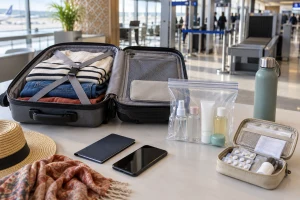
The day before, explain the journey in stages: taxi, station, train, walking and arrival. Keep tickets, snacks, water, clothes and entertainment accessible. Put essential medication in hand luggage.
Do not schedule a paid activity immediately after a long journey. A missed connection should not result in a dangerous rush. Keep the first meal and bedtime flexible.
Download maps and bookings. A SIM or eSIM helps, but the guide https://www.lemarocouvresesportes.com/en/sim-esim-internet-morocco/ also recommends an offline mode.
Family checklist before confirming
- Documents and authorisations checked for each child.
- Insurance including health, repatriation and planned activities.
- Limited stops and arrivals preferably before nightfall.
- Bed, stairs, pool and taxi access confirmed by the accommodation.
- Suitable child seat confirmed for each road transfer.
- Breaks, water and a solution for the heat planned.
- Address and numbers placed in the child’s pocket.
- One activity chosen for each age, without overloading the day.
Official sources consulted
- Moroccan National Tourist Office, family travel: https://www.visitmorocco.com/fr/experiences/segments/famille
- Moroccan Ministry of Foreign Affairs, entry requirements: https://diplomatie.ma/fr/visiter-le-maroc
- France Diplomatie, entry and stays with minors: https://www.diplomatie.gouv.fr/fr/information-par-pays/maroc/conseils-aux-voyageurs-entree-sejour
- France Diplomatie, health in Morocco: https://www.diplomatie.gouv.fr/fr/information-par-pays/maroc/conseils-aux-voyageurs-sante
- France Diplomatie, safety and swimming: https://www.diplomatie.gouv.fr/fr/information-par-pays/maroc/conseils-aux-voyageurs-securite