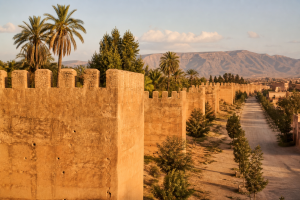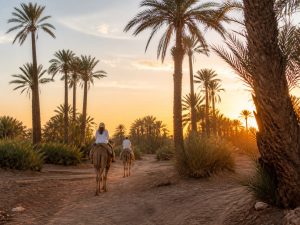
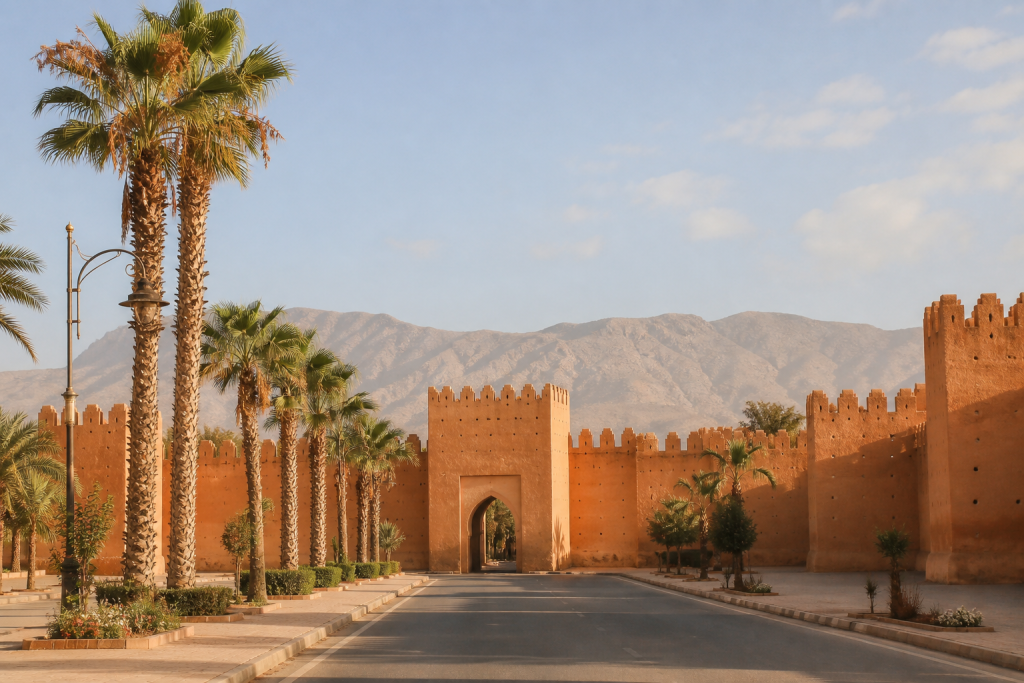
Taroudant is sometimes described as a “little Marrakech”. The comparison is convenient, but it erases the city’s own character: its ramparts, scale, markets, place within the Souss and links to the Anti-Atlas. A successful stop does not try to recreate Marrakech at a quieter volume.
Two days give one day to the city and one to a chosen excursion. Tioute provides a reading of oasis life and rural landscape when transport is prepared and the visit is not reduced to a commercial stop.
Day 1: read the city from the ramparts
Begin with one section of wall and a recognisable gate. Morocco’s National Tourist Office highlights Taroudant’s historic enclosure and souks. Light changes through the day; walking the full circuit is not necessary to understand the city’s scale.
Roads and edges carry several uses. Stay aware of traffic and do not block access for photographs. Before a carriage ride, agree on duration, route, price and passenger number; also observe the animal’s condition.
Markets: buy with a method
The markets sell daily goods, craft objects and produce from the Souss. Something described as local deserves simple questions: material, place of production, maker, packaging and intended use. For argan oil, distinguish food and cosmetic products and look for clear information.
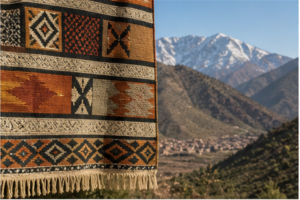
Our Moroccan craft guide explains techniques and regional links. The feature on Amazigh culture prevents motifs and objects from being reduced to context-free decoration.
Negotiation and payment
Ask the price before negotiating. Compare similar objects and do not treat a discount as an obligation. Working time, material and losses all matter. If you do not wish to buy, say so calmly.
A workshop visit should disclose whether a demonstration is paid, whether a purchase is expected and whether the guide receives commission. Transparency protects artisan and traveller.
End the day inside the medina
Keep part of the afternoon for walking without a strict schedule. A square, café or meal gives a truer reading than a chain of shops. Ask before photographing residents and respect spaces of prayer and work.
The Taroudant hub gathers useful material. Use it to choose rather than turning the city into a compulsory list.
Day 2: prepare Tioute
The National Tourist Office includes Tioute and its oasis among the area’s nature excursions. Reaching it requires a vehicle or organised transfer. Agree on departure, waiting, return, meals and stops before payment.
An oasis is an inhabited agricultural system, not just a line of palms. Remain on permitted paths, do not pick produce or enter fields, and carry waste out. Accompaniment is useful when it explains irrigation, crops and local organisation.
Walking, heat and water
Adapt the route to the season. Hot hours reduce comfort and increase water needs. Ask for actual walking time, gradient, shade and rest possibilities. A walk described as “easy” needs concrete detail.
Carry a bottle and check refill options. Do not hand gifts or money to children on a guide’s instruction; use identified organisations if you want to support a project.
Where to stay and how to arrive
An address in or near the medina simplifies walking, with possible parking and luggage constraints. A property outside may offer a pool or garden but adds journeys. Examine claimed water practices instead of trusting a vague badge.
From Agadir, Taroudant can be a day trip, but one night prevents ramparts, markets and Tioute being compressed into one day. From Marrakech, the distance merits a true stage. Consult our guide to getting around Morocco.
What a MOP offer must state
A commercial experience must identify operator, language, vehicle, group size, walking, meals, shopping and cancellation. The word “cooperative” is not sufficient: the organisation’s role and payment arrangements must be understandable.
For accommodation, MOP separates location, verified services, accessibility and seasonality. A possible commission does not alter editorial criteria.
Every booking page should display the exact cancellation deadline and payment currency. A discounted rate is only useful when the traveller understands which services and changes it excludes.
Food and regional products
Ask whether a tasting is included, optional or linked to a sales presentation. A label such as “local breakfast” should identify its main products rather than operate as decoration. Check allergies and dietary needs directly with the host. In a market, food exposed to heat requires the same judgement as anywhere else: choose busy, clean-looking stalls and drink water from a source you trust.
Checklist
- Choose one wall section rather than racing around all of it.
- Ask about product origin and use.
- Clarify commission linked to a workshop.
- Confirm Tioute transport and return.
- Adapt walking to heat and shade.
- Respect fields, water and oasis life.
Sources consulted
- Moroccan National Tourist Office, Taroudant: https://www.visitmorocco.com/en/travel/taroudant
- Moroccan National Tourist Office, nature and Tioute: https://www.visitmorocco.com/en/travel/taroudant/nature